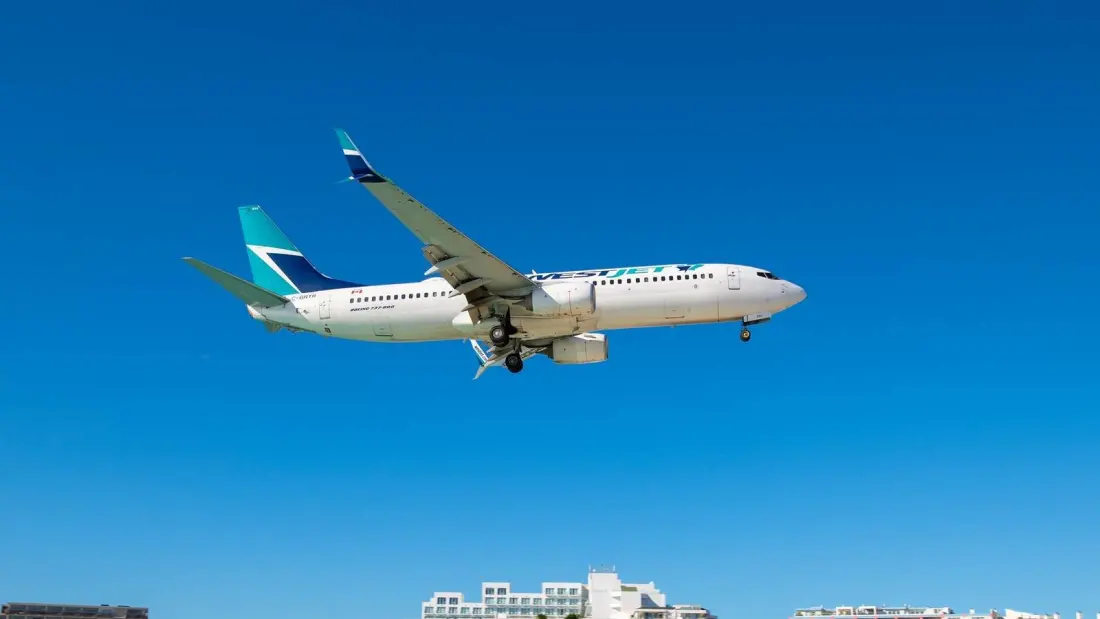
A WestJet captain has gone public with a complaint that will sound familiar to anyone who has stared out a plane window at a queue of aircraft: at Seattle-Tacoma International Airport, simply getting to the runway can take so long that a jet burns serious fuel before its wheels ever leave the ground.
The flight in question was WestJet 1553, a daily Boeing 737-800 service from Seattle to Calgary, operating on Thursday, October 8. It should have pushed back at 10:30 AM. Instead, it left the gate at 1:03 PM — more than three hours late — and then sat through roughly 32 more minutes of taxiing and maneuvering across congested taxiways before finally lining up on Runway 16L and departing at 1:35 PM. It landed in Calgary at 4:02 PM after a flight of just under two hours.
The detail that got attention: by the time the aircraft reached the runway, the captain reported it had burned around 800 pounds (about 362 kg) of fuel just idling and creeping across the airport. He told the airline that a 30-minute taxi is now routine at Seattle, and that he had deliberately filed extra fuel beyond the standard plan. That was a calculated precaution — if taxi delays ran long enough, the aircraft could have dropped below the legal minimum takeoff fuel and been forced to return to the gate, turning a bad delay into an even worse one.
It is a small incident that points at a bigger problem. Seattle-Tacoma is one of the busiest airports in the United States, and ground congestion has knock-on effects everywhere: schedules, airline costs, fuel planning, and passenger patience. Crews increasingly have to game out worst-case taxi times before departure, which is not the kind of arithmetic most travellers realise is happening behind the cockpit door.
There is a genuinely useful takeaway for anyone flying between the Pacific Northwest and western Canada. Seattle has become a busy gateway to Canada, with four airlines — WestJet, Air Canada, Alaska Airlines and Delta — flying to seven Canadian cities, including Calgary, Vancouver, Toronto, Montreal, Edmonton, Kelowna and Victoria. Vancouver is the busiest of them: more than 624,000 passengers flew Seattle-Vancouver between July 2025 and June 2026, making it the airport's third-largest international route overall, behind only Taipei and Seoul. Air Canada's seasonal Seattle-Montreal route is slated to return on May 1, 2027.
If you are booking one of these short cross-border hops, the WestJet story is a nudge to build slack into your plans — especially for a same-day connection at either end. Morning departures from SEA are the ones most exposed to the taxi queue the captain described, so a midday or evening flight, or an overnight buffer before anything important, takes some of the risk out of it. Travellers have no control over taxi times, but choosing flights with margin is the best available defence.