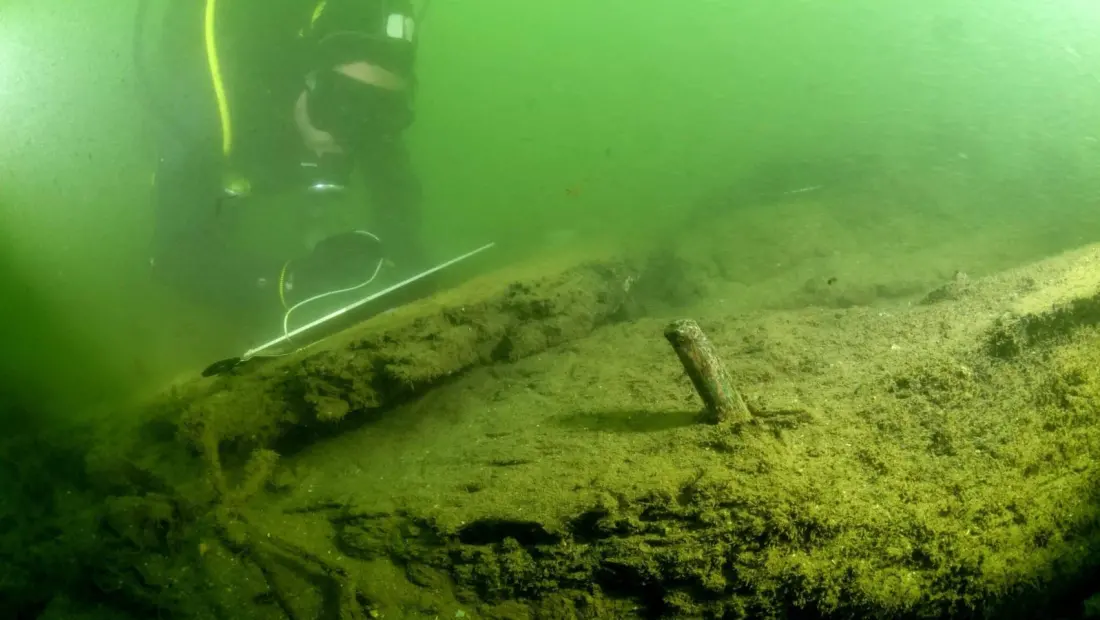
Somewhere under the Arade River near Ferragudo, in Portugal's Algarve, lies the wooden hull of a ship nobody can identify. Archaeologists believe it was built in the 19th century — its construction matches techniques documented on vessels from that era worldwide — but its origin, purpose and the reason it sank remain unknown. As CNANS coordinator José Bettencourt put it: this was a time of global shipping, and researchers genuinely have no idea where the ship came from.
The wreck sits at a site dubbed GEO 5, on the left side of the river's navigation channel. It featured in the first campaign of MUSA, a new €3.475 million project (with €2 million of EU funding) that brings together Portimão and Lagoa councils, national heritage bodies, the University of Algarve and others to study and open up the river's underwater heritage. This year's three-week field campaign used photography, video and photogrammetry to build detailed 3D models, and unusually good visibility let researchers examine the ship's structure in more detail than ever before. Most of the upper hull has eroded away, but the bottom is well preserved, buried in river sediment.
So far all work has been non-intrusive — just recording what's visible. That changes in 2027, when a major May-to-October campaign will carry out trial excavations at GEO 5 and other sites. The team hopes to recover cargo or equipment that reveals whether the vessel was a merchant trader, and whether it points to a trading link between the Algarve and somewhere far beyond. There's urgency: fishing nets and cables have been found around the wreck, and researchers may ultimately choose between preserving it in place or excavating it fully.
The mystery ship is just one thread. The Arade's anchorage areas hold at least 2,000 years of material — Roman amphorae, Iron Age objects recovered during 1970s dredging, a 16th-century wreck (Arade 1), and the Portuguese Navy gunboat Faro, which sank off Alvor in 1912. Finds will be conserved at Portimão Museum and CNANS, then displayed at two planned venues: a future museum at Mexilhoeira da Carregação in Lagoa and a new centre at the Fortaleza de Santa Catarina in Portimão. Large iron artefacts like anchors and cannons may go into an underwater reserve that divers can actually visit.
Why should travellers care? Because this quiet stretch of river between Portimão and the sea is quietly becoming one of the Algarve's more unusual heritage stories — and divers may eventually get a purpose-built underwater site to explore, beyond the region's beaches and golf courses. If you're in the Portimão area, the existing museum already stages exhibitions, and the new centres plus 360-degree virtual tours should make this submerged history accessible even if you never get wet.