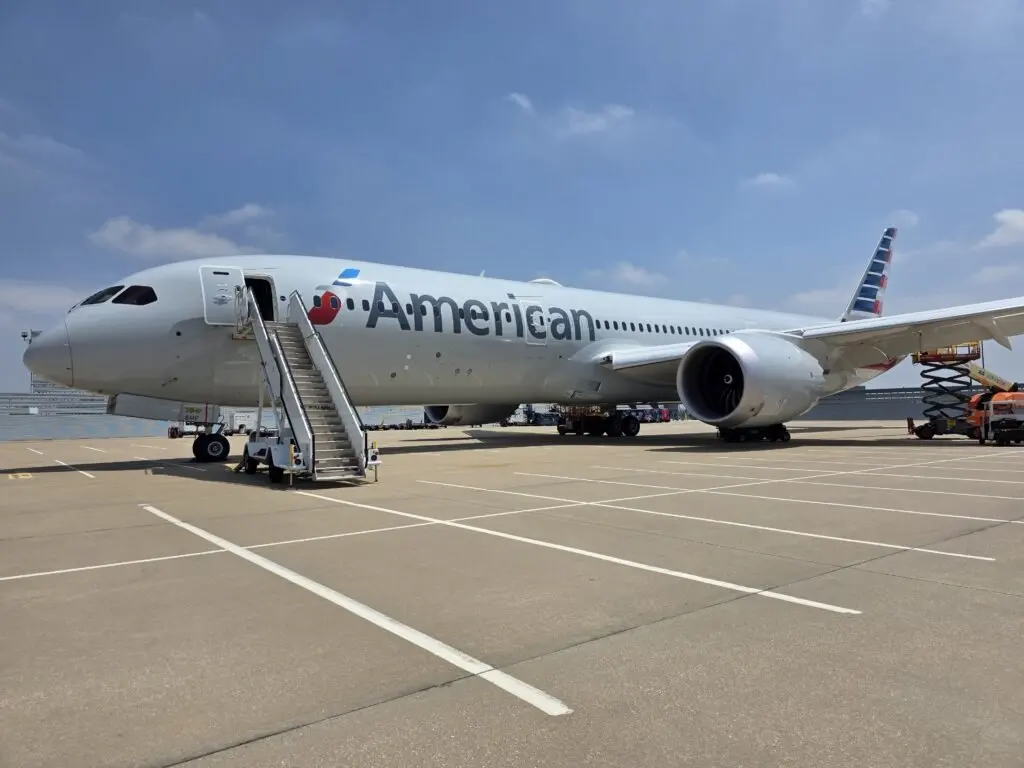
American Airlines is expected to announce its next widebody aircraft order this week, most likely alongside its quarterly earnings on Thursday morning. The numbers being discussed: somewhere between 50 and 70 planes, a mix of firm orders and options, with deliveries starting around 2030.
The interesting part isn't just the size of the order — it's what American's chief commercial officer Nat Pieper seems to want to do with the aircraft. He has hinted at rebuilding Los Angeles into a proper Pacific gateway for the airline, which would mean more nonstop flights to Asia and Oceania. He's also called the Airbus A330 family the "perfect Atlantic airplane," so Europe and South America routes will keep getting plenty of capacity too.
So which planes? Boeing's 787-9 and 787-10 and Airbus's A350-900 and A350-1000 are the candidates in play, according to recent reporting — notably not the A330-900 that earlier analysis favoured. The 787-9 is the safe pick since American already flies it, with pilots and maintenance in place. The bigger A350-1000 is the boldest: Japan Airlines fits just 239 passengers into one, with six first class suites, 54 business seats and 24 premium economy rows. American's newest 787-9s carry 244. If American ordered the A350-1000, the thinking goes, it would use the extra floor space for premium cabins rather than cramming in more economy seats — think Tokyo, Sydney and long Pacific routes out of Los Angeles, while the refurbished 777-300ERs (70 business suites, 44 premium economy seats each) dominate Heathrow flying.
Boeing's case got stronger in March, when higher takeoff weights for the 787-9 and 787-10 were certified, giving airlines extra range or payload. The 777X, by contrast, looks unlikely — it's a brand-new, still-delayed programme, and Pieper prefers letting other airlines iron out a new type's early problems before committing.
For travellers, the takeaway is straightforward: more long-haul capacity from around 2030, and quite possibly a lot more business class and premium economy inventory on transpacific routes. American's widebody fleet is currently all-Boeing, but the company has signalled it would switch to Airbus if the economics justify it — CEO Robert Isom has said manufacturers will find planes for American even with industry-wide order backlogs stretching years. If you fly premium cabins across the Pacific or the Atlantic, competition between Boeing and Airbus for this order could ultimately mean newer cabins, more lie-flat seats and better redemption availability on competitive routes.