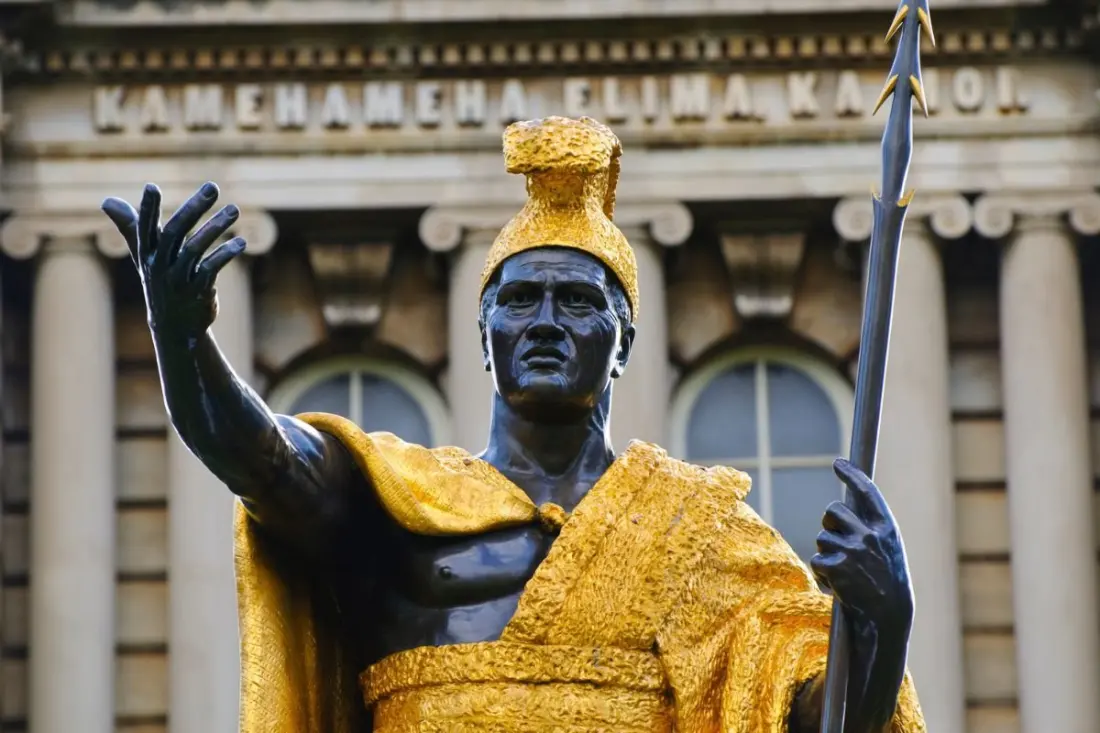
Long before Hawaiʻi was a U.S. state, it was an independent kingdom — the only American state that can make that claim. King Kamehameha I unified the islands in 1810, and for more than eight decades his successors ruled a sovereign nation that, by the standards of its day, was remarkably modern. Visitors who only come for the beaches are often surprised to find the monarchy's fingerprints on everything from the state's hospitals to its street names.
The royals were serious about public welfare. Queen Emma and Kamehameha IV founded Queen's Hospital in 1859 to care for all residents; today Queen's Health System runs four hospitals and more than 70 specialty care locations. Queen Kapiʻolani opened a maternity home for Hawaiian mothers in 1890, now the Kapiʻolani Medical Center for Women & Children. King Kamehameha III created a Board of Health in 1850 — nearly two decades before any U.S. state did the same. The kingdom was progressive on gender, too: women held roles as judges and members of the House of Nobles long before American women could vote, and Queen Liliʻuokalani became the kingdom's first and only queen regnant in 1891.
Education was another priority. Liliʻuokalani founded a society to school impoverished Hawaiian girls and later a trust for orphaned children that still operates. Princess Bernice Pauahi Bishop's estate funded Kamehameha Schools, which opened for boys in 1887 and now runs over 30 preschools and three K-12 campuses across the islands.
The best place to see this history up close is ʻIolani Palace in Downtown Honolulu — the only royal palace on U.S. soil. Built for King Kalākaua between 1879 and 1882 in an 'American Florentine' style, it was a marvel of its age, with flush toilets, in-house telephones and electric lighting installed before the White House had any. Guided tours reveal both the European ambition and the distinctly Hawaiian character of the monarchy. Kalākaua himself deserves a spot in your itinerary notes: nicknamed the 'Merrie Monarch,' he revived hula, which missionaries had banned, and the famous hula competition in Hilo is named in his honour. He even kept volunteering as a firefighter after taking the throne.
Travellers will find the monarchy's memory woven into everyday Hawaiʻi. The state is one of only two with two official languages — English and ʻōlelo Hawaiʻi. Honolulu's Lunalilo Freeway and Waikīkī's Kalākaua Avenue bear royal names, as do the Queen Kapiʻolani Hotel and ʻAlohilani Resort, built on land once owned by Queen Liliʻuokalani. The kingdom ended in 1893 with the overthrow of the monarchy, and the U.S. annexed Hawaiʻi in 1898 — history that still shapes local identity, so it's worth engaging with it respectfully rather than treating it as trivia.
For history-minded travellers, pairing a palace tour in Honolulu with a Hilo trip during Merrie Monarch season (Easter week) makes for a genuinely different Hawaiʻi holiday.