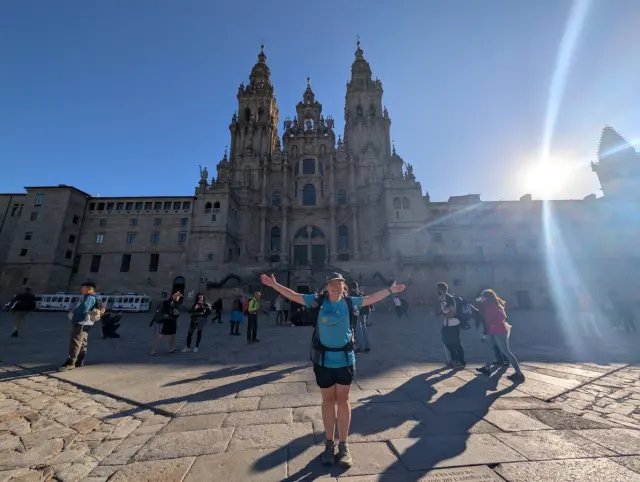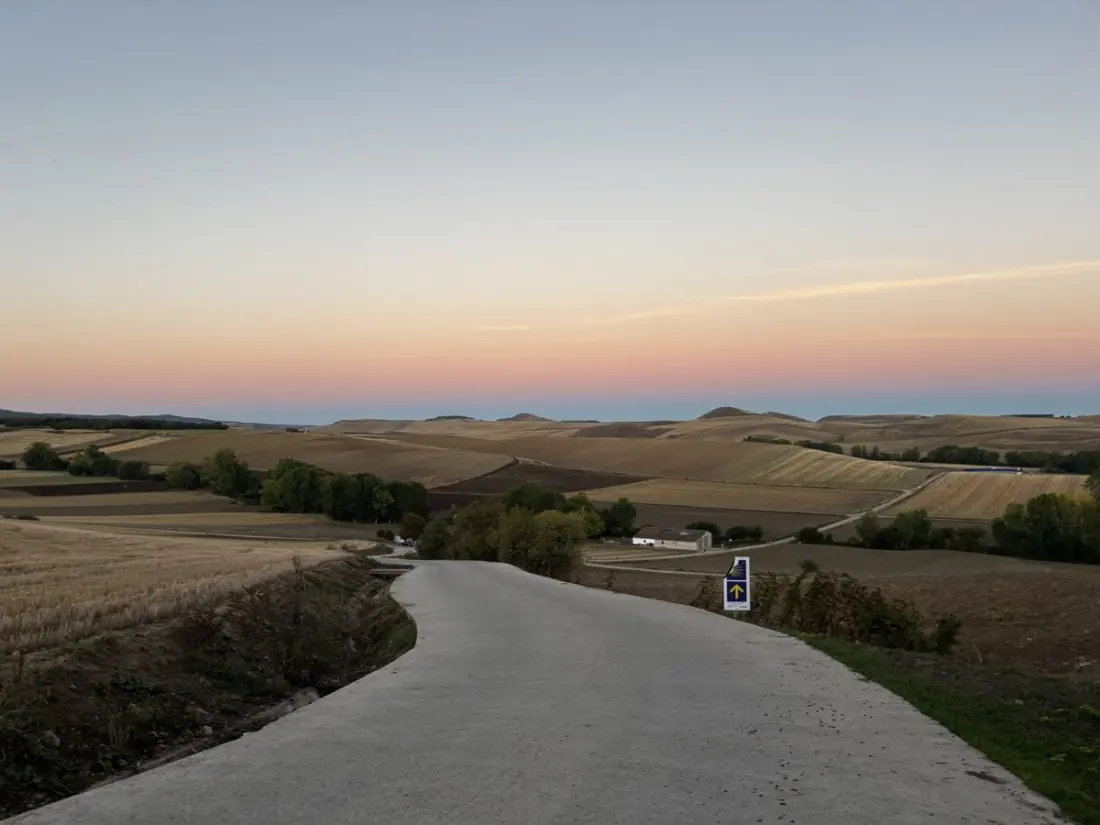
Day 17 on the Camino de Santiago starts before dawn, and that's exactly the point. Our pilgrim-diary writer, walking somewhere between Grañón and Belorado in northern Spain's Castilla y León, has settled into a rhythm many walkers come to swear by: leaving in darkness, headlamp on, walking alone under the stars before the day's heat and chatter begin. Earplugs help too — shared albergue dorms come with a full orchestra of snoring, which one busy hostel host has learned to hear as a comfort rather than an annoyance.
The morning delivered one of those small, perfect Camino moments. Arriving in Grañón just as the sun came up, a coffee from a roadside food truck, drunk on the steps while the light spread across the meseta. Simple, cheap, unforgettable.
The day's route rolled through dusty brown hills with zero shade — bring a hat and start early if you walk this stretch in warm months. But the middle of the day had its rewards. First, a panadería where the smell of fresh bread pulled the writer off the trail, resulting in a croissant roughly the size of a human head. Then came the real find: the Inner Camino House, an unofficial stop marked only by a hand-painted "drinks & snacks" sign. It's not a business — it's a couple's home, run purely on donations, where a husband who has walked the Camino four times (he and his wife met and honeymooned on the trail) invites pilgrims to help themselves to fruit, sandwiches, and pastries, then clean up after themselves. Stories like this are common on the Camino, and they're a big part of why people keep coming back.
The afternoon heat turned pleasantly delirious — the writer's Italian walking companion offered the day's wisdom: "il cammino ha bisogno di persone un po' pazze," the road needs people who are a little crazy. The group finally rolled into Belorado and the Hostel de Santiago, an albergue with a restaurant, bar, and pool. In Camino terms, that's paradise. The evening filled up with groceries, a pharmacy run, and time with a rotating international crew of Italians, Brits, and Australians.
Why should a traveller care? Because this is what the Camino actually is. It's not a hiking challenge so much as a moving village: strangers communicating across three languages, locals feeding walkers for free, and a daily structure — early solitude, shared meals, a pool at the end — that people describe as the most balanced they've felt in years. If you've been considering the Camino Francés, the stretch through Grañón and Belorado is a good example of why the walk earns its reputation. It's about 20-25km days, a bed every night, and the occasional croissant the size of your head.