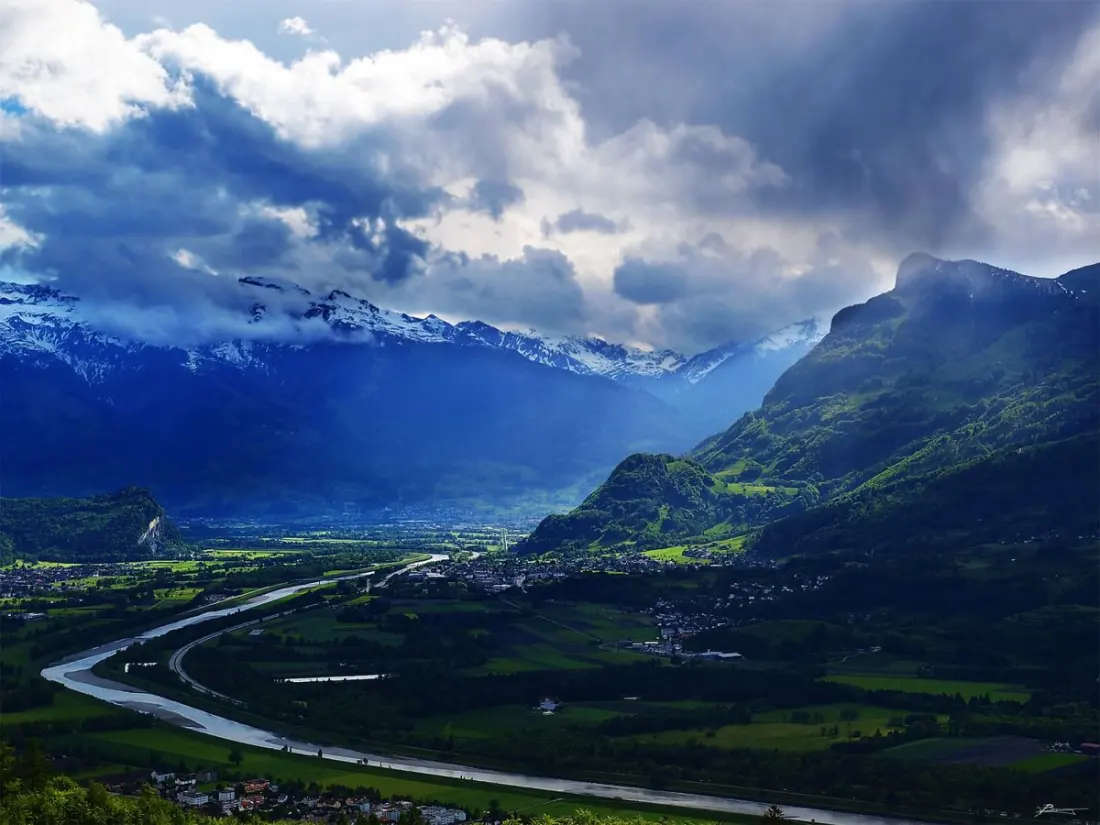
Tucked between Switzerland and Austria, Liechtenstein covers just 160.5 square kilometres and counts barely 41,000 residents — yet by the end of 2025 it had around 43,275 jobs. More people work in the country than actually live there, with 57.2% of its workforce commuting in daily from across the borders. That single quirk explains a lot about how this pint-sized principality became one of Europe's richest places.
The economy is broader than its reputation suggests. Yes, finance matters — financial services made up 36.5% of corporate income tax revenue in 2024, and the princely family's own LGT Group is a serious international private banking player. But roughly 26% of resident workers are in industry, mostly high-value manufacturing, precision products and technology. The IMF points to very high per capita income, low unemployment and virtually no public debt. Companies pay a 12.5% corporate tax rate — not the tax haven caricature — and since 2024 large multinationals fall under the OECD's 15% global minimum tax.
Money, though, isn't the main reason to visit. Vaduz, the capital, is dominated by the castle that overlooks it and remains home to the ruling family — Prince Hans-Adam II on the throne since 1989, with his son Alois acting as regent since 2004. The family's fortune, estimated by BILANZ at around 10.5 billion Swiss francs, includes one of Europe's great private art collections, with masterpieces accumulated over centuries. Parts of the collection rotate through public exhibitions in Vaduz, which is reason enough for art lovers to detour here.
The everyday atmosphere is the bigger surprise. This is a country so quiet that its entire prison held 11 people in early 2025, with some sentences served across the border in Austria or Switzerland. Crime is low by any measure, and life runs at an Alpine pace: small municipalities, short distances, mountains on all sides. You can walk much of Vaduz in an afternoon, pairing the Kunstmuseum and the postal museum with vineyard paths on the hillside below the castle.
Practically, Liechtenstein works best as part of a Switzerland–Austria itinerary. It uses the Swiss franc, has no airport of its own, and is about 15 minutes by bus from Switzerland's Sargans or Buchs railway stations, or a short hop from Feldkirch in Austria. Hikers can tackle the Liechtenstein Trail, a 75km route threading all eleven municipalities. For anyone curious how wealth, monarchy and small-town calm can coexist in one of the world's smallest states, a day or two here answers the question better than any statistic — though the statistics, admittedly, are pretty remarkable.
Story via Colombia One.