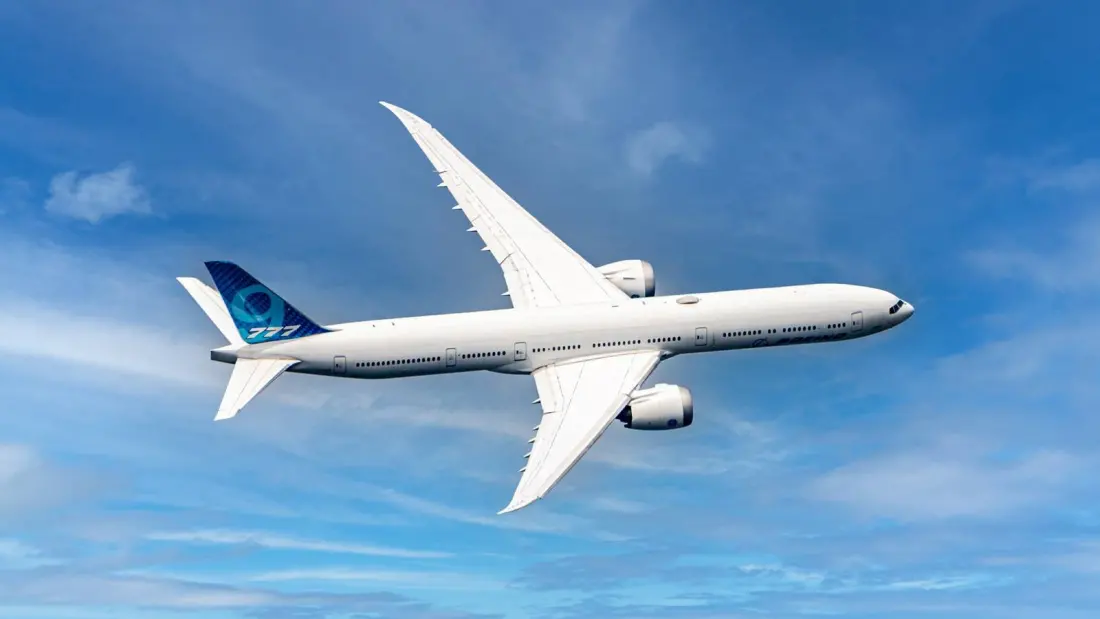
The Boeing 777X was meant to be flying passengers by 2020. Instead, first deliveries are now pencilled in for 2027, and the programme has become one of the costliest development sagas in aerospace history. In the third quarter of 2025 alone, Boeing took a $4.9 billion charge on the jet, with cumulative write-downs reportedly reaching around $15 billion. Early-built test airframes have needed such extensive rework to meet final certification standards that some were simply dismantled and recycled rather than upgraded.
And yet airlines are not walking away. They're ordering more. Emirates used the 2025 Dubai Airshow to add 65 more 777-9s to its books, bringing its total commitment to a staggering 270 aircraft, with deliveries expected to run through 2038. That's despite president Tim Clark's very public frustration — he has even refused the first batch of ten production frames because of the rework they'd require. Qatar Airways, ANA and other long-haul giants are holding firm too.
Why the loyalty? Simple: there's nothing else like it. The 777-9 seats up to 450 passengers in a two-class layout — roughly 57 more than an Airbus A350-1000. Since Airbus shut the A380 line, no manufacturer offers a twinjet in that capacity tier, so carriers replacing 777-300ERs and 747-400s on dense trunk routes have no real alternative. Downsizing would mean sacrificing seats on their most profitable routes.
Slot constraints make the maths even sharper. Hubs like London Heathrow, Tokyo Haneda and Dubai International run at nearly full runway capacity during peak periods, so airlines can't just add flights — they need bigger planes per slot. Landing rights at these airports are worth tens of millions of dollars, and swapping one planned 777-9 for several smaller jets makes little commercial sense.
The jet itself has genuine selling points. Its General Electric GE9X engines — the largest and most powerful commercial turbofans ever built — deliver a 10–12% fuel burn improvement over previous-generation widebodies. And Boeing's clever folding wingtip system, an industry first, lets the 71.75-metre wingspan compress to Code E gate dimensions on the ground, so it can dock at standard airport gates without infrastructure upgrades.
For travellers, this matters quietly but significantly. The 777X is set to become the backbone of long-haul flying into the 2030s, succeeding the 747 and A380 as those types retire. Frequent flyers on Gulf, Asian and European trunk routes can expect more seats per flight, newer cabins and lower-emission aircraft — eventually. The catch, as always with the 777X, is the timeline. Even Emirates' patience has limits, and Boeing still needs final regulatory clearance before 2027 deliveries can begin.
The story of the 777X is really a story about how airline fleet planning works on 30-year horizons, not quarterly earnings cycles. Seven years of delays and billions in overruns haven't dented demand because, for the world's mega-hub carriers, waiting is genuinely the cheaper option.