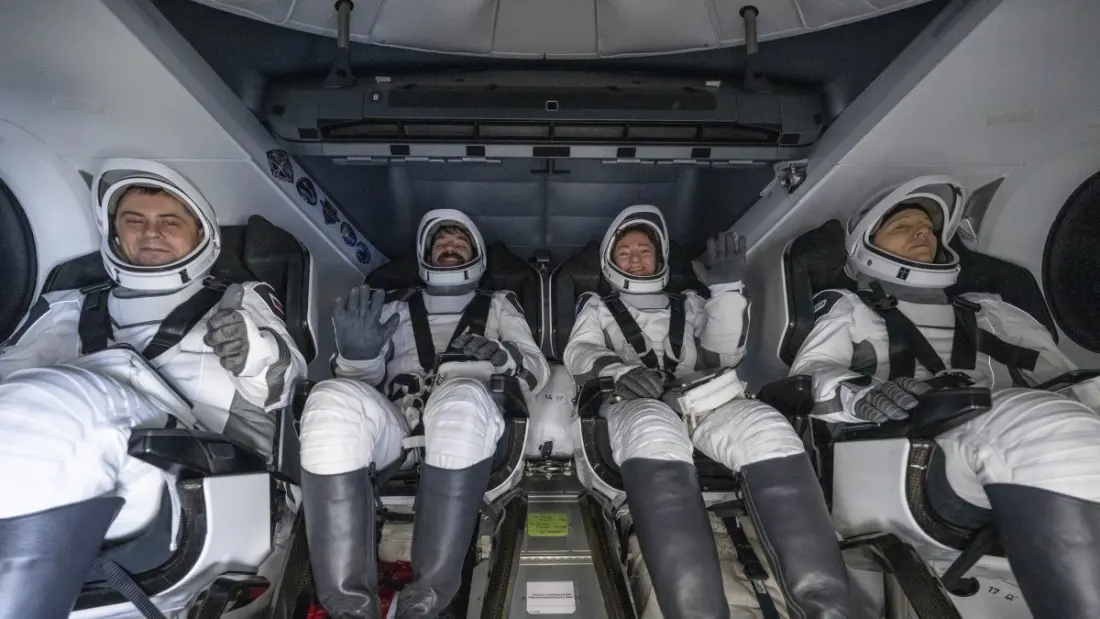
Four astronauts are back on Earth after an eight-month stay on the International Space Station, with SpaceX easing their capsule into the Pacific off the coast of Los Angeles on a Thursday in early October 2026.
The crew — NASA's Jessica Meir and Jack Hathaway, France's Sophie Adenot and Russia's Andrey Fedyaev — left the station on Wednesday and were out of the capsule within an hour of splashdown, waving from SpaceX's recovery ship before a helicopter ride to shore and onward travel to Houston. Their homecoming had been delayed about three weeks because their replacements' capsule needed repairs.
Their mission had an unusual start, too. They launched in February as a rushed replacement crew after NASA's Mike Fincke, now retired, fell ill in orbit — the agency's first medical evacuation in 65 years of human spaceflight. The four station occupants they replaced came home early.
The months in between were busy. Meir completed four spacewalks and Adenot three, all part of maintenance and upgrades on the 28-year-old station. There were lighter moments as well: the crew threw a dance party, ran cooking demonstrations in aprons and chef's hats, and Meir even joined the Boston Pops by piccolo for a Fourth of July concert marking America's 250th birthday — performed, of course, from orbit. They also watched the Artemis II astronauts fly around the moon during their stay.
Hathaway's naval aviator mustache became an in-flight talking point; he grew it as a nod to his Navy ties and reported it was no harder to groom in weightlessness than on Earth. Enough ground controllers grew mustaches in solidarity that he mused it had become "a little bit of a brand."
Once down, the astronauts were keenly anticipating simple pleasures: fresh air, a proper shower, and for Adenot, getting back into water sports. Meir radioed that the crew was thrilled to be home after an incredible mission, while admitting they would miss the views of the planet below.
Seven astronauts from the U.S., Russia and Canada remain aboard the station, which has hosted 298 visitors from 26 countries since 2000, according to NASA.
Why does this matter to travellers? Human spaceflight is edging closer to the tourism mainstream, and splashdowns off the California coast are becoming a genuine spectator event — with more commercial missions expected, watching a capsule return near Los Angeles could soon sit alongside rocket launches at Cape Canaveral as a travel-worthy spectacle.
First reported by Associated Press via Daily Sabah Travel.