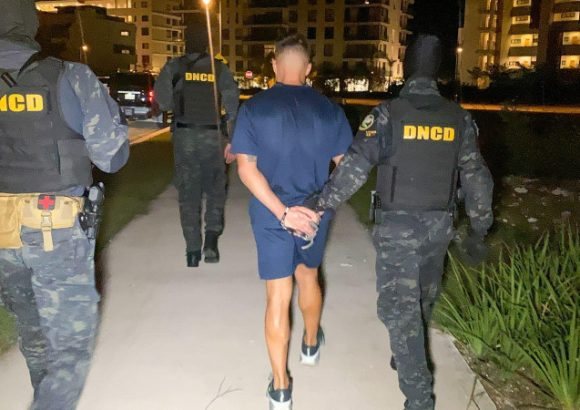
A 41-year-old Spaniard wanted back home for allegedly running a drug trafficking and money laundering network was arrested in Punta Cana, in the Dominican Republic's La Altagracia province, after a coordinated sweep spanning several countries.
The man, identified as Jonathan Yera Pozo, was picked up during a raid on a property in the Punta Cana municipal district. Dominican authorities acted on an extradition request from Spain, where the Supreme Court ordered his arrest. The operation, dubbed "Fast Lap," involved an unusual amount of international muscle: Spain's Civil Guard and national police, the US Drug Enforcement Administration, Europol and the Global Drug Information Network all played a part, alongside the Dominican National Directorate for Drug Control (DNCD) and the Public Prosecutor's Office. In total, 38 simultaneous searches were carried out across multiple countries to break up the network.
What investigators found during the Punta Cana raid reads like a snapshot of modern organised crime finances. Alongside phones, laptops and tablets, officers seized three Ledger cryptocurrency cold wallets, seven luxury watches from brands including Rolex, Hublot and Richard Mille, assorted jewellery, a Mercedes-Benz GLS 580 4Matic, bank cards, property and loan contracts, and about US$11,500 in cash plus Dominican pesos worth roughly RD$79,815. The detainee remains in custody pending extradition proceedings to Spain.
For holidaymakers, the takeaway is mostly reassuring rather than alarming. Punta Cana is the Dominican Republic's flagship resort strip, drawing millions of visitors a year, and this arrest targeted a foreign fugitive living in the area, not tourists or tourist zones. What it does show is that Dominican authorities are actively working with European and American agencies to pursue organised crime on the island — cooperation they present as a priority for protecting the country's reputation as a destination. Travellers heading to the east coast won't notice any practical change, but the story is a useful reminder of the broader context behind resort-glamour destinations: high-end real estate, luxury goods and international residents are exactly what money launderers seek out, and enforcement is catching up.
If anything, this is the kind of headline to register and move on from — a law-enforcement success in a place most visitors experience only as beaches, all-inclusive resorts and airport transfers. The Dominican Republic continues to position itself as both a playground and a partner in international policing, and Punta Cana remains very much open for business.
Story via Dominican Today.