Kazakhstan is having a moment. Within the space of a few weeks, the country has landed its first-ever state visit by a European monarch and won UNESCO recognition for a set of extraordinary cave mosques carved into the cliffs of Mangystau. Both stories point the same way: Central Asia's largest country is moving up a lot of wish lists.
King Philippe and Queen Mathilde of Belgium arrive on October 12 for a three-day visit covering Astana and Almaty — the first state visit by a European monarch to any Central Asian nation. They're bringing serious company: roughly 110 people, including four ministers, 25 business executives and seven university rectors. The agenda leans heavily on trade — critical raw materials, energy, transport links and the Middle Corridor, the freight route that runs from Asia through Kazakhstan, the Caspian Sea, the South Caucasus and Türkiye. That corridor has already grown fivefold in six years, from 800,000 to 4.1 million tons of annual freight, with a 10-million-ton target in sight.
For travellers, the more immediately appealing news is the UNESCO listing. Five rock-hewn mosques and their sacred sites, built between the 12th and 18th centuries, were inscribed at the World Heritage Committee's session in Busan on July 25. They're named after revered Sufi figures — Beket-Ata, Shopan-Ata, Karaman-Ata, Shakpak-Ata and Sultan-Epe — and sit in Mangystau, a region in western Kazakhstan known for stark, almost lunar scenery. The complexes layer centuries of Sufi tradition over older beliefs, and visiting them means going properly off the beaten track: this is one of the least-visited corners of the country, which is precisely the appeal.
There's also an environmental footnote worth knowing if you're eyeing the Caspian coast. Japan is funding a $3 million UNDP project, launched in Aktau on October 5, to monitor the shrinking sea. The shallow northern basin — vital habitat for Caspian seals and sturgeon — is most at risk, and falling water levels are already complicating shipping and port operations. It's a reminder that the Caspian shoreline you visit may look quite different in a decade.
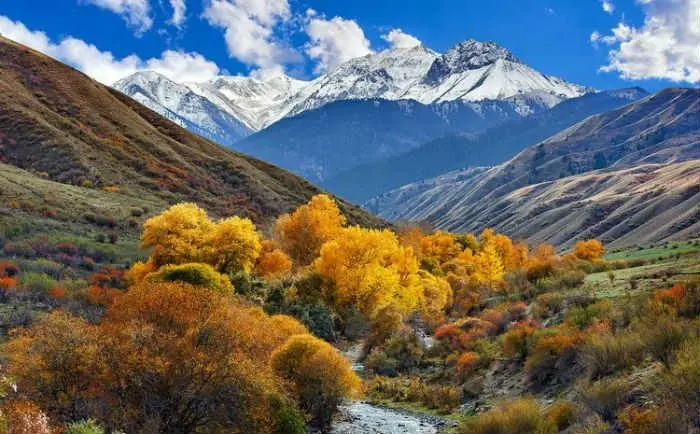
Who should care? If you like being somewhere before the crowds arrive, Mangystau's new UNESCO status makes it the strongest argument yet to plan a trip. Getting there usually means flying into Aktau, and the mosques require a sturdy vehicle and a local guide. Meanwhile, the royal visit signals that Kazakhstan's cities — Astana's futuristic architecture, Almaty's mountain-backed food scene — will see growing flight connections and hotel investment as European ties deepen. Watch this space.
Story reported by The Astana Times.