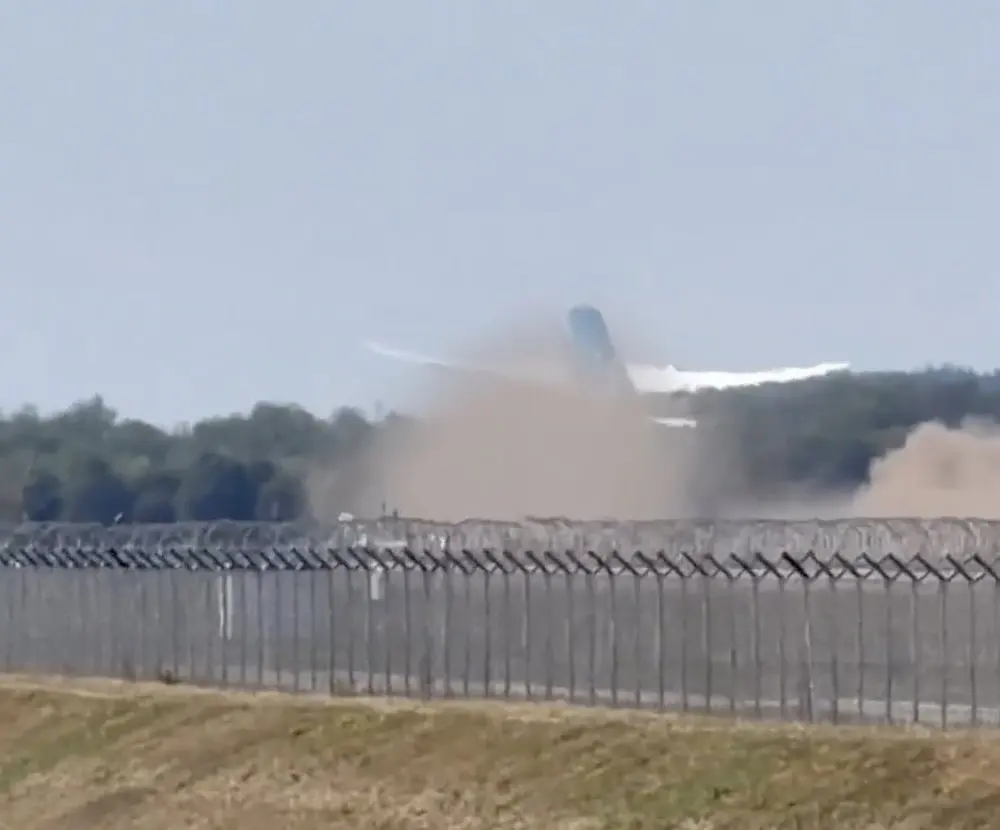
A Vietnam Airlines Boeing 787-9 nearly came to grief leaving Munich on August 15, 2026, and the first official explanation of what happened is, if anything, more puzzling than the incident itself.
The aircraft, carrying 287 people, rolled and rolled down one of Munich's longest runways — over 13,000 feet — without gaining the speed it needed. It clipped runway lights, scraped off the ground only barely, triggered its stall protection with the slats auto-extending, and limped back to Munich for an emergency landing. Nobody was hurt, but the plane has been grounded there ever since.
Now the German Federal Bureau of Aircraft Accident Investigation (BFU) has published its preliminary report, and the recorded data points to something that should never happen during a takeoff: repeated braking at the captain's pedals. The flight recorder picked up rudder inputs and movement of both brake pedals on the left (captain's) seat seconds after the takeoff roll began. Roughly a minute in, the Brake System Control Unit logged a maximum brake command of about 27% on the left side and 17% on the right. Seconds after that, the crew tried to rotate at 163 knots — well below their calculated rotation speed of 175 knots.
Why this is so strange: on a jet, rudder pedals and brakes share the same footwell, and pilots use the rudder to steer down the centreline during takeoff while keeping their feet off the brakes entirely. Deliberate braking mid-roll would only make sense if a crew were aborting. And this was the captain's seat — the more experienced pilot — not the first officer's.
The report documents what happened but not why, and the open questions are uncomfortable. Could the pedals have malfunctioned and braked on their own? If so, why didn't the crew notice the lack of acceleration and reject the takeoff early? And the awkward possibility nobody wants to raise: was the braking intentional? The report draws no conclusions on that, but comparisons are already being drawn to the fatal Air India 787 crash at Ahmedabad in 2025 (AI171), where power was cut seconds after takeoff — also a 787, also a loss of performance at the worst possible moment.
For now, the BFU's findings stop at the data. The final report will presumably try to answer whether this was a technical fault, human confusion, or something else entirely.
Why a traveller should care: 287 people walked away from what could have been a catastrophic accident, and the safety system worked — the crew got the plane back on the ground. Vietnam Airlines flies 787s on routes to and from Europe, including Munich and Frankfurt, so it's a story worth following if you're booked with them, though there's no indication of any ongoing risk to passengers. Final findings will be the real test.