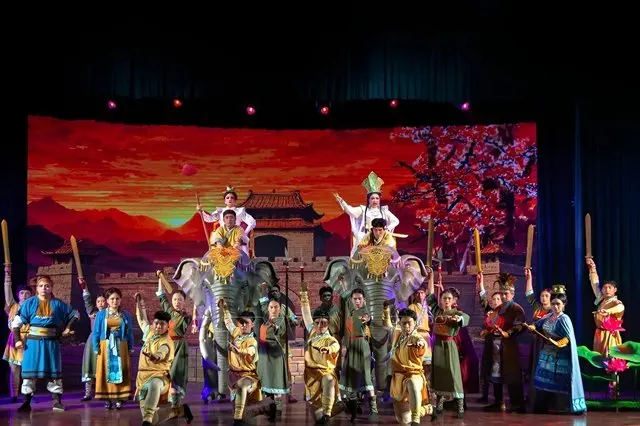
If your Hanoi itinerary already includes the Temple of Literature, there's a fresh reason to go before the year ends. A new exhibition, Patron Saints and Eminent Scholars of Việt Nam, is running at the heritage site until December 5, and it's the first show of its kind to tackle an unusual angle: scholars who founded entire trades.
The timing matters. The temple — Vietnam's first university, founded in 1076 — hits its 950th anniversary next year, and this show is part of the build-up, alongside the 16-day Hanoi Creative Design Festival starting November 13.
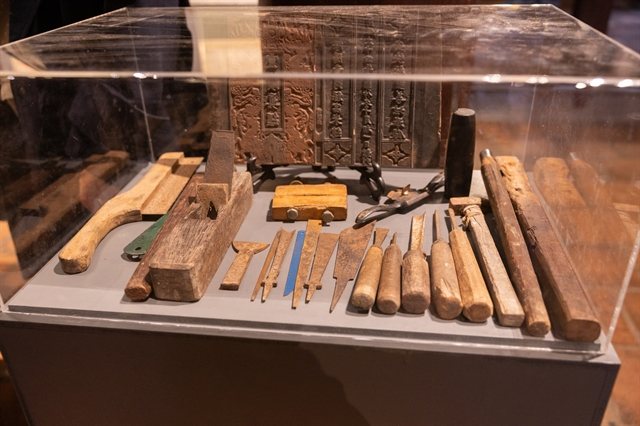
The exhibition profiles eight scholars whose names appear on the temple's famous stone stelae and who were later revered as patron saints of traditional crafts. Think Lương Như Hộc, the father of woodblock printing; Phạm Đôn Lễ, linked to sedge mat weaving; Trần Lư, honoured through traditional sơn ta lacquerwork; and Lê Công Hành, associated with embroidery. There's also Nguyễn Thời Trung (leather tanning), Nguyễn Chính (tin plating), Phùng Khắc Khoan (gauze weaving) and Nguyễn Quang Tán (oil pressing).
A standalone section celebrates Đặng Huy Trứ, the Nguyễn Dynasty official who opened Vietnam's first locally owned photography studio in Hanoi in 1869 — a bold move at a time when Western photographic technology was met with scepticism. His story is told through photography from artist Nguyễn Thế Sơn, photographer Phạm Duy and students from Vietnam National University.
What makes this worth your time is the format. Instead of dry biographical panels, the stories unfold across nine zones through live craft demonstrations and contemporary art — woodcarving, lacquer, embroidery, sculpture and installations. Artisans from Nga Sơn Village in Thanh Hóa Province show off their mat-weaving skills in person, while woodblock printing specialists demonstrate techniques on the spot. Artist Trần Hậu Yên Thế has even created mica-engraved stelae that echo the temple's ancient stone tablets in a modern visual language.
Curator Nguyễn Thế Sơn frames the show as a dialogue between historical documents, traditional crafts and contemporary art — treating heritage as a living resource rather than a museum piece.
For travellers, this is a rare chance to see master artisans working inside one of Hanoi's most significant heritage sites, and to understand why the temple matters beyond the postcard view of its courtyards and stelae. The exhibition is free to explore as part of a temple visit, and it runs until December 5 at 58 Quốc Tử Giám Street in Văn Miếu Ward. Pair it with a wander through the Old Quarter afterwards — many of the crafts on display, from lacquerware to embroidery, are still sold in its workshops today.