British Airways is about to make its biggest aircraft feel a lot less crowded — at least in the front half. As part of a major refurbishment, each of its Airbus A380 superjumbos will drop from 469 seats to 417, a cut of 52 seats per plane. That might look like madness for an airline based at Heathrow, where take-off and landing slots are scarce and every seat counts. The numbers behind the change suggest otherwise.
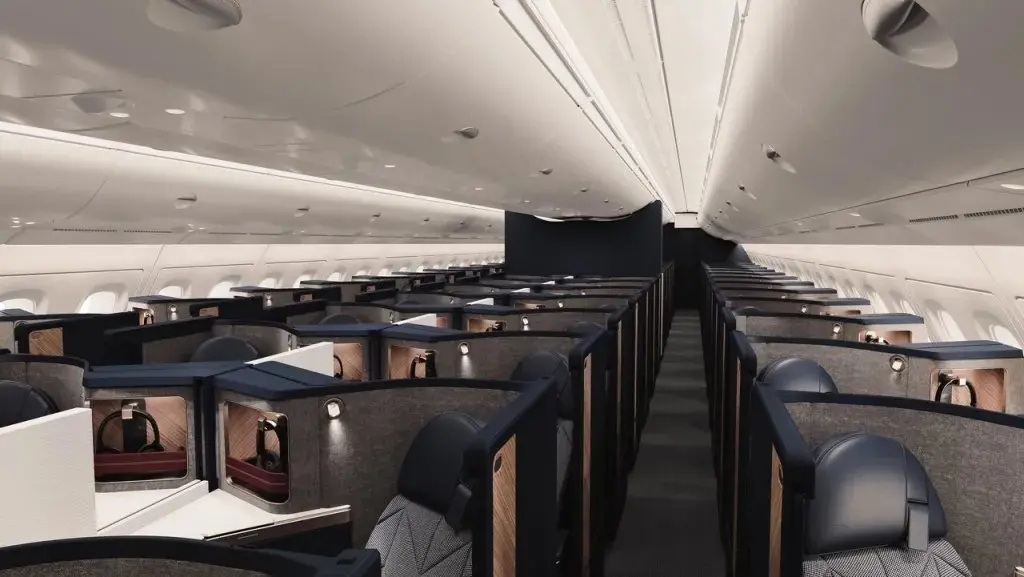
The biggest shrinkage is at the back. Economy drops by 88 seats — roughly 30% — leaving just 215 in the main cabin. But the space doesn't vanish; it moves up the aircraft. The entire upper deck will be handed over to Club World, creating a business-class cabin of 106 Club Suites that BA claims will be the largest of its kind in the world.
The more interesting story, though, might be premium economy. World Traveller Plus gains 29 seats per aircraft, jumping to 84 — an increase of more than 50%. That's the cabin where a lot of travellers actually live: extra legroom, better food and a wider seat without the eye-watering jump to business-class fares. First Class slips slightly from 14 suites to 12, a minor trim compared with the reshuffle elsewhere.
Why does this make financial sense? On a slot-constrained route network, an airline can't easily add more flights into Heathrow, so the only way to grow revenue is to earn more per flight. Premium cabins sell at far higher fares than economy, and demand for them has been strong in recent years. Trading dozens of economy seats for premium ones means each A380 departure can earn more even with fewer passengers on board. Expect rivals watching from other Heathrow carriers to take notes.
For travellers, the practical effect is mixed. If you always fly long-haul in economy, you'll find fewer seats on BA's A380 routes — potentially tighter availability and pricier peak fares as supply shrinks. If you pay for premium economy or business, your odds of using points or finding a sale fare should improve, and the new Club Suites on the upper deck will be among the roomiest business products in the sky. It's also a sign of where long-haul flying is heading generally: fewer, better seats up front, and airlines increasingly happy to leave economy volume behind.
Who should care? Anyone booking BA long-haul over the next couple of years — especially on flagship A380 routes — and anyone tracking whether other airlines follow suit with similar premium-heavy refits.