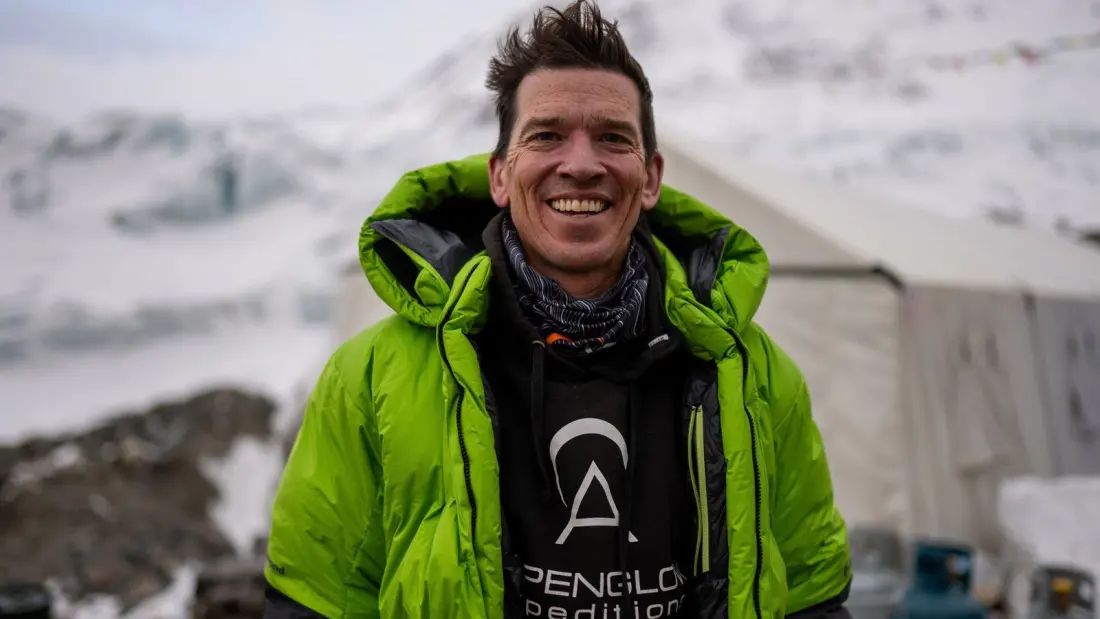
For over a decade, American guide Adrian Ballinger refused to run Everest expeditions from the Nepal side, calling it ethically indefensible. His company, Alpenglow Expeditions, switched to the Tibetan north side back in 2014. Now he's planning a return to Nepal — and the reason is a fleet of cargo drones.
The core problem was always the Khumbu Icefall, a crumbling stretch of glacier between Base Camp and Camp I where seracs topple and avalanches sweep the route. Every spring, Sherpa crews cross it dozens of times to shuttle food, tents and oxygen uphill. Ballinger's argument was blunt: run 20 expeditions with 15 to 20 Sherpas a year, and you're gambling with a lot of lives. Deaths, crowds, trash and human waste on the South Col route only strengthened his case.
The north side had perks — fewer people, and a Base Camp you can drive to. But it came with a catch: China can shut the mountain at will. Beijing closed Everest for the 2008 Olympic torch relay, and since 2016 it has closed the peak five more times, including a pandemic shutdown that ran through 2023. The cruelest blow came in March 2026, when China cancelled the season after operators had already committed wages. Ballinger paid his Sherpas and guides anyway, refunded or deferred his clients — a third deferred to 2027, two-thirds rebooked in Nepal — and says he's cancelled six of the last 20 seasons. Running trips on both sides of the border is his hedge against the next sudden closure.
What really changed his mind about Nepal's ethics, though, was watching technology work. In 2026, a Nepali company called Airlift Technologies began flying heavy-duty cargo drones from Base Camp at 17,500 feet over the icefall to Camp I at 19,900 feet. After two seasons of test flights — including a 2025 run carrying an oxygen canister and gear bags — the service matured to the point that several outfitters leaned on it heavily. Ballinger sent his lead guide, Esteban "Topo" Mena, to scout the operation, and came away convinced Alpenglow can replace all of its Sherpa carries through the icefall with drones. Each flight is one fewer human crossing. It's not friction-free — Nepal grounded the drones for four unexplained days in 2026, and piloting them takes a two-person relay, with a handoff mid-route between pilots at Base Camp and Camp I — but Ballinger calls drones a stepping stone toward making the icefall manageable long term.
For travellers eyeing Everest, this matters beyond the summit push. The Nepal route is becoming more attractive for reputable operators precisely because the deadliest job on the mountain may no longer need to be done by people. Anyone booking a guided expedition in the next few years should ask operators how they're moving loads through the icefall — the answer increasingly separates the forward-thinking companies from the rest.
Outside Online