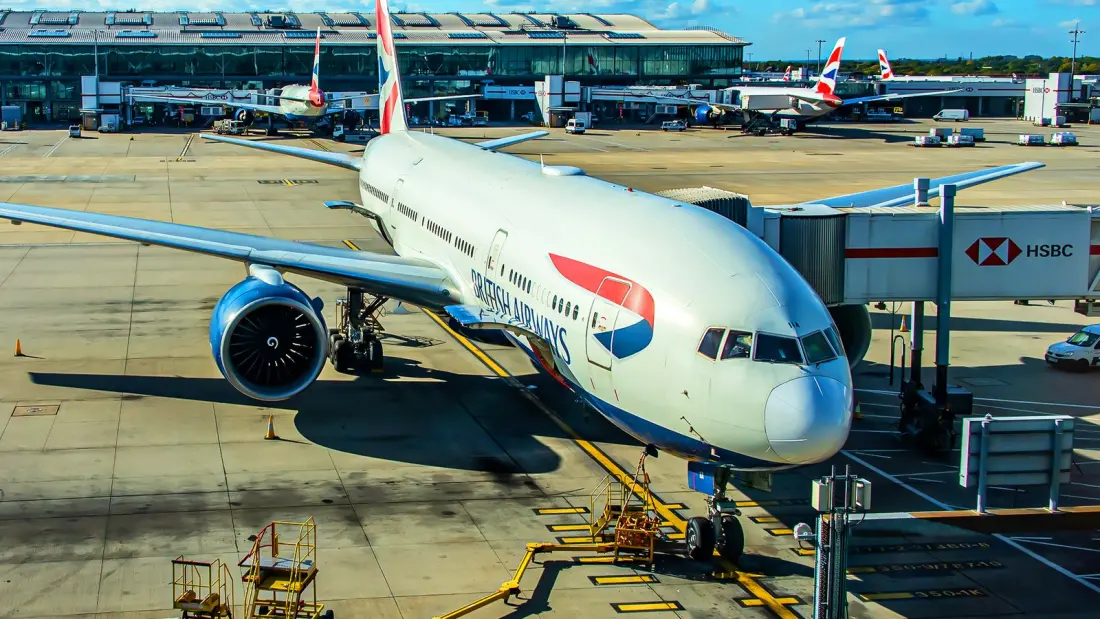
If you're booked on a British Airways flight to New York, Chicago or Atlanta, there's a reasonable chance the aircraft outside the window is older than some of the crew flying it. G-VIIA, the airline's oldest active Boeing 777, first flew in October 1996 and was delivered in July 1997. It now marks three decades in service, and it still crosses the Atlantic regularly.
The type remains a workhorse: British Airways operates 43 Boeing 777-200ERs delivered between 1997 and 2009, one of its largest widebody sub-fleets and its oldest group of long-haul jets. They're assigned to trunk transatlantic routes — New York JFK, Chicago, Atlanta, Los Angeles — plus island hops like London to Bermuda and even fifth-freedom sectors connecting Saint Lucia to Guyana.
That longevity has recently come with some bumps. On October 5, G-VIIA operating BA295 to Chicago suffered a cabin pressurization issue at 36,000 feet, prompting a controlled descent, priority handling from air traffic control, a lengthy fuel-dumping process and a safe return to Heathrow. Earlier in the year, other 777-200ERs also turned back to London with technical problems on US-bound services. None of these events endangered passengers, but they highlight what happens when a fleet ages: maintenance becomes the difference between an isolated incident and a recurring headache.
So why keep 30-year-old jets? Economics. These aircraft were fully depreciated years ago — no financing payments, no leases — so as long as maintenance costs stay predictable, they can still turn a profit. Meanwhile, the replacements aren't arriving fast enough: British Airways has 18 Airbus A350-1000s in service with six more pending, plus 32 Boeing 787-10s on order, but those deliveries stretch from 2028 to 2033. The transition has started in small ways, though — Heathrow–Nashville switches from the 777-200ER to the A350-1000 in March 2026.
For travellers, the practical upside is real: many of the oldest 777s have already been retrofitted with British Airways' Club Suite business class, so you may well get the airline's newest-style cabin on its oldest airframe. Check the aircraft type when booking if cabin matters to you — or, conversely, if you'd rather guarantee an A350, pick routes that have already switched.
The bigger story is a decade of overlap ahead. Newer jets are more fuel-efficient and spend less time in unscheduled maintenance, but retiring dozens of widebodies is a years-long shuffle, not a switch. Expect the first-generation 777s to coexist with their successors well into the 2030s — meaning that 30-year-old jet could be under you the next time you fly to the East Coast.