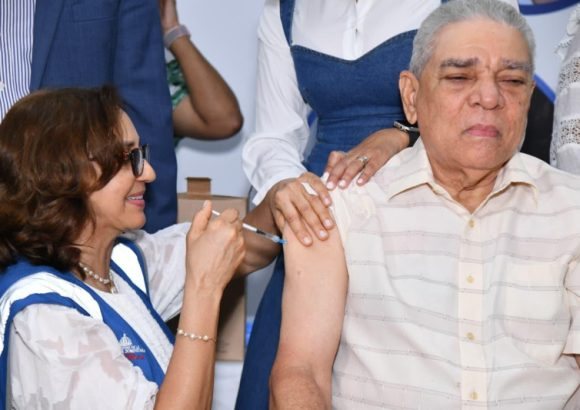
The Dominican Republic has launched a national influenza vaccination drive, with the Ministry of Public Health making more than 400,000 doses available free of charge across over 1,350 vaccination centres nationwide. The campaign was announced in Santo Domingo by Health Minister Víctor Atallah, who said the government had committed at least $775,000 to fund the effort.
The push targets the groups that tend to suffer most when flu turns serious: adults over 75, people with chronic conditions, pregnant women, and children between 6 months and 35 months. Teams will also visit care homes directly so residents can be immunised without having to travel, and every dose is offered at no cost.
A key point the minister stressed is that flu vaccination is an annual affair, not a one-and-done. Protection fades over time, and the circulating strains shift from season to season, so last year's jab does not carry over. He noted that the vaccine chosen for the Dominican Republic is the one matched to the variants posing the greatest risk to the local population — a reminder to visitors that the flu season in the Caribbean doesn't neatly follow northern-hemisphere timing.
There was also an update on another health issue relevant to anyone heading to the island: leptospirosis. Atallah said the bacterial infection, which spreads through water contaminated by animal urine, has been under control for the past six weeks. He linked a recent uptick to flooding in Puerto Plata, where some residents waded through contaminated water barefoot, damaging homes and affecting a hospital. For travellers, the practical takeaway is simple — avoid walking through floodwater or freshwater rivers and streams after heavy rain, especially in the north coast region.
So why should holidaymakers care? If you're travelling to the Dominican Republic during flu season and fall into a higher-risk category — over 75, pregnant, chronically ill, or travelling with a toddler — the campaign signals that the country takes respiratory illness seriously and has the infrastructure to respond. For most visitors, the advice is the same as at home: consider a flu shot before you fly if you're in an at-risk group, wash your hands often, and steer clear of floodwater. Basic precautions, but on a Caribbean holiday it's easy to forget them.
For anyone staying longer-term — expats, snowbirds, digital nomads wintering in Santo Domingo or Punta Cana — this is also useful practical info: the vaccine is free and available at more than 1,300 locations, so there's little barrier to getting an updated dose locally rather than flying home for one. Health is shared, as the minister put it — and a preventable fever is a poor souvenir.