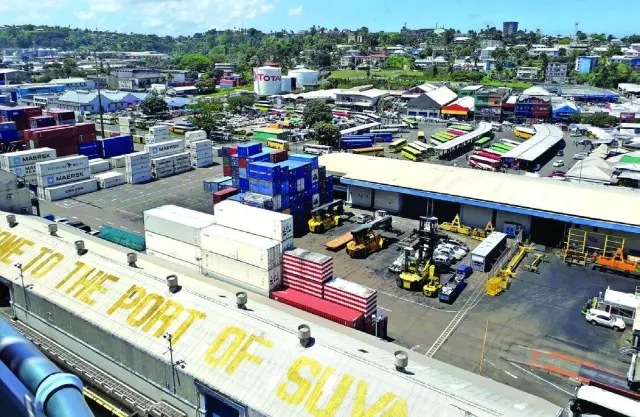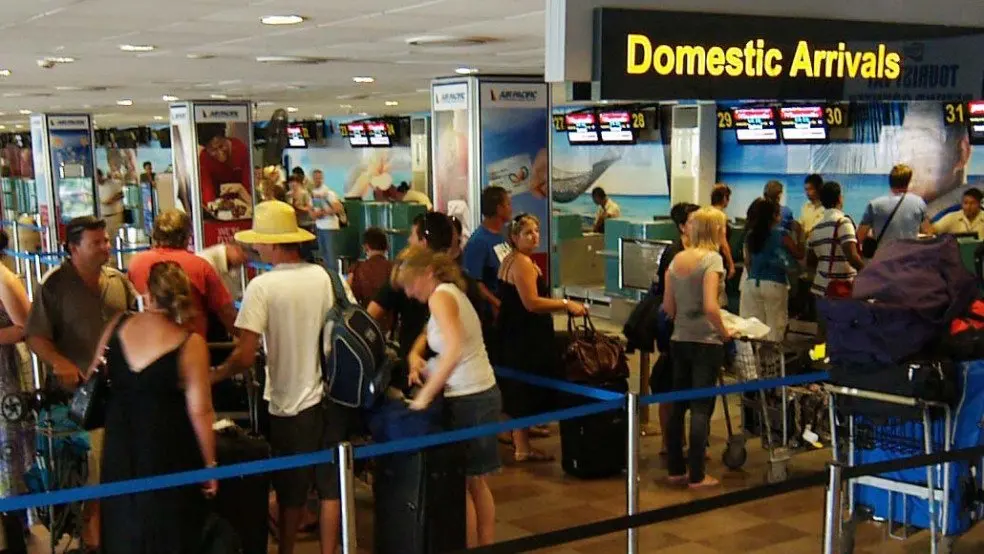
Fiji has crossed a symbolic milestone: more than a million visitors in a rolling 12-month period. ANZ's September research update put the annual total at 1,013,565, with year-to-date arrivals at 762,352 — up 3.7 per cent on last year. September alone drew 95,970 visitors, a 3.9 per cent rise, and July was the standout month with 105,791 arrivals. The country has now logged six straight months of year-on-year growth since April, marking a shift from post-pandemic recovery into genuine growth.
But there's a catch for anyone watching Fiji's tourism numbers: the growth is dangerously one-sided. Australia supplied 48.2 per cent of September arrivals — 46,302 visitors, up 4.8 per cent. Nearly one in two travellers now comes from a single market. Australian outbound traffic to Fiji jumped 13.7 per cent in August, which is great news right now, but it also means Fiji's fortunes rise and fall with one neighbour's appetite for island holidays.
New Zealand, the second-biggest source, isn't helping much. It accounts for 23.1 per cent of arrivals, but September numbers fell 2.7 per cent and the year-to-date figure is down 0.4 per cent, sitting below 2024 levels.
The long-haul story is more encouraging, if still small. Continental Europe grew 20.3 per cent, the UK 37.6 per cent, Japan a striking 77.7 per cent, Korea 25 per cent and India 21.2 per cent, with Norway, Sweden, Italy and Finland leading the European charge. Yet Europe still supplies just 3.5 per cent of arrivals and Japan 1.4 per cent — nowhere near enough to cushion an Australian slowdown.
Competition is also sharpening. Vietnam drew 30.3 per cent more Australian visitors in August, and Vanuatu 33.1 per cent, while Bali remains a far bigger draw for Australians overall. From New Zealand, Vietnam grew 23 per cent and Vanuatu a huge 124 per cent, against Fiji's 1.1 per cent. Fiji is still growing in absolute numbers, but its slice of the Australian and New Zealand travel pie is shrinking.
Who actually visits? Holidaymakers dominate at 80.4 per cent of arrivals, with visiting friends and relatives at 8.1 per cent and business travel just 2.1 per cent. Interestingly, the largest single age bracket is 65-plus, at 11.7 per cent of visitors — Fiji remains a strong draw for older, longer-stay travellers.
For travellers, the takeaway is practical: Fiji is a destination in confident form, with airlines, resorts and operators seeing sustained demand — which argues for booking peak-season trips early. July is the busiest month, so if you want calmer resorts and better rates, the shoulder months either side offer the same islands with fewer crowds.