
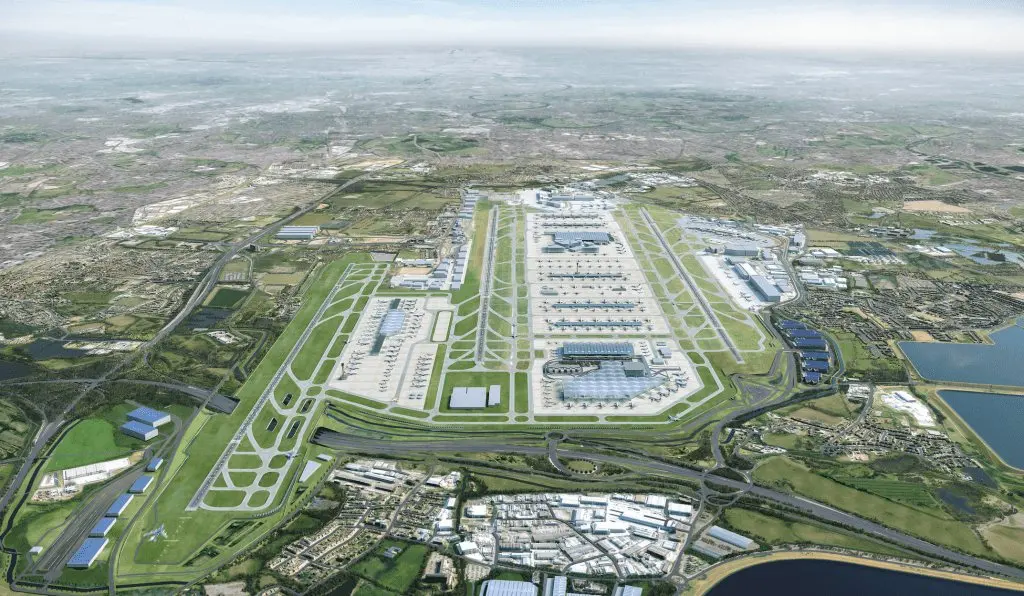
Heathrow's long-debated third runway dream is back — but this time the pushback is coming from the UK's own climate watchdogs, not just local protesters.
The Climate Change Committee, the government's official advisor on net zero, has told ministers that expanding Heathrow simply doesn't square with the country's climate commitments. Nigel Topping, the committee's chair, was blunt: aviation emissions are projected to rise even without a bigger Heathrow, the UK has no credible plan to cut them, and the conditions that would make an expansion compatible with net zero — an industry that pays the full cost of its own decarbonisation — do not exist today.
The implication for travellers is significant. If technology solutions like sustainable aviation fuel and more efficient aircraft don't materialise fast enough, the report suggests demand management could become the fallback. In plain terms: limiting how many people fly, most likely through pricing. Cheaper flights, the thing that made weekend city breaks and long-haul holidays routine for millions of Brits, would be the first thing to go.
Flying currently accounts for around 2.5% of global carbon emissions, and it's one of the hardest sectors to clean up. Unlike power generation or road transport, there's no ready-made replacement for jet fuel at scale. That's why the committee frames the problem as structural: the UK's climate targets assume aviation emissions fall, but nothing on the table guarantees they will.
For the government, the awkward position is this — it has talked up Heathrow growth as an economic win while also legally committing to net zero by 2050. The committee's message this week is that it can't have both without conditions the aviation industry hasn't yet met. Airlines would need to genuinely bear the costs of decarbonising, rather than passing them to the climate ledger of the future.
Who should care? Anyone booking flights out of the UK over the next decade. If demand management ends up in the policy toolkit, expect it to show up as higher fares, extra levies, or caps on capacity at crowded hubs like Heathrow. Business travellers and frequent flyers would feel it first; holidaymakers would feel it eventually.
None of this is settled policy — it's the official advisor applying pressure, and the government's response will shape UK aviation for a generation. But the direction of travel is clear: the era of assuming flights can keep getting cheaper and more plentiful is under genuine challenge in Britain, and Heathrow is where the argument will be settled first.
Story via Skift.