
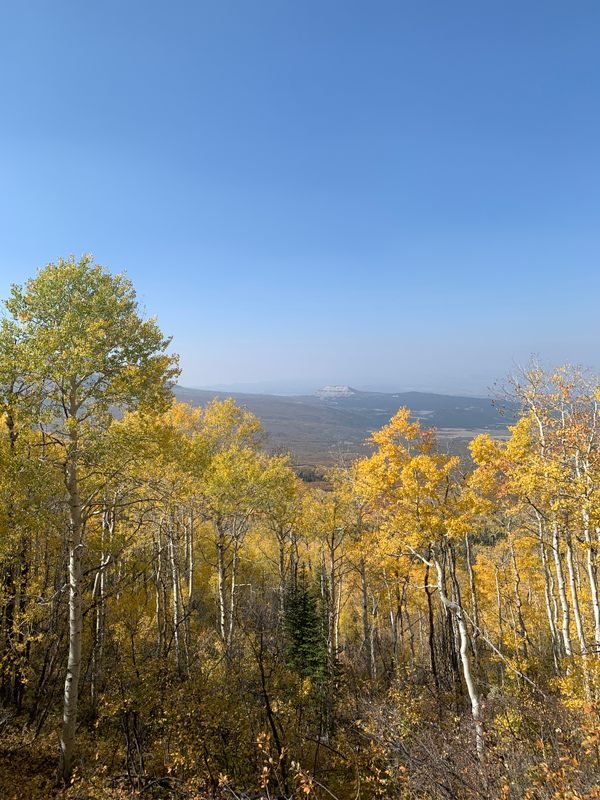
Western Colorado is famous for red-rock canyons and high desert, but rising straight out of that arid landscape is something unexpected: the Grand Mesa, widely described as the largest flat-topped mountain in the world. It stretches roughly 40 miles across Garfield, Grand and Delta counties, with most of its summit sitting around 6,000 feet above sea level and the highest points topping out just over 11,000 feet, largely within Grand Mesa National Forest.
The surprise up top is water. More than 300 lakes dot the mesa, fed by creeks like Plateau and Kannah that spill down toward the Grand Valley. That makes the mesa a genuine oasis compared with the parched Western Slope below — and it comes with a dramatic temperature swing. The summit can run as much as 30 degrees cooler than the valley floor, which means cool summer escapes and deep winter snow.
The simplest way to take it in is to drive the Grand Mesa Scenic Byway along Highway 65, which runs from Interstate 70 up through a series of switchbacks and overlooks before dropping into the small town of Cedaredge. The drive alone is worthwhile, but the mesa rewards getting out of the car. Grand Mesa National Forest holds more than 3,000 miles of maintained trails, and the standout is the Crag Crest Trail, a 10.5-mile loop that follows a ridgeline with views over a scatter of alpine lakes.
Winter flips the mesa into snow country. Nordic skiers head for the Grand Mesa Nordic Center, while Powderhorn Ski Area serves up alpine skiing and snowboarding — then swaps to hiking, scenic lift rides and downhill mountain biking once the snow melts. History buffs can add a detour to the Lands End Observatory, about ten miles off the byway. Built by the Civilian Conservation Corps, this historic ranger observatory looks out across the Grand Valley far below.
Who is this for? Anyone road-tripping between Denver and the Utah border who wants a cooler, greener alternative to the canyon country — hikers and anglers in summer, skiers and snowshoers in winter. It pairs naturally with nearby Palisade's wineries or a drive through the Colorado National Monument, and because Cedaredge and the surrounding towns are small and low-key, it never feels like a resort corridor. Just pack layers: the same altitude that keeps things refreshingly cool in July can dump serious snow from November through April.