Holidaymakers who like the idea of border-hopping across the Turkic world may soon be able to leave their passports at home. Speaking at the Turkic World Youth Gathering in Kocaeli, northwestern Türkiye, AK Party deputy chair Kürşad Zorlu confirmed that officials are laying the groundwork to let citizens of Organization of Turkic States (OTS) members travel between member countries on national identity cards alone — a Schengen-style arrangement for a bloc stretching from the Balkans to Central Asia.
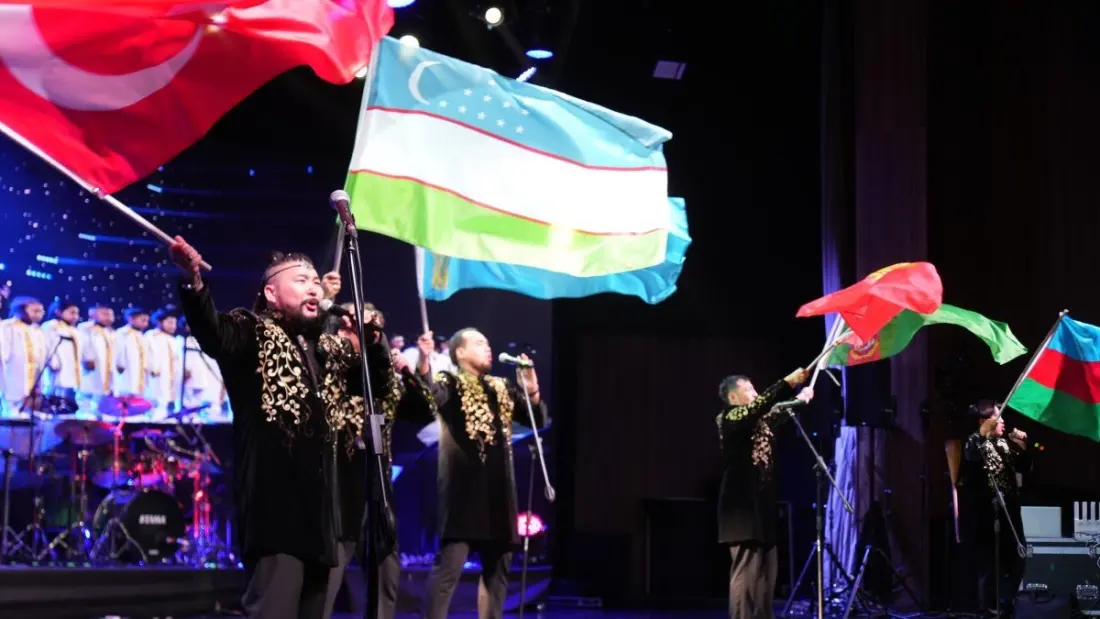
The gathering, co-organised by the ruling party and the local municipality under the motto "Shared Heritage, One Heart," pulled in hundreds of young people not just from OTS states but from Gagauzia, Iraq, Syria and Tabriz. President Erdoğan addressed the crowd by video, and used the moment to confirm that Türkiye will host the 13th OTS summit at the end of October, where it is expected to take over the bloc's rotating presidency.
The numbers behind the bloc are growing fast. Trade between Türkiye and its seven Turkic partner states hit $115 billion over five years — $26 billion in the last year alone — and Zorlu wants that to climb from roughly 4.5% of Türkiye's foreign trade to 10%. Tourism, education and healthcare cooperation are all flagged as growth areas. The OTS now covers territory home to more than 170 million people with a combined GDP above $2 trillion.
Infrastructure is the other big story. Kazakhstan's President Tokayev has proposed linking the 44-kilometre Zangezur Corridor between Nakhchivan and Azerbaijan into the Middle Corridor rail and transport network — the overland route that already carries freight and, increasingly, travellers from China through Central Asia and the Caucasus to Türkiye and on to Europe. Zorlu was blunt about its importance, declaring the ambition of making the next hundred years the "Century of the Turkic World."
Why should a traveller care? Because all of this points to an easier, better-connected Central Asia and Caucasus in the next few years. The Middle Corridor is steadily opening up overland routes through Kazakhstan, Azerbaijan and Georgia into eastern Türkiye — a genuine alternative to flights for adventurous overlanders. Work on a common alphabet and closer linguistic ties could eventually make multi-country trips through the Turkic world feel less like a linguistic assault course. And if ID-card travel goes ahead, regional trips like Baku-to-Tbilisi or Istanbul-to-Nakhchivan get simpler for citizens of member states, with spillover effects for the wider tourism infrastructure that serves everyone.
For now, nothing has changed for visitors: passports and standard visa rules still apply. But if you've been eyeing a route along the old Silk Road by rail, the political and practical stars are aligning — watch the outcome of the OTS summit for the next concrete steps.