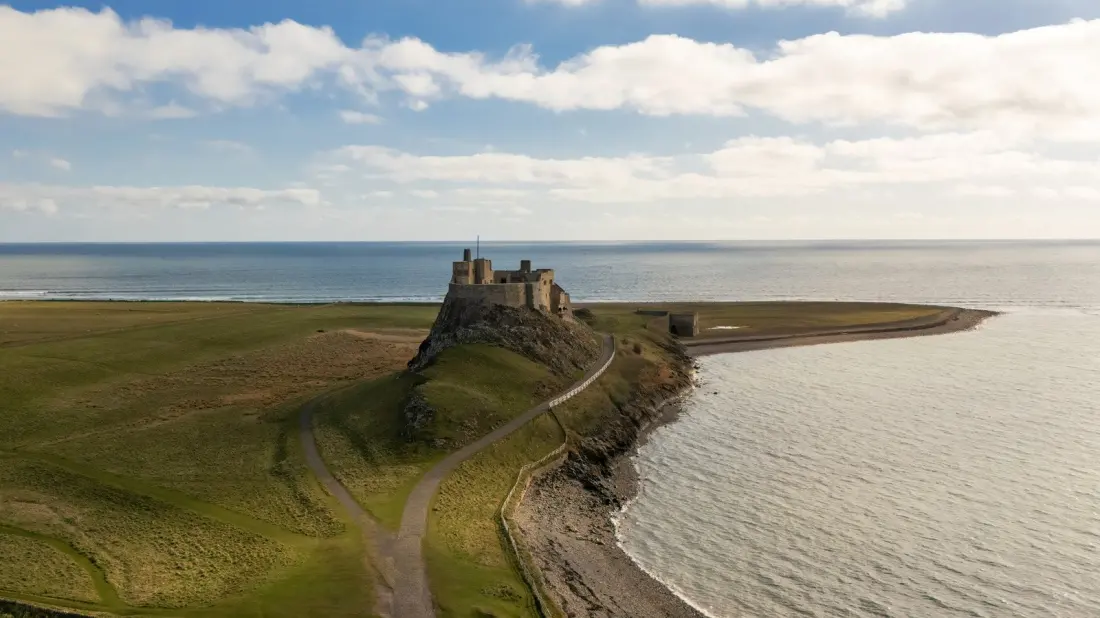
Most people come to Lindisfarne for the priory ruins and the illuminated manuscripts, but the tidal island is only one piece of a much bigger wild space. The wider Lindisfarne National Nature Reserve covers more than 3,500 hectares of Northumberland coast — saltmarsh, mudflats and the longest stretch of sand dunes in the UK — and it makes a genuinely rewarding day trip from either Newcastle upon Tyne, about 60 miles south, or Edinburgh, roughly 70 miles north across the border.
On foot is the best way to see it. The reserve's own Nature Trail is a gentle circular loop of about three miles that takes two to three hours, marked by eight posts that point out the highlights. It starts at the Window on Wild building and winds through dunes and rocky shore, passing relics of the fishing industry and the early foundations of Lindisfarne Castle. Halfway round, between posts 4 and 5, mudflats draw wintering wading birds — trees planted here by Natural England are part of an ongoing habitat restoration effort. Those wanting more can pick up the Lindisfarne Circular, a 5.4-mile loop around the whole island with white-sand beaches and repeated views of the castle. Parts of the coast also form a section of the King Charles III England Coast Path.
The wildlife is the real draw. Around 330 bird species have been recorded here, and the reserve is the only regular British wintering site for Svalbard pale-bellied brent geese. Winter brings huge flocks of geese and wigeon; summer sees terns arriving from Africa. Eiders, oystercatchers, lapwings and redshanks are resident year-round, and puffins breed here in late spring if you're lucky. It's not just birds: grey seals haul out along the coast, and the dunes support common blue butterflies, garden tiger moths and eleven species of orchid, including the endemic Lindisfarne helleborine.
The reserve was created in 1964 to protect habitats like saltmarsh and dune systems that were vanishing elsewhere in Britain, and that conservation-first feel sets it apart from busier coastal spots like nearby Bamburgh. One thing you absolutely cannot skip: Lindisfarne is a tidal island, reachable only when the causeway is exposed at low tide. Check the official crossing times before you set off, both ways — plenty of visitors have been caught out by the sea coming back in. Time it right and you get a rare combination in one compact outing: Tudor-era castle views, centuries of pilgrimage history, miles of empty beach and some of the best birdwatching in Britain, all within easy reach of two great cities.