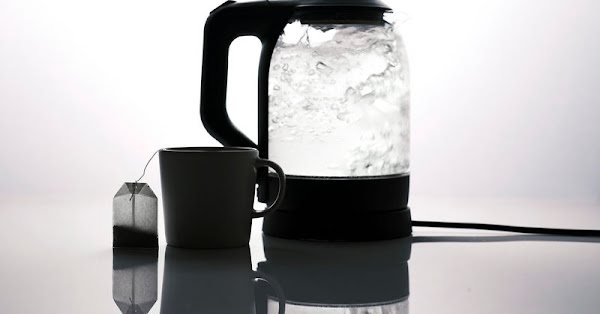
When a big TV show ends in Britain, the lights don't flicker — but the grid feels it. Millions of viewers stand up at once, wander into the kitchen and switch on their electric kettles for a cuppa. Engineers call this 'TV pickup', and it's one of the strangest quirks of any national electricity system: consumption can jump by thousands of megawatts within a couple of minutes, simply because a country of tea drinkers shares a habit.
The figures are genuinely wild. After England lost the 1990 World Cup semi-final to West Germany on penalties on 4 July, a heartbroken nation put the kettle on and demand surged by roughly 2,800 megawatts — the equivalent of about a million kettles running at once. The finale of The Thorn Birds in January 1984 triggered around 2,600 MW, a Dallas episode about 2,200 MW, and the 2001 EastEnders episode revealing who shot Phil Mitchell added roughly 2,290 MW. Even the solar eclipse on 11 August 1999 produced a record spike of 3,000 MW, and the Queen's televised lockdown address in April 2020 still nudged demand up by 500–600 MW.
Why does this matter to the people running the grid? Electricity can't be stored cheaply at scale, so supply has to match demand second by second. Britain's network runs at a steady 50 hertz, and if demand jumps without extra generation, the frequency drops. So operators literally study TV schedules, know when a popular programme is due to end, and have standby capacity ready — including pumped-storage hydro stations in places like Wales and Scotland, which can release water stored in uphill reservoirs through turbines within moments of the credits rolling.
Streaming has softened the effect in recent decades, since nobody watches the same thing at the same time any more. But the story remains a great piece of British cultural trivia — and it explains a lot about the country you'll visit. The electric kettle, drawing 2.5 to 3 kilowatts, is one of the most-used appliances in UK homes. Ask for tea at someone's house and you'll witness the ritual first-hand; you just won't be doing it in sync with 25 million other people.
For travellers, this is the kind of detail that makes a visit richer: it's a window into how centralised British broadcasting once was, how seriously the nation takes its tea, and how engineering quietly adapts to human behaviour. If you're touring energy heritage sites — the pumped hydro stations at Dinorwig in Snowdonia or Cruachan in the Scottish Highlands both offer visitor experiences — you can hear about demand surges directly from the people built to handle them.
Credit: Amusing Planet