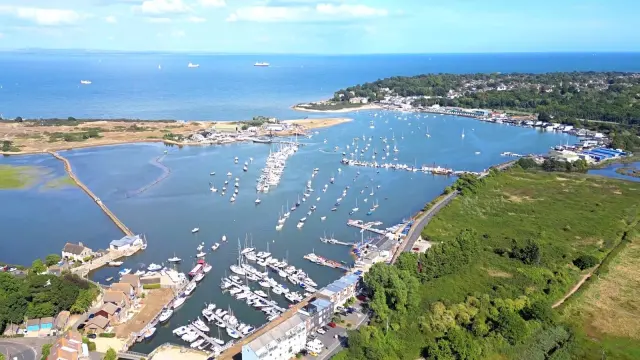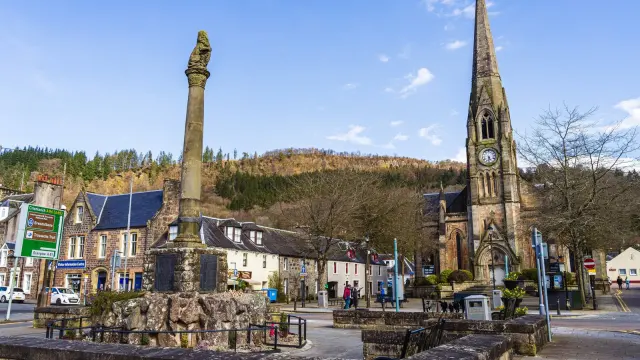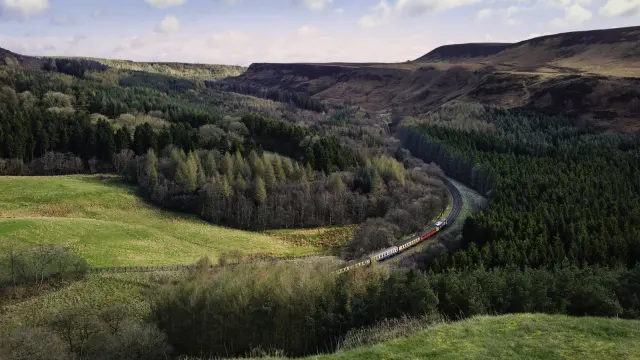
A small fishing village on the north shore of the Firth of Forth, Lower Largo sits about 25 minutes' drive from St Andrews and roughly the same from Kirkcaldy. It's the kind of place people speed past on the way to Fife's famous golf courses — but it has a literary claim few villages can match, plus a sandy beach, quirky public art and a stretch of one of Scotland's best coastal walks.
The big story here is Alexander Selkirk, born in the village in 1676 under the name Selcraig. A restless local who joined sailing expeditions in his twenties, he signed on as a navigator with the privateer William Dampier in 1703. After a falling-out with a ship's captain in 1704, he asked to be dropped on Más a Tierra, an island some 400 miles off the Chilean coast near Valparaíso — and was left there alone for over four years until his rescue in 1709. Daniel Defoe is widely believed to have drawn on his ordeal for the 1719 novel Robinson Crusoe. Today a statue of Selkirk stands on Main Street, on the spot where he was born.
There's more art where that came from. Local sculptor Alan Faulds carved the Malagan Sculpture from Scottish oak, inspired by Lithuania's roofed poles, and installed it in his garden beside Main Street overlooking the sea. If you time your trip for Largo Arts Week each July, the village fills with folk music, poetry and sculpture events featuring well-known artists.
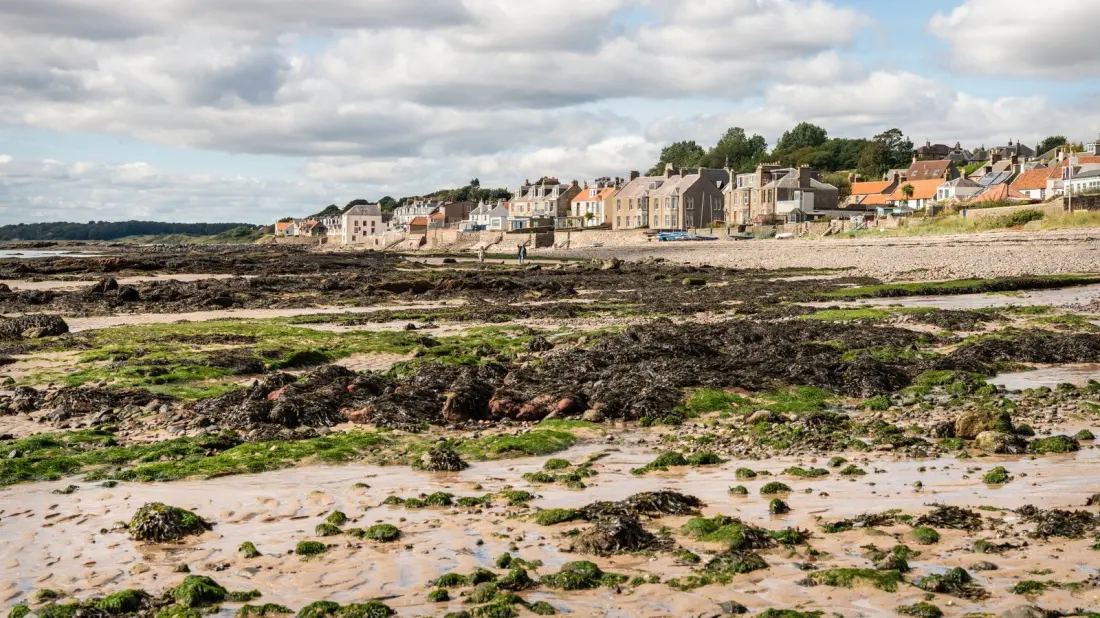
The outdoors is the other draw. The village beach has craggy rocks rising from the sand, good for a wander and tidepooling. Inland, the Standing Stones of Lundin — thought to date to the Bronze Age — tower over the green at Lundin Links, a women's golf course in a region genuinely spoiled for golf (Crail is a short hop along the coast).
For walkers, the Fife Coastal Path passes straight through Lower Largo on its 117-mile route from West to North Fife. The East Wemyss to Lower Largo section runs 7.25 miles and takes just over three hours, taking in seaside viewpoints, open fields and the ruins of 14th-century Macduff's Castle, built by the Wemyss family, descendants of the medieval Macduff earls of Fife who crowned Scottish royalty such as Robert the Bruce.
Practically speaking, Fife stays mild year-round — July averages around 58°F, January about 39°F — but rain is a given at any time of year. Pack a rain jacket, layers, waterproof shoes and a daybag that can take a soaking. And one etiquette note: locals will not thank you for calling them English or British.
Lower Largo suits travellers who like their destinations small and layered: a Crusoe pilgrimage, Bronze Age stones and a coastal hike all within walking distance, with St Andrews for a bigger day out. It works equally well as a base or a stop on a longer Fife road trip.
Story source: Islands.