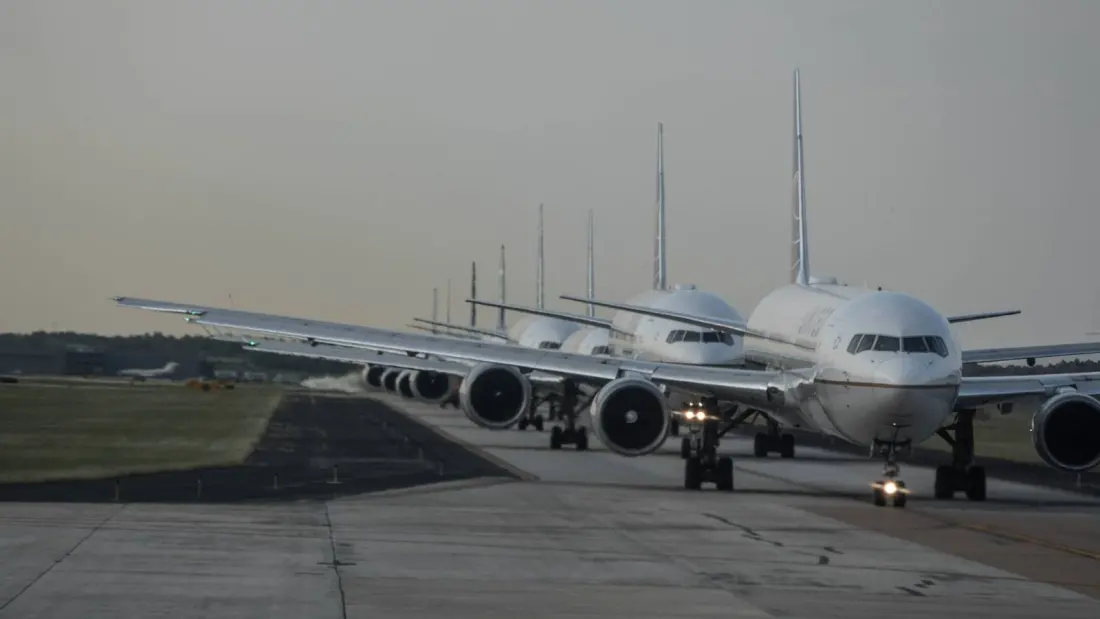
A quietly introduced Federal Aviation Administration directive is set to change how US airports handle departures, and its start date lands right at the start of the Thanksgiving rush. From November 24, 2026, the FAA requires a dedicated supervisor to be on duty whenever controllers use Line Up and Wait — a procedure that lets aircraft taxi onto an active runway and hold there until takeoff clearance comes through.
It sounds technical, but it matters to anyone flying. Line Up and Wait is one of the tools controllers use to keep departures flowing: planes are already sitting on the runway when a gap opens, so takeoffs happen faster. Under the new rule, spelled out in FAA Notice JO 7210.979, the local control position handling arrivals and departures can no longer be combined with other duties, and a stand-alone watch supervisor must be staffed separately. Towers that don't have enough people to fill that extra position will have to send planes back to taxiway holding points instead — meaning fewer departures per hour at exactly the airports least equipped to absorb the hit.
Reports of a "forever" ban spread quickly after a controller at Albuquerque International Sunport warned a Southwest Airlines crew that the restriction could slow things down during peak holiday travel. The FAA has pushed back on that framing, saying the measure is a safety improvement and insisting it "will not impact airport operations." Notably, the notice itself carries a cancellation date of June 9, 2027 — so it is not a permanent prohibition, though its real-world effect will depend heavily on staffing at individual towers.
The timing is the crux. The FAA forecast more than 52,000 flights on that Tuesday alone, with over 417,000 scheduled across the nine-day Thanksgiving window. Layering a new staffing requirement on top of a network already running short of controllers is a recipe for departure bottlenecks.
The controller shortage is the underlying story. The FAA recruited 2,235 trainees in the most recent fiscal year — beating its target — and a campaign aimed at video gamers drew over 12,000 qualified applicants in a single day. But full certification takes more than two years, so new hires won't relieve pressure until well after this rule takes effect. Recruitment targets rise to 2,300 for fiscal 2027 and 2,400 for 2028.
For travellers, the takeaway is practical: if you're flying in the US around Thanksgiving, expect the possibility of longer taxi and departure waits and build buffer time into connections. The rule is aimed at making runways safer, not slower — but at understaffed towers, the two may be hard to separate.
Simple Flying