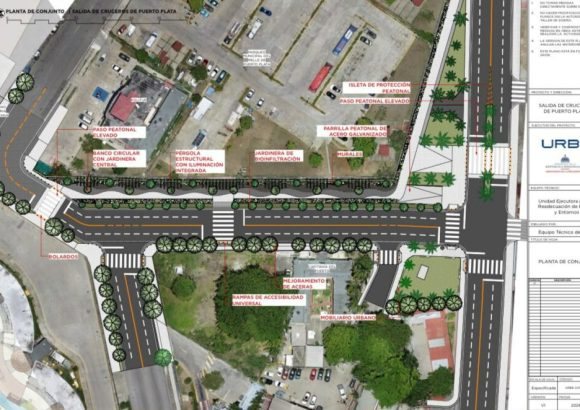
The walk from your cruise ship into Puerto Plata is about to change. The Dominican Republic's government, led by Minister of the Presidency José Ignacio Paliza, is rolling out an urban makeover of the area surrounding the Taíno Bay Cruise Terminal in the lower part of the city's Historic Center.
The plan, being developed with the urban regeneration unit URBE, covers the Old Pier, Francisco Alberto Caamaño Avenue, the lower stretch of Duarte Street and the old railway line. The goal is straightforward: the thousands of passengers who disembark at Taíno Bay currently pass through a somewhat haphazard zone, and the authorities want it organised, accessible and genuinely pleasant.
The preliminary design, called the Puerto Plata Cruise Ship Terminal Project, reads like a wishlist for anyone on foot. Think elevated pedestrian walkways, universal-access ramps, upgraded sidewalks, pedestrian protection islands, bollards and new street furniture. There's a landscaping angle too, with circular benches built around planters, bio-infiltration planters to help manage stormwater, a structural pergola with integrated lighting, murals and even a galvanized steel pedestrian grill.
The most intriguing piece is the recovery of the old railway line's terminus. Officials envision that space hosting a museum, public bathrooms for cruise passengers and tourist information points — turning a forgotten corner of the port into something closer to a proper welcome hub. Civil Defense, which currently operates in the area, will be relocated to better premises.
Two things need to happen before shovels move. First, complementary studies on the water table level, focused on drainage and flooding risk, since low-lying port zones are vulnerable. Then Minister Paliza will present the project to the Puerto Plata City Council, where the full details and scope will be revealed.
Why does this matter if you've already booked a Caribbean cruise calling at Puerto Plata? Taíno Bay is one of the island's busiest cruise ports, and the city beyond it is the real draw: the Victorian architecture of the Historic Center, the funicular up Mount Isabel de Torres, and the Atlantic-facing Malecón. This project directly targets the route you'd walk between the ship and those attractions, promising better signage, shade, seating and safer crossings. If it delivers, it should make a half-day in port noticeably easier and more enjoyable — especially for anyone with mobility needs, thanks to the universal-access ramps. Worth watching as plans firm up in the City Council.