August in Croatia was big business. The Croatian Bureau of Statistics has released its peak-season numbers, and they show a country welcoming 4.8 million tourist arrivals and 26.9 million overnight stays in a single month — up 2.3% on arrivals compared with August last year.
Foreign travellers did almost all the heavy lifting. They made up 90.9% of all overnight stays, clocking 4.3 million arrivals and 24.4 million nights, with the average visitor staying 5.7 nights. Foreign arrivals grew 1.6% year on year, though the number of nights they spent held steady.
Germany, as ever, is the engine of Croatian tourism. German guests accounted for 6.3 million overnight stays — a quarter of all nights spent by foreign visitors. Poland came second at 9.4%, followed by Slovenia, Austria, Italy, Hungary, Czechia and Slovakia. Hungary is the market to watch: its overnight stays jumped 14.5% year on year, the fastest growth of any major market. The picture is clear — Croatia's summer crowd is overwhelmingly Central European, driving in or flying short hops for a fortnight on the Adriatic.
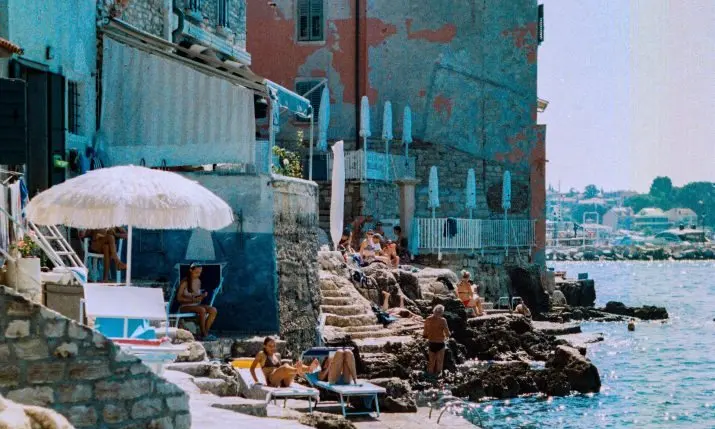
So where does everyone actually go? Rovinj, the Venetian-hued fishing town on Istria's western coast, was the top destination for foreign tourists with a million overnight stays. Medulin followed with 826,000, then Poreč (819,000), Dubrovnik (751,000) and Umag (720,000). Four of the top five are in Istria, which remained the country's leading region overall — the peninsula's mix of stone towns, truffle country and beach coves keeps pulling crowds, and its proximity to Austria, Italy and Slovenia makes it an easy road trip.
Croatian holidaymakers play a different game. Domestic tourists favoured Dalmatian coast towns: Vodice and Biograd na Moru led with 87,000 overnight stays each, ahead of Crikvenica, Šibenik and Mali Lošinj on the island of Lošinj.
For travellers, the takeaways are practical. Rovinj and Dubrovnik in August are genuinely packed, so book months ahead and expect peak pricing. If you want the same coastline with more breathing room, Medulin and Umag offer quieter alternatives in Istria, while the domestic favourites like Šibenik and Mali Lošinj give a taste of where locals actually holiday. Shoulder-season visits in June or September mean fewer crowds at these same spots.
The full ranking comes via Croatia Week.