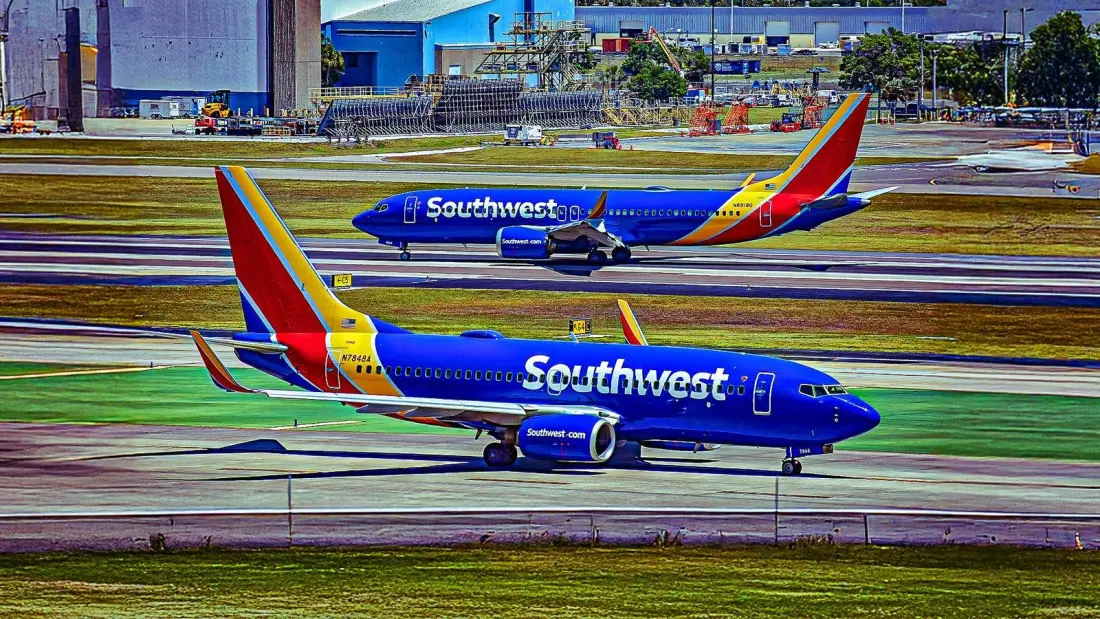
A two-hour technology failure at Southwest Airlines on Friday, October 9 brought check-in and boarding to a standstill across the carrier's entire US network, with staff resorting to handwritten bag tags and paper processing while technicians scrambled to restore service.
The trouble started shortly after 8:00 AM Eastern, when travellers found they couldn't pull up mobile boarding passes and airport computers went dark. At Dallas Love Field, Southwest's home base, queues stretched out of the terminal doors as boarding pass printers sat idle. At Denver International, gate agents announced that every Southwest aircraft on the ground nationwide was being held. By the time systems came back online at 10:15 AM, more than 900 flights had been delayed and 43 cancelled. FlightAware data later showed the ripple effects stretched to roughly 1,500 delayed flights — about a third of Southwest's schedule for the day.
The culprit wasn't Southwest's own systems but Amadeus, the technology provider whose Altéa platform has handled the airline's reservations, check-in, boarding and baggage processing since 2017. Amadeus pinned the failure on an unidentified third-party supplier of its own and apologised to passengers. That chain of dependencies is exactly the problem: even as Southwest pours money into its own infrastructure, a vendor several steps removed can still freeze the whole operation.
It's also a depressingly familiar story. In July 2016, a router failure with no working backup led to more than 2,300 cancellations over four days. Consecutive failures in June 2021 caused around 500 cancellations. A vendor firewall failure triggered a nationwide ground stop in April 2023, delaying over 2,100 flights. And the worst of all came at Christmas 2022, when Winter Storm Elliott overwhelmed crew-scheduling systems and produced 16,900 cancellations, two million stranded passengers, over $600 million in refunds and a record $140 million US DOT penalty.
To its credit, Southwest has responded. The airline has spent more than $1 billion on operational improvements since the 2022 meltdown, including over $112 million on its Network Operations Control centre, and punctuality has measurably improved. In June it announced an expanded deal with Amazon Web Services to move from largely on-premises systems to a cloud-based, AI-enabled architecture by 2028, with 2,700 developers already working on the transition. But Friday proved the awkward truth: cloud migration doesn't protect you when the fault sits with an external provider like Amadeus. Redundancy and contingency planning matter as much as shiny new infrastructure.
For travellers, the practical lesson is simple. Outages like this can hit any large airline with little warning, so screenshot your boarding pass, keep essential booking details offline, and build buffer time into connections — especially when flying Southwest on a busy morning. If a same-day trip is non-negotiable, travel insurance or flexible tickets are worth considering.