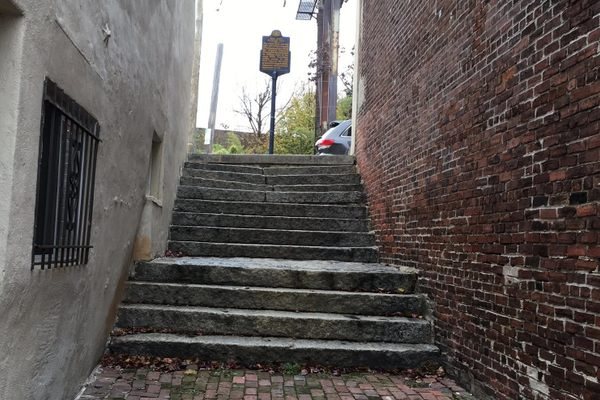
Tucked behind the interstate hustle of Philadelphia's Delaware riverfront sits a short flight of brick steps most commuters walk past without a second glance. The Wood Street Steps, however, may be the most quietly significant piece of streetscape in the city — the sole survivor of around ten public stairways that William Penn commissioned in the 1680s to connect the original high bank of the Delaware down to the wharves below.
The backstory is a classic dispute between a founder's ideals and his wealthiest neighbours. Penn believed every citizen should be able to reach the river and its port, but some early Quaker landowners whose properties lined the bank saw things differently. The standoff ended in a 1684 compromise: stairways would run from the upper streets down to the waterfront near each major cross street, spaced from Vine Street in the north to what was then called Cedar Street — today's South Street — in the south.
Centuries of landfill, industry and later development buried the old riverbank and swallowed almost every one of those passages. The Wood Street Steps are the only set still visible, their worn brick flight now marooned in the maze of old streets between Columbus Boulevard and Water Street, just north of the Ben Franklin Bridge area and near the Race Street corridor.
They reward a deliberate visit rather than a drive-by. Reach them by walking Race Street east to Columbus Boulevard, turning left, then left again onto Summer Street — mind the fast-moving I-95 northbound traffic slicing in from the boulevard there. Continue past Vine Street, head down the left side of Water Street, and you'll spot the bricks set into the sidewalk. Look up: the steps climb away from you, pointing back toward where the water's edge once stood.
For travellers, the appeal is the layering. Philadelphia's modern waterfront sits a considerable distance from Penn's original shore, and the steps are one of the few places you can physically stand on the edge of that buried 17th-century bank. Pair it with a walk along the Delaware River Trail, a stop at Penn's Landing, or the more famous colonial sights in Old City a few blocks west, and you get a fuller sense of how the city grew away from its river.
It's free, it takes ten minutes, and it's the kind of detail that makes Philadelphia rewarding for visitors who like their history off the standard Liberty Bell circuit. Just keep your wits about you near Summer Street — the traffic genuinely doesn't slow down.