Boeing now has two very different customer reactions to its long-delayed jets. Emirates is refusing the first ten 777Xs it ordered, with President Tim Clark stating plainly that the airline's new flagships will be newly built. Lufthansa is negotiating over which of its early 777-9s it will accept, and may take some only if Boeing pays for the modernisation. Roughly 30 completed 777Xs sit awaiting extensive rework, and Boeing's own CEO Kelly Ortberg admits the modifications could take years.
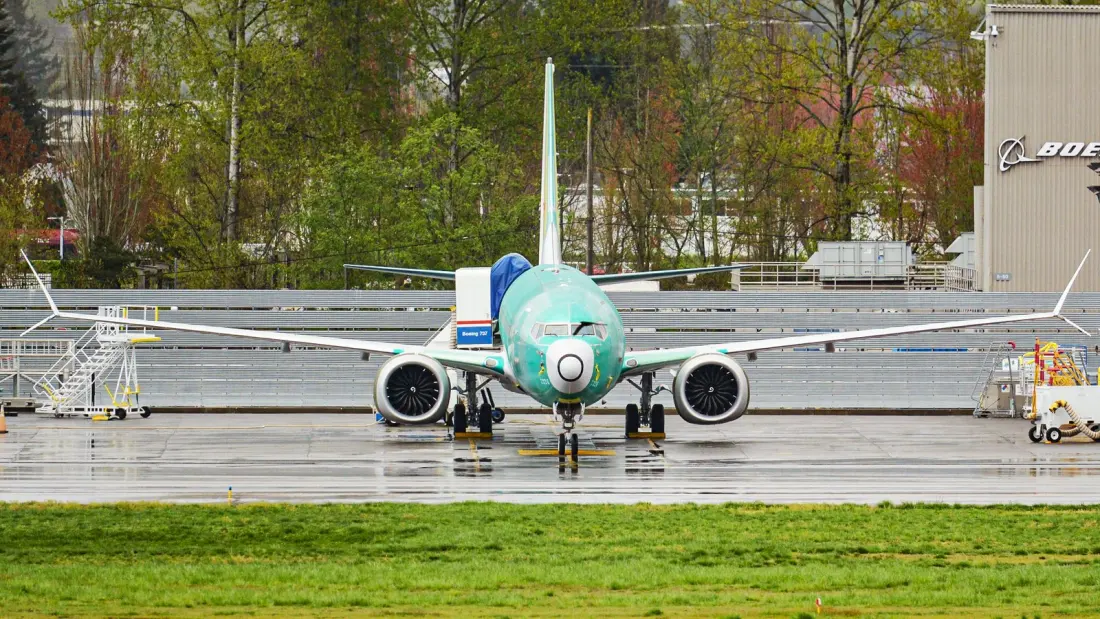
Southwest, meanwhile, is doing the opposite with the 737 MAX 7. The FAA certified the variant on August 3, 2026 — more than eight years after its first flight in March 2018, following over 1,000 hours of testing and fixes to flight-control software, cockpit alerting and the engine anti-ice system. Southwest is now preparing to accept 27 aircraft that were built before certification and have sat in storage since. CFO Tom Doxey says the airline has spent about a year working with Boeing to bring them up to current specification.
The contrast comes down to scale and leverage. The MAX 7 is a derivative of a familiar aircraft; its stored examples need updates, not overhauls. The 777X, with new engines, composite wings and folding wingtips, accumulated far heavier changes during its delays — and customers waiting on flagship long-haul jets for a decade know they hold the negotiating power.
Southwest also simply needs the jet. Its fleet of 262 737-700s averages over 20 years old, and with no regional jet operation, the 150-seat MAX 7 is its answer for thinner routes. COO Andrew Watterson has highlighted its hot-and-high performance on routes like Las Vegas and Phoenix to Hawaii, where it will take over overwater duties currently flown by specially equipped 737-800s. First deliveries are expected in late 2026, with passenger service targeted for March 2027 after FAA validation flights and overwater approvals.
For travellers flying Southwest, the MAX 7 means 150 RECARO seats instead of 137, an extra lavatory, larger bins, in-seat power and Starlink Wi-Fi from day one — a cabin that arrives already matching the airline's newer standard, complete with assigned seating.
The aircraft is otherwise a hard sell: Allegiant, Luxair and WestJet have all drifted toward larger MAX 8s, since a MAX 7 costs nearly as much to operate but carries fewer passengers and less premium space. Southwest, with over 440 MAX aircraft on firm order, is effectively the plane's only major champion.