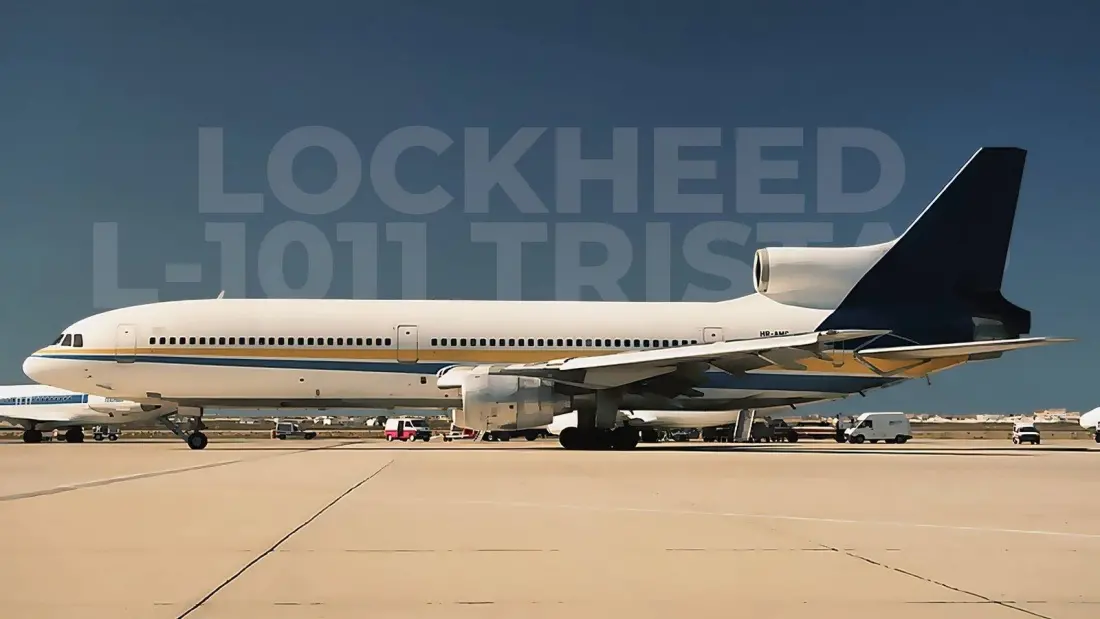
Fifty-two years after it rolled off the Lockheed line, one L-1011 TriStar is still earning its keep in the sky. Registered N140SC and nicknamed Stargazer, this 1974-built trijet now belongs to Orbital Sciences, a Northrop Grumman division, and spends its days hauling Pegasus rockets to 39,000 feet, where the rockets drop from its belly and fire satellites into orbit. It has pulled off nearly 50 such launches since joining the fleet in 1994 — an unlikely second act for a plane that once carried holidaymakers between continents.
Before its rocket days, N140SC flew for Air Canada as C-FTNJ, configured for around 300 passengers, with a brief lease to Air Lanka in 1982. Orbital Sciences bought it in 1992 and spent two years converting it, upgrading the engines to the more powerful Rolls-Royce RB211-524B along the way. Today it mostly operates out of Mojave, California, on an irregular schedule, and is also available for research flights.
The TriStar was always the odd one out among the four great Western widebodies of the 1970s. Boeing built 1,574 747s, Airbus 561 A300s, McDonnell Douglas 386 DC-10s — Lockheed managed just 250 TriStars before ending production in 1984 with no successor. Ironically, it may have been the most technically ambitious of the lot: an advanced autopilot, autoland and an automated emergency descent system made it the most sophisticated subsonic airliner of its era. But development delays tied to the RB211 engine, a market too small for two near-identical trijets, and the arrival of the twin-engined A300 sank it commercially.
Its disappearance from airline service was swift too. Lockheed never offered a freighter conversion, and with no cargo role the type had nowhere to go — the last passenger TriStar flight happened back in 2008. A handful of DC-8s and nine DC-10s still fly, and the A300 remains common with cargo carriers, but the TriStar is down to this single example.
Even Stargazer's future is uncertain. Parts are nearly impossible to source, few mechanics know the type, full-flight simulators for training pilots barely exist, and RB211 support is drying up as the aircraft that used them get retired. Reusable SpaceX rockets are also undercutting the economics of launching satellites from a half-century-old airliner. There is no announced retirement date, but when it comes, nothing will replace it.
Aviation fans wanting one more vintage trijet in the air do have an alternative to follow: the Orbis Flying Eye Hospital, a converted DC-10 operated by volunteer FedEx pilots that trains doctors in remote regions. It is even older than Stargazer, but with DC-10 parts and MD-11-rated crews still available, it will likely outlive the last TriStar.