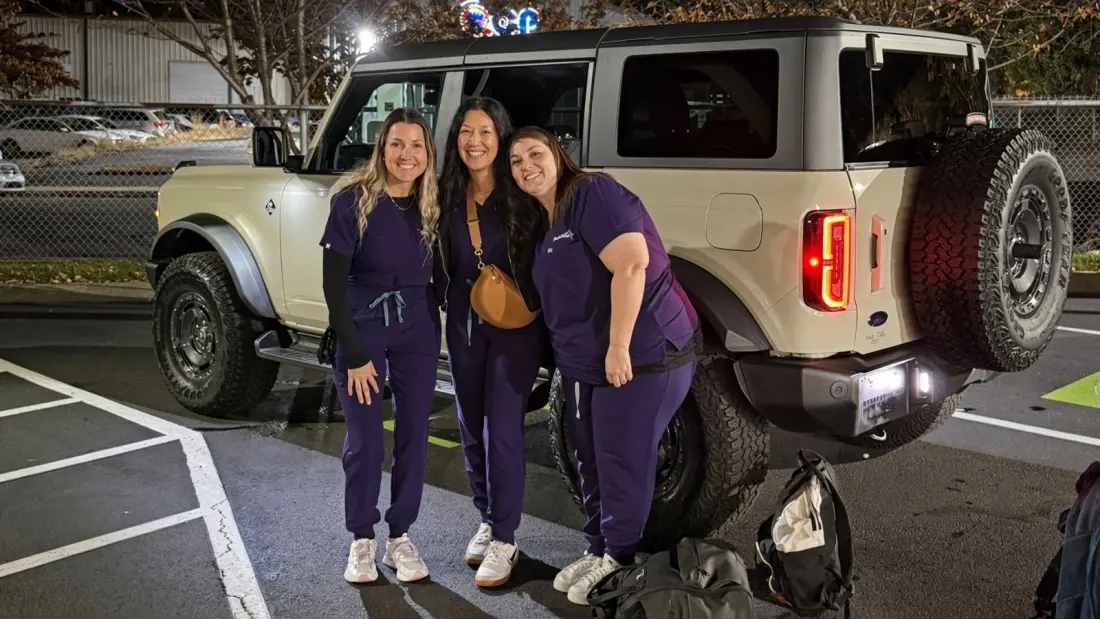
When a nationwide FAA ground stop froze flights across the US, most stranded passengers refreshed their airline apps and hoped for the best. Tara Harding and her two employees did something different: they walked into a dealership and bought a $48,000 Ford Bronco, then took turns driving it roughly 1,600 miles back to Bismarck, North Dakota.
The three women had been in Charlotte, North Carolina for work training and needed to be home for Monday-morning patients, so waiting out the backlog wasn't really an option. The alternatives collapsed one by one. No rental cars were available within a four-hour radius of Charlotte. Trains, buses, even a U-Haul came up empty. Harding's mother-in-law floated the car-buying idea, and it stuck: they purchased the Bronco with no money down and set off, splitting the driving and sleeping in shifts over a 27-hour haul.
The original plan was pragmatic — sell the car to a dealership once they reached Bismarck and absorb the losses from depreciation, taxes, fees, financing and fuel as the cost of getting home. In the end, Harding decided to keep it. As she put it to NBC News, they left for a work trip and came home with a new car.
Context matters here. While flights resumed at 8:15 p.m. Eastern that Friday, more than 18,000 flights had been cancelled and there simply weren't enough seats on the recovery flights to rebook everyone quickly — it took several days to clear the stranded crowds. And because the disruption stemmed from a federal ground stop rather than any airline's failure, there was no carrier to reimburse them. That's a key difference from the closest precedent: during Southwest Airlines' Christmas 2022 operational meltdown, a stranded couple bought a $500 used car to get home and Southwest actually paid them back. Harding's crew had no such recourse.
There's a genuine lesson for travellers in all this. When mass cancellations hit, everyone in the airport is competing for the same scarce rental cars, rebooking slots and ground transport. The people who get home fastest are usually the ones willing to consider unconventional options early — long-distance one-way car purchases among them. Buying a vehicle to drive 1,600 miles sounds extravagant, but against multiple nights in a hotel, missed work and family obligations, the maths isn't always as crazy as it sounds. Just know before you go that a no-money-down purchase comes with taxes, fees and financing costs that eat into whatever you'd recover on resale, and that a system-wide stoppage means no airline liability to claim against. Flexibility, a full phone battery and a willingness to think sideways turned a miserable Friday into a road trip — and, for these three, an unexpected family SUV.
Story via View from the Wing.