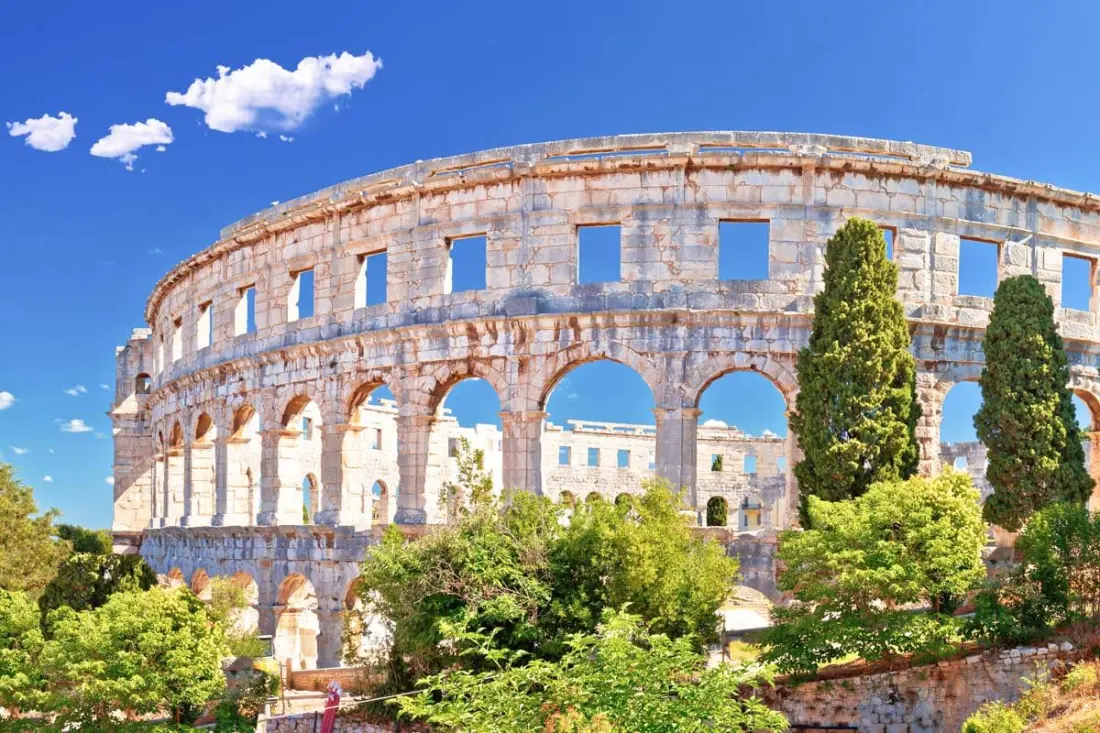
Most people visit Pula for one reason: the Arena. Built in the 1st century AD, this amphitheater is one of the best-preserved Roman arenas anywhere in the world, and standing inside it — where gladiators fought nearly 2,000 years ago — is genuinely worth the trip on its own. Entry costs €10 for adults (under-fives go free), and there's a free multilingual audio guide via QR codes inside. The underground passages hold displays on Roman life in Istria, including olive oil and wine production, and in summer the site stays open until 10 pm, so you can visit in the cool of the evening.
But the Arena is only half the story. Pula sits on Croatia's Istrian peninsula with the Adriatic right on its doorstep, and the water is where this city really shines. Wild bottlenose dolphins live in the waters around the nearby Brijuni Islands year-round, and sunset dolphin cruises from Pula Harbor regularly spot a dozen or more playing in the wake. The writer behind this guide calls her sunset cruise the best evening of her trip — unlimited local wine, islands on the horizon, and a pass by the Lighting Giants, Pula's shipyard cranes that glow after dark.
For something more active, a three-hour kayaking tour from Valovine Beach takes you along the rugged Muzil Peninsula to sea caves, with snorkelling and optional cliff jumping thrown in. If you'd rather let a boat do the work, there are a few options: a four-hour Brijuni National Park cruise with a freshly cooked lunch and unlimited wine, plus a stop in the fishing town of Fažana; or a five-hour pirate-style boat trip from Medulin (about 20 minutes from Pula) past Porer Lighthouse, which has stood on a rocky islet since 1846, ending at Levan Island — one of the rare sandy beaches in an area that's mostly pebbly.
On land, the Lungomare coastal promenade is an easy free win: roughly 4 kilometres of pine-shaded path from Valkane Beach past Gortanova Cove, with plenty of spots to stop for a swim in clear water. Late afternoon is the sweet spot, when the heat drops and the light over the sea does its thing.
Pula itself is compact and walkable, so you don't need a car for the historic centre. Local buses (check Pulapromet for timetables) cover the beaches and outlying spots, and Bolt taxis fill the gaps. Plan on at least three days: one for the Roman ruins and old town, one for kayaking and the Lungomare, one for a boat day. May, June and September hit the sweet spot — warm enough for swimming without the July and August crowds.
This one's for travellers who like their beach holidays with a side of history — Roman ruins in the morning, dolphins at sunset, and a cocktail on a sandy island beach in between. It's also a solid value pick compared to Croatia's bigger-name coastal towns.