Wine is quietly becoming the Algarve's second act. On November 12 and 13, the town of Lagoa in the western Algarve will host the fourth edition of the Lagoa Wine Tourism Forum, this time with an Iberian twist that brings Spanish producers, operators and destinations into the conversation.
The two-day event takes place at the Lagoa Congress Centre and is organised jointly by the Algarve Tourism Board and Lagoa Council under the INOVA ALGARVE 3.0 project. Expect producers, tourism businesses, public bodies, academics and destination marketers from both Portugal and Spain comparing notes on everything from how wine ties into local gastronomy and identity, to the untapped potential of fortified wines, to what actually makes a wine tourism experience feel worth the trip.
There's a clear commercial logic behind it. Algarve Tourism Board president André Gomes has been upfront that wine is a lever to pull visitors away from the region's heavy summer dependence and towards the quieter months. The board's wider push includes international promotion, familiarisation trips for trade professionals, training investment and a new marketing push — and Spanish agents are the first target. From October 7 to 10, 14 travel agents from Madrid, Barcelona, Palma de Mallorca, A Coruña, Cáceres and Seville toured Albufeira, Lagoa, Portimão and Faro, mixing winery visits with food, nature and outdoor activities, all with an eye on filling short breaks outside peak season.
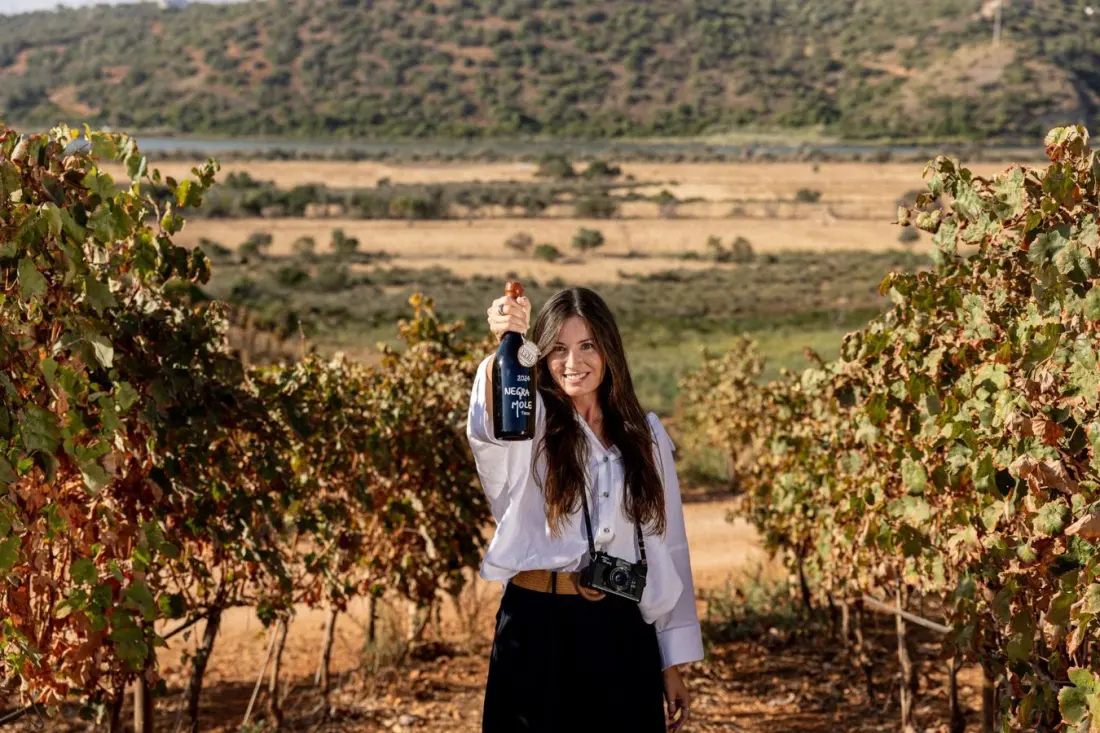
For travellers, the useful takeaway is a new brochure and short film titled Algarve, Entre Uvas e Marés (Between Grapes and Tides), produced by New Light Pictures. The brochure is the more practical of the two: it maps the region's winemaking heritage across four protected appellations — Lagos, Portimão, Lagoa and Tavira — and spotlights native varieties like Negra Mole. The experiences it lists go well beyond a standard cellar door tasting: grape harvest participation, blending your own wine, dinners in the vineyard, winery tours, and combinations of wine with hiking, culture and wellness.
Why does this matter if you're planning a trip? Because the Algarve most visitors know — the coastal strip from Lagos to Faro — is only part of the story. The region's vineyards sit inland and in the hills, in villages where tourism pressure is a fraction of what you'll find on the coast. That means lower prices, easier bookings and a version of the Algarve that works beautifully in spring and autumn, when the beaches lose their appeal but the wineries and restaurants don't. If the board gets its way, shoulder-season visitors will follow wine routes rather than sand, spreading money into inland communities year-round.
Even if you can't make the November forum, its existence is a good signal: more investment, better-organised routes and more English-friendly experiences are likely coming to Algarve wine country. Wine-curious travellers planning an off-season Algarve break now have official backing, structured materials and a growing network of producers ready to receive them — a genuine alternative to the region's sun-and-sangria default.