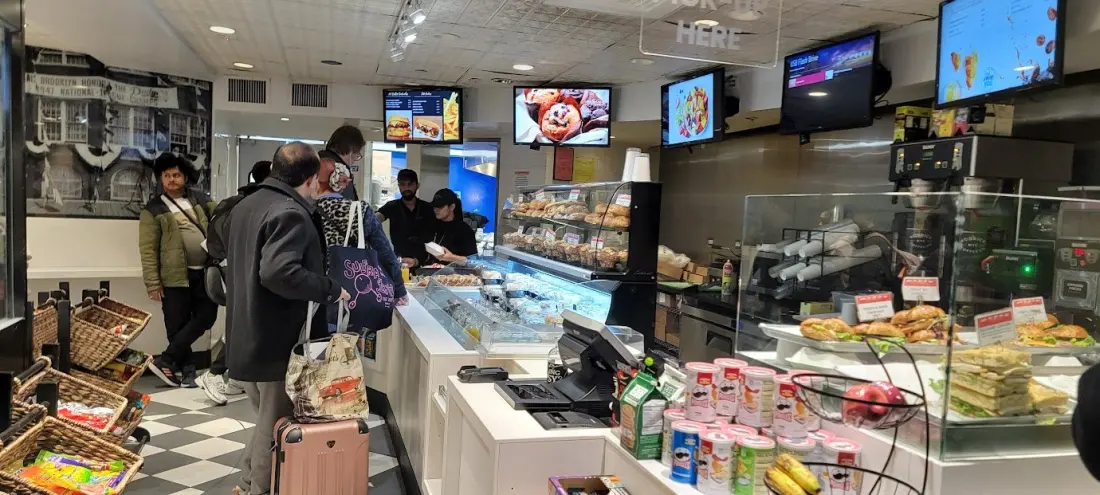
A bottle of water for $6.89, defended by the very authority that's supposed to cap prices. A $21.99 book at JFK with a 3% "employee retention fee" tacked on. If you've ever suspected airport pricing rules were more marketing than protection, a recent investigation covered by View from the Wing suggests you're right — and the reasons are more structural than simple gouging.
Most large US airports promise "street pricing": shops charge what comparable businesses charge outside, sometimes plus a small premium. The industry's 2025 concessions survey found that model at 80% of responding large hubs. But the airports are also the landlords, and they sell merchants access to a captive audience — people past security, with nowhere else to go and often minutes to boarding. Concession contracts typically demand the greater of a guaranteed minimum or a percentage of sales, so airports profit directly when prices rise.
The numbers are striking. Dallas–Fort Worth's 2025 budget counted $120.1 million of non-airline revenue toward terminal costs and $23.9 million toward the airfield, money that offsets what airlines pay. Airports have even engineered foot traffic for retail: DFW spent roughly $1 million removing moving walkways in Terminal D, projecting about $2 million in extra revenue within two years, and United stripped out all eight walkways in O'Hare's C concourse.
Enforcement is where things get creative. Denver approved most of its out-of-line prices explicitly. Airport Starbucks locations are often benchmarked against other airports rather than ordinary street stores. New York's Port Authority justified that $6.89 water by classifying Hudson as a "specialty market" — despite its own manual requiring bottled drink comparisons against convenience-style shops. Beyond that, several airports allow surcharges stacked on top of the caps: the Port Authority permits a 3% wage-and-benefit fee, Minneapolis has a 4.5% hospitality surcharge, and Austin self-checkouts have been caught defaulting to 18% tips while adding card fees.
In fairness, operating behind security genuinely is expensive. Workers face background checks, remote parking and shuttles, which pushes wages up. Deliveries must be screened on controlled routes — DFW just opened a 90,000-square-foot distribution centre. Kitchens, storage and construction all cost more, and merchants may be required to open long hours regardless of profitability.
There's proof the model can work, though. Portland showed much closer compliance by pairing street pricing with reasonable rent tiers of 18–22% of sales plus a 1% delivery fee. And a February Starbucks snapshot across 24 airports found a grande coffee at $3 in Salt Lake City versus $5.05 in Phoenix — which had scrapped its street pricing rule — suggesting caps do restrain prices, imperfectly.
For travellers, the practical takeaway is simple: expect inflated prices and sneaky fees at most US hubs, eat before security when you can, and know that the airport profiting from your sandwich is often the same authority claiming to protect you from it. Source: View from the Wing.