Seven wildfires forced the closure of 189 miles of the Pacific Crest Trail in 2026, with flames crossing six miles of the trail itself, according to the Pacific Crest Trail Association's end-of-year recap. For anyone eyeing a thru-hike or section hike in 2027, the takeaway is clear: the disruption doesn't end when a fire is declared out.
The geography of the closures surprised nobody who followed the fire season. California, which scorched through 329,000 acres in a below-average year, briefly closed 32.5 miles of trail via the Corral and Talbot fires. Oregon had a record-shattering year — more than two million acres burned statewide — yet only 6.1 miles of the PCT closed, from the Badger Butte and Lemiti fires in Mount Hood National Forest.
Washington took the real hit, especially late in the summer. Over 650,000 acres burned statewide, and fires including the Ptarmigan, Miners, Three Queens, King and Sisi closed roughly 150 miles of trail. The most consequential outcome: the Ptarmigan Fire shut down the northernmost 50 miles of the entire route, including the Northern Terminus at the Canadian border — a sting for hikers hoping to finish at the iconic monument. Crews are still assessing the damage.
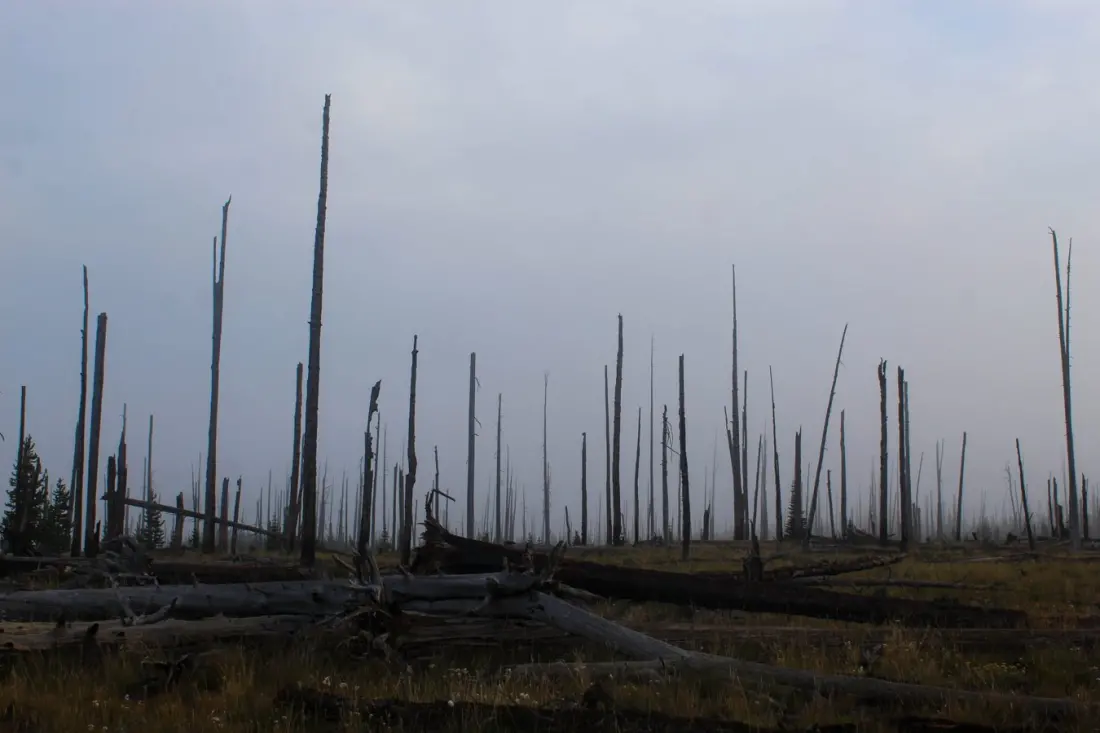
The deeper story for 2027 planners is recovery time. Burn scars degrade trails for years, and the older Dixie and Bear fire scars keep shedding dead timber and pushing up dense brush each season. PCTA staff and volunteers sawed through 3,100 fallen logs in the Bear Fire scar alone across 2025 and 2026, part of more than 23,000 downed trees cleared trail-wide since 2024.
Practical implications for next season are worth spelling out. Closure orders can stretch through winter into the next hiking season, so the PCTA's closures page should be a fixture in any planning session. Inside burn zones, standing dead trees can drop without warning — especially in wind — which makes camping or lingering under them a bad idea. Scorched slopes are also unstable, and heavy winter rains could trigger landslides or wash out more tread before summer. Hikers should expect blowdowns, overgrown brush, rough or missing trail, plus extra sun exposure where the canopy burned off. Water sources can shift too, so carrying more capacity and checking current water reports remains essential.
None of this makes a PCT hike a bad idea. Plenty of 2026 hikers salvaged great seasons by detouring, flipping their itineraries or scheduling return trips for the closed miles. The same flexibility will serve 2027 hikers well — treat the closures as routing puzzles rather than dealbreakers, and budget extra time for slow, careful travel through recent scars.
Story from The Trek.