
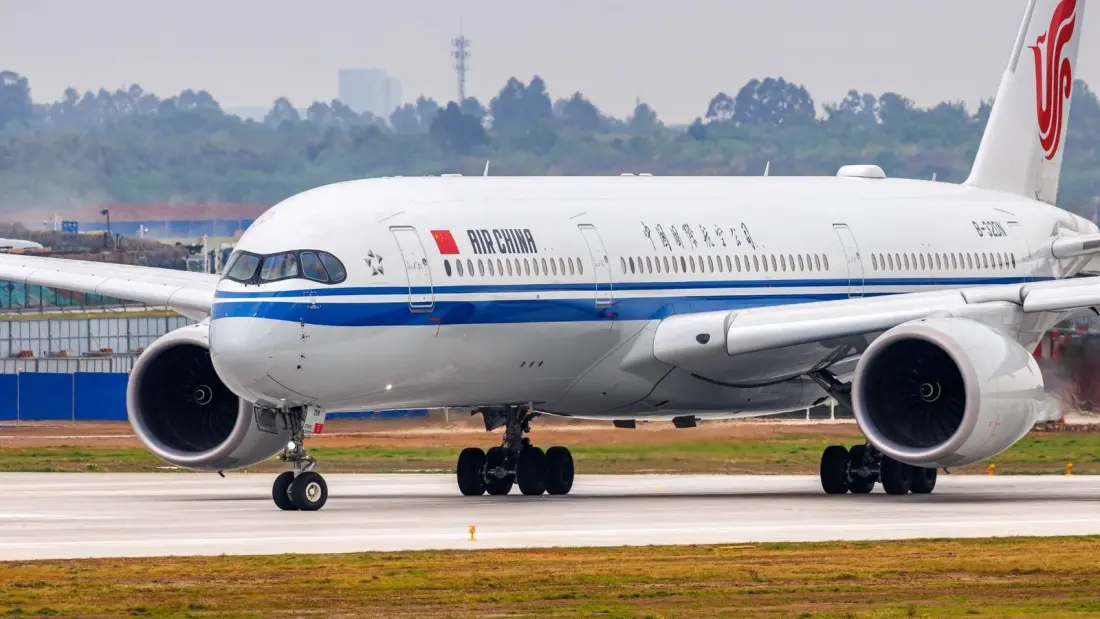
Air China wanted to fly two extra round trips into Washington Dulles and New York JFK to support President Xi Jinping's state visit — a two-day trip centred on a September 24 White House meeting with Donald Trump. US carriers made sure it didn't happen.
The request ran straight into the US Department of Transportation's bilateral cap, which limits each country to around 50 weekly round trips between the two nations. That's a fraction of the 300-plus weekly flights that operated before the pandemic. Air China already flies five times a week to each of the two cities it targeted, and pressure from American, Delta, United and lobby group Airlines for America convinced regulators that any extras would open a backdoor around the cap. The compromise floated by US airlines: allow the flights, but only if they're classified as charters rather than scheduled additions.
Why the hard line? Russian airspace. Chinese airlines can still overfly Russia on US routes, cutting flight times and fuel burn, while American carriers are banned — retaliation for Washington's own ban on Russian flights after the invasion of Ukraine. That asymmetry means Chinese airlines can price and operate trans-Pacific routes more cheaply, and they've been winning market share because of it. The DOT floated a ban on Chinese carriers using Russian airspace on US routes, but that plan was dropped ahead of the ongoing trade talks after opposition from other US agencies.
For travellers, the knock-on effects are real. With capacity capped well below pre-pandemic levels on US–China routes, airfares have stayed relatively high — a contrast to the pre-COVID era, when oversupply often pushed prices down. On the East Coast, Chinese carriers dominate: Air China serves New York and Washington from Beijing, China Eastern flies Shanghai to JFK, China Southern links Guangzhou to New York, and XiamenAir connects Fuzhou to New York. US airlines have struggled to compete on these routes at all, since their longer routings around Russia make them costlier to run.
The bigger story is precedent. US carriers argue that letting even a diplomatic, one-off request through would normalise Chinese airlines operating extra flights over Russian airspace — locking in a competitive imbalance they can't offset. Whether the 50-flight cap loosens, and whether Russian airspace rules ever level out, will shape both fares and route options for anyone flying between the two countries. For now, if you're booking US–China, expect limited schedules, higher prices, and a market where Chinese carriers hold most of the East Coast cards.