
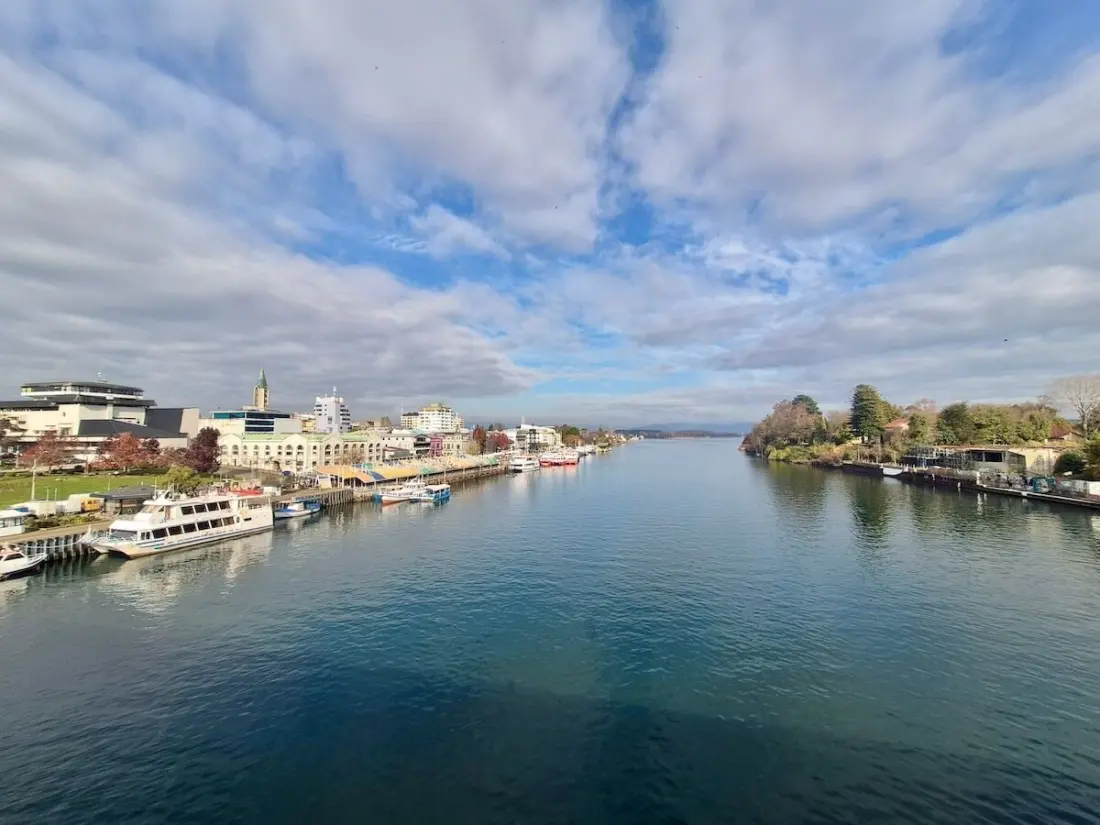
Valdivia owes its identity to water, in more ways than one. This compact city of around 170,000 people sits where three rivers — the Calle-Calle, Cau-Cau and Cruces — meet and flow together as the Valdivia River on the final stretch to the Pacific. That confluence made it a key military outpost during Spanish colonial rule, and the city still carries the name of conquistador Pedro de Valdivia.
It also nearly lost its brewing tradition to water, in violent form. On May 22, 1960, the strongest earthquake ever recorded — a colossal magnitude 9.5 — struck southern Chile. The Valdivia earthquake levelled homes, sent tsunami waves across the Pacific as far as New Zealand, and came close to wiping out the very industry the city is now famous for: beer. That it survived says a lot about the place's stubborn character.
Why beer here at all? The ingredients of geography, basically. Valdivia has an abundance of freshwater straight from those rivers, plus a cool, rainy climate that suits brewing far better than Chile's arid north. The combination has earned it the nickname of Chile's beer capital, and breweries are woven into the city's identity alongside its German-influenced heritage.
But beer is only part of the pitch. The rivers themselves are the main event — sea lions haul out along the waterfront and the fish market, lounging around like they pay rent, and boat trips ply the waterways past old Spanish fortifications that once guarded the river mouth. The city is walkable and relaxed, with a university-town energy that gives it more nightlife and café culture than its size suggests. Think of it as a base for southern Chile's Lake District and the nearby Pacific coast, rather than a whirlwind sightseeing stop.
For travellers, Valdivia works as a slower, tastier alternative to the region's better-known highlights. You can spend a morning watching sea lions squabble by the market, an afternoon exploring riverside forts or taking a boat up the Calle-Calle, and an evening working through local brews in a city that treats beer as heritage rather than trend. It pairs naturally with trips to nearby coastal towns or the lake region further inland.
If you like your cities with a side of history — colonial, seismic and sudsy — this southern Chilean river town deserves a spot on the itinerary. Credit: Matador Network