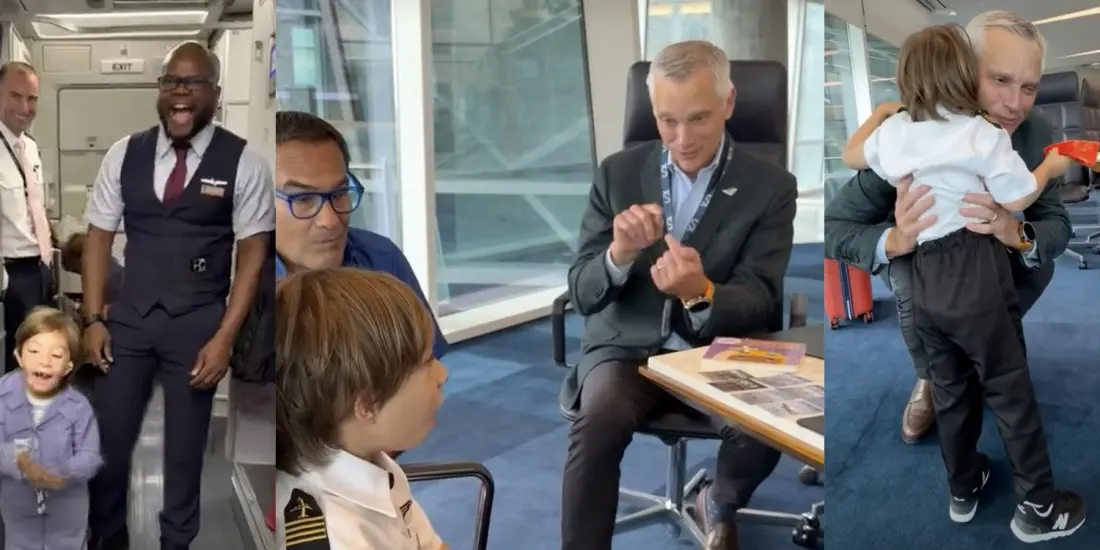
A five-year-old named Luca is Deaf, loves airplanes, and recently had a day he will probably remember forever. During an American Airlines flight, a crew member communicated with him in sign language, both at the aircraft door and onboard. His mother later shared that visiting the airline's campus in Dallas, Luca was greeted by hundreds of American employees — many of whom had learned some signs specifically for him.
The standout moment came when CEO Robert Isom met the family. Rather than posing for a quick photo, Isom learned how to fingerspell his own name and sign "nice to meet you" in American Sign Language. He also gave Luca a stack of airline trading cards, which reportedly went down extremely well. Luca's mother put it simply: it is hard to describe how much it means when someone makes that extra effort to communicate directly with her son.
Why does this story stand out? Airline news is usually dominated by delays, fees and complaints, so a genuinely warm interaction is a refreshing change of pace. And there is a lesson in hospitality here that goes beyond a feel-good clip. Isom could easily have handed over some merch and let Luca's parents do the translating. Instead, a few minutes of practice allowed him to actually speak to Luca in his own language. The same applies to the flight attendant and the crowd of employees who learned signs ahead of the visit — small preparations that turned a corporate meet-and-greet into a genuine welcome.
American shared the encounter on social media, so yes, there is a marketing angle. That is fine. Airlines trade on their reputations for care, and it is fair to praise them when the reality matches the slogan. The company's current tagline promises to "care for people on life's journey" — and here, employees did something concrete to back that up rather than just repeating it.
There is also a practical takeaway for any traveller: thoughtful service tends to come from individuals who prepare, not from policy documents. If you or a family member has specific communication or accessibility needs, letting the airline know in advance — as Luca's family evidently did — opens the door to exactly this kind of effort. It does not always happen, but when it does, it can turn a routine flight into a story a family tells for years.
For Luca, the itinerary read like a dream: a crew member who signed with him, a campus full of people who had learned to say hello, and a personal meeting with the airline's top executive. For everyone else watching, it is a useful reminder of what good hospitality actually looks like — not grand gestures, but the willingness to meet someone where they are.