Antarctic travel has gone from a niche expedition to a booming industry. Around 8,000 people visited the icy continent in the early 1990s. Fast forward to the 2023–24 season and the figure, tracked by the International Association of Antarctica Tour Operators (IAATO), hit roughly 122,000. If growth continues on its current path, one forecast projects more than 450,000 annual visitors by the 2033–34 season — nearly a fourfold jump in a decade.
The cruise industry has been racing to keep up. Lindblad Expeditions ran just two polar ships in 2019, but had two more under construction at the time, and both are now in service. Viking has two expedition ships rated for polar waters and two more on order. Much of this expansion was locked in before the pandemic, when operators were betting big on demand for remote, high-end adventure travel.
Here's the catch: the people actually running these trips say the workforce hasn't grown at the same pace. Veteran polar guides argue that expertise is thinning even as fleets expand. Training an experienced Antarctic guide takes years — knowledge of wildlife behaviour, ice conditions, safety protocols and the science that makes landings meaningful isn't something you can hire off the shelf. More ships mean more departures, and more departures mean the industry needs far more qualified expedition staff than it currently has.
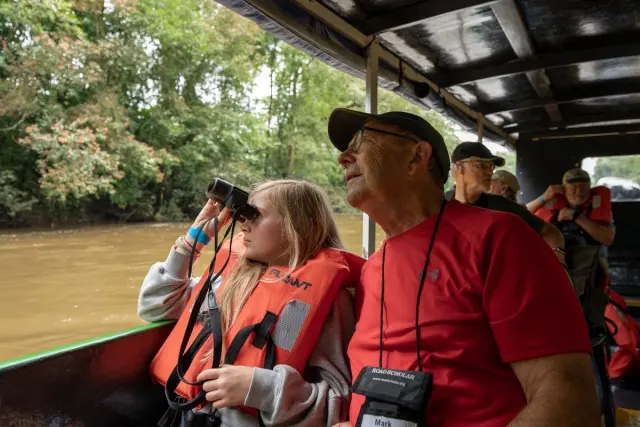
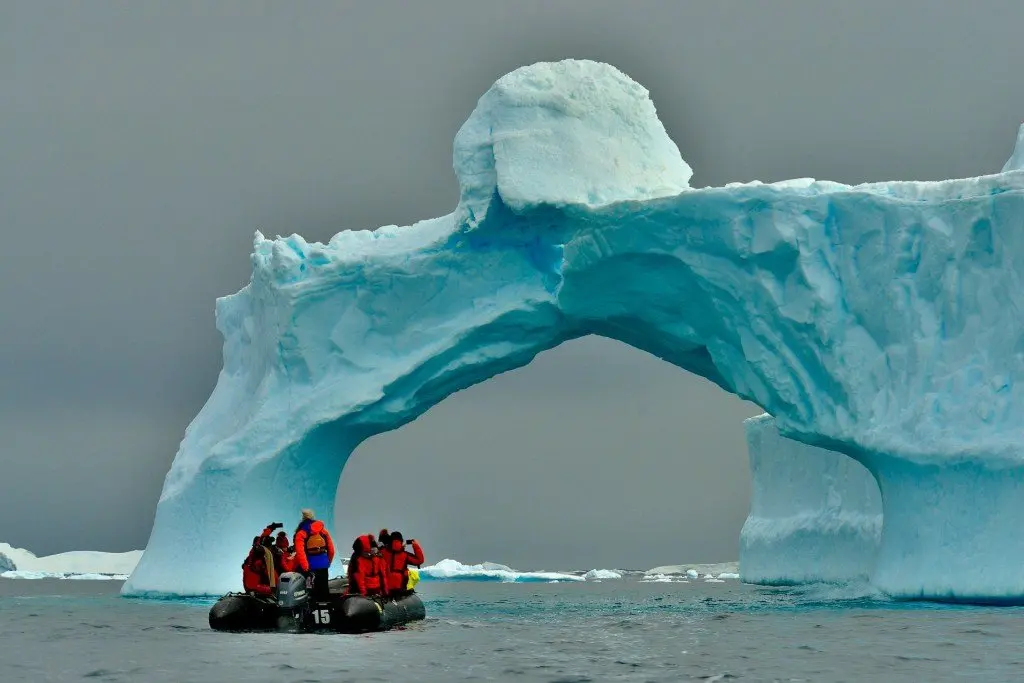
For travellers, this matters in practical ways. On a well-crewed expedition, guides are what turn a zodiac cruise past an iceberg into something you actually understand — a seasoned ornithologist spotting a rare penguin behaviour, or a historian explaining whaling-era ruins at a landing site. With thinner expertise spread across more departures, the quality of interpretation and shore supervision can vary more between operators. It's a good reason to research an operator's guide team, not just the ship's amenities, before booking.
There's also the crowding question. IAATO imposes strict rules on landings — typically no more than 100 people ashore at a time at any given site — so a surge in visitor numbers means more competition for the best landing windows and potentially tighter schedules on popular routes along the Antarctic Peninsula.
Who is this for? Anyone considering the trip of a lifetime south of the 60th parallel. Booking early still gets you the widest choice of cabins and itineraries, and asking operators about their guide-to-guest ratio and staff experience levels is now a smart part of the vetting process. Antarctica isn't getting cheaper or quieter, but with the right crew, it remains one of the most extraordinary places on Earth to visit.