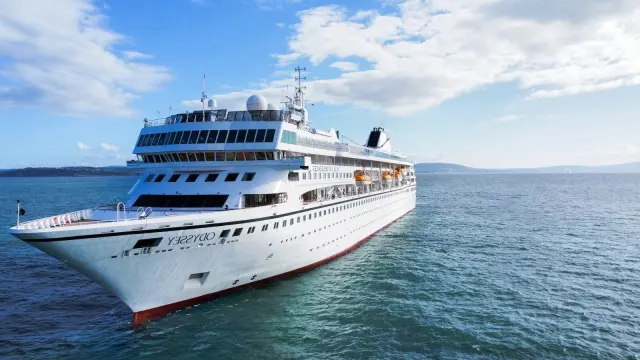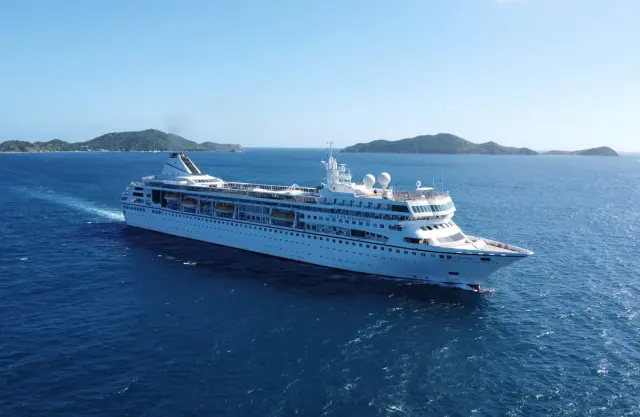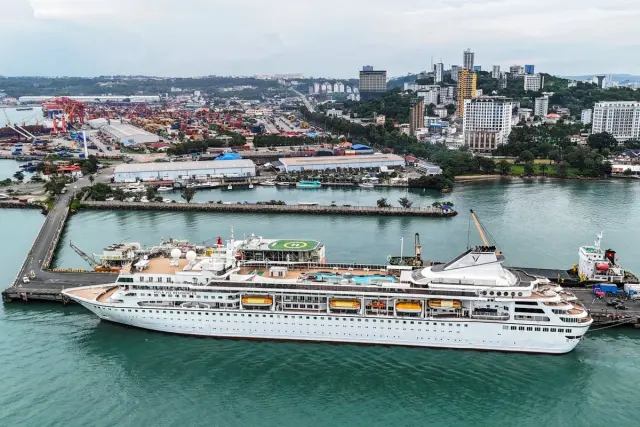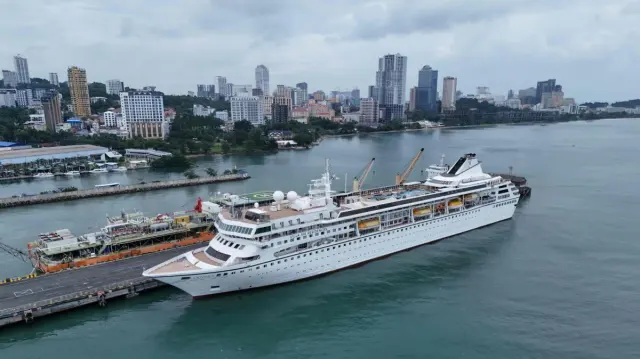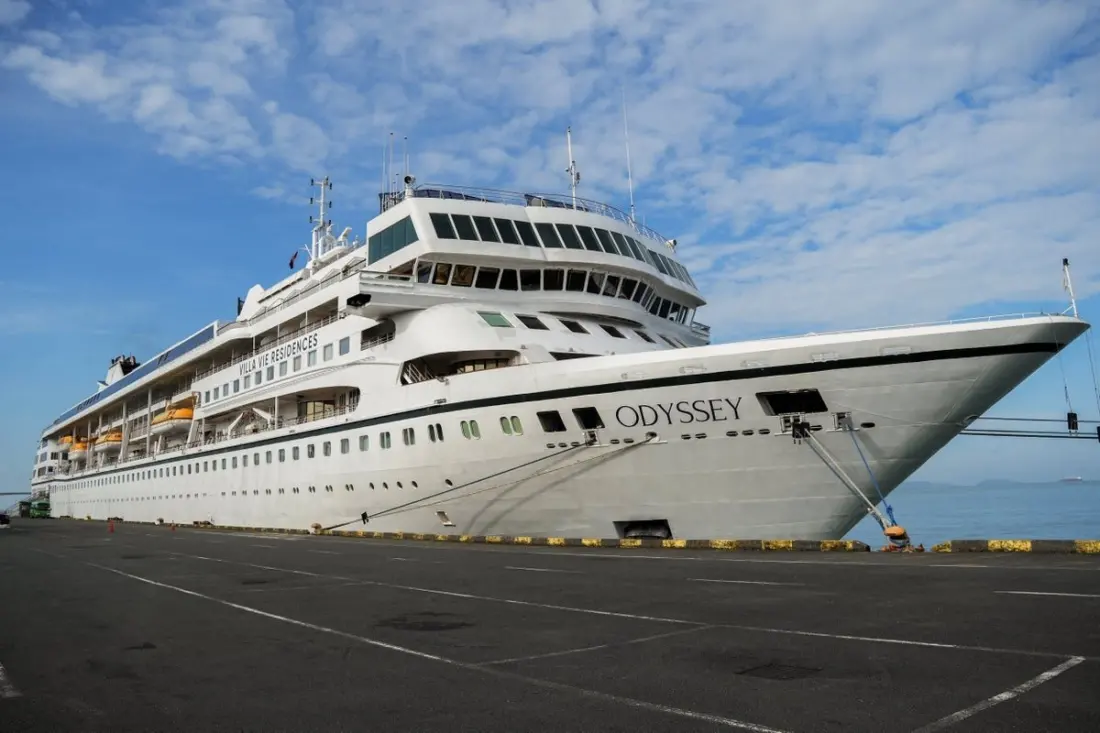
A luxury residential cruise ship that promised three years sailing around the world has ground to a halt in Sihanoukville, Cambodia — and its passengers were reportedly asked to chip in for fuel before being given eight hours to pack up and leave.
The MV Odyssey, operated by Florida-based Villa Vie Residences, set sail two years ago with cabins sold as floating homes. Suite prices started around $230,000, and many owners treated the ship as a permanent address. Some sold businesses or properties to buy in. Among them were Lanette Canen and Johan Bodin, both 56, who paid $100,000 for a cabin plus $3,500 a month in fees, and even ran a business from on board while documenting their life at sea on YouTube.
Things unravelled fast. Villa Vie says monthly fuel costs per cabin, previously around $1,800, ballooned to $6,000–$8,000 in parts of Asia after traffic largely stopped in the Strait of Hormuz, a critical oil shipping lane, amid the war in Iran. The company slowed the itinerary and spent more time docked to save fuel, but the maths never worked. The ship ran out of fuel in Sihanoukville, and passengers say they were repeatedly asked for extra money — including, according to resident Lynn Montoya, a call to raise funds just to leave Cambodia. Crew members, she says, have also gone unpaid.
On Monday, passengers — 203 of them, mostly American, aboard a ship built for 650, plus 156 crew — were told at 6am they had to disembark by 2pm the same day. There is no date for a restart, and the company says it can no longer carry the operating losses. It is helping with shuttles and coordinating disembarkation, but not hotel bills. One former resident, Sharon Lane, says communication has been poor and that owners face heavy losses, since cabin contracts don't allow rentals and sales now look unlikely.
For the Canens and Bodins of this story, there's a silver lining of sorts: they're turning the disruption into overland travel, spending a week in Sihanoukville, then Phnom Penh, before heading to Vietnam, Bali and Thailand, where a lower cost of life will stretch their budget while they regroup. Many residents are settling near each other on land, keeping the shipboard community alive.
Why should a traveller care? Beyond the human drama, this is a cautionary tale about residential cruising — an expensive, largely unregulated model where your home floats on volatile fuel prices and a single company's solvency. And it's a reminder of how Middle East conflict is quietly inflating costs across Asian travel, from shipping lanes to fuel surcharges. If you'd been eyeing a long-stay cabin at sea, read every contract clause first.
The Independent Travel