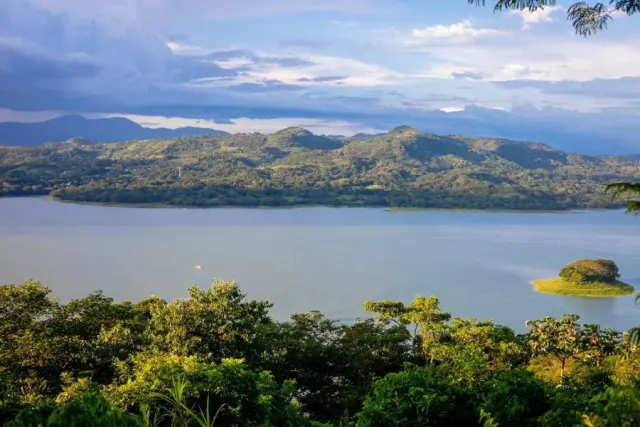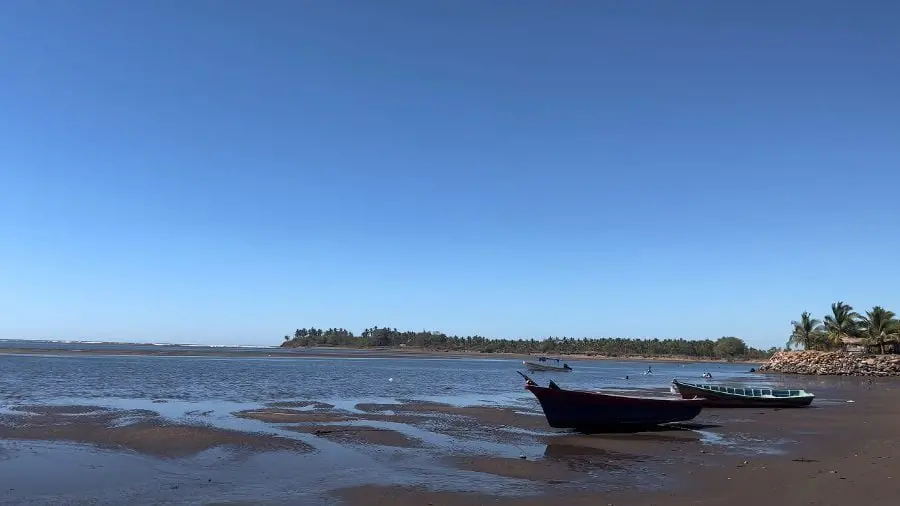
On El Salvador's far western Pacific coast, close to the Guatemalan border, Barra de Santiago offers something increasingly rare along Central American shorelines: a beach town that hasn't been built up. Fishing boats still set the rhythm here, and the main attractions are natural ones — a long stretch of dark volcanic sand on one side, a wide estuary and mangrove forest on the other.
The area sits in the department of Ahuachapán, part of the municipality of Jujutla, and holds international environmental credentials as a Ramsar-listed wetland. That designation matters for travellers too: the mangrove channels shelter herons, egrets, migratory birds, and the young fish and crustaceans that sustain local fishing families.
The signature experience is a boat trip through the mangroves with a local guide, who navigates channels shaped by the tides and points out wildlife along the way. Timing matters, since excursions depend on water levels and conditions. Back on the ocean side, the beach is broad and uncrowded — good for walking, photography and long afternoons — though swimming demands caution. Pacific currents can be strong, and the water near the estuary mouth is best avoided entirely.
Practicalities are straightforward but worth planning. The trip from San Salvador runs roughly 120 kilometres and takes two and a half to three hours by car, mostly on the coastal highway before smaller local roads. Public transport exists but usually requires bus changes in nearby towns, so a private vehicle gives you far more flexibility — especially if you want to stay for sunset, which is arguably the best show in town.
Accommodation leans small and local: simple hostals, beach houses and rentals rather than resorts. Bring cash, since smaller shops often don't take cards. The dry season from November to April brings reliable sunshine, while the greener rainy months of May to October can still work for mangrove tours if storms stay away. Weekdays, and avoiding Easter and year-end holidays, mean fewer people.
Barra de Santiago also pairs well with the rest of western El Salvador. Metalío beach is a short coastal stop with similar dark sand, Los Cóbanos offers rocky shores and some of the country's better snorkelling, and the highland coffee town of Apaneca adds cooler air and green hillsides to the mix.
This isn't a destination for travellers chasing nightlife or resort amenities. It's for anyone who'd rather watch birds at dawn than queue for a sun lounger — a genuinely quiet slice of El Salvador's coast where the ecosystem, not the entertainment, is the draw.