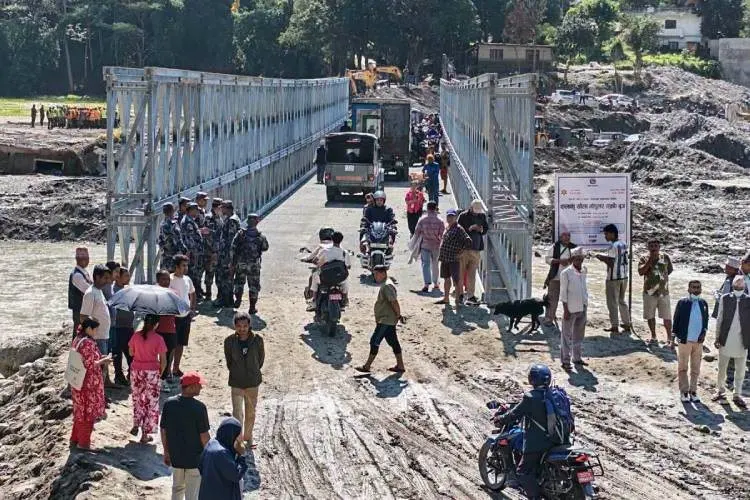
A new steel crossing is good news for anyone heading north out of Kathmandu towards Langtang. The Nepali Army has installed a Bailey bridge over the Phalaku River at Betrawati, restoring the link between Nuwakot and Rasuwa districts after a violent flash flood on 26 August severed the road. The structure can carry loads of up to 40 tons, which is enough for buses, supply trucks and the usual mix of local traffic that keeps the valley moving.
That matters because this stretch of road is the only practical route to Dhunche, the district headquarters of Rasuwa and the gateway town for trekkers starting the Langtang Valley trail. When the flood hit, transport to Dhunche was cut entirely, stranding residents and disrupting the flow of trekkers, food and fuel into the mountains. A Bailey bridge is a modular, rapidly assembled military design, so it is a stopgap rather than a permanent fix — but it has restored through-traffic along a corridor that was effectively dead.
For travellers, the takeaway is simple: the road north is open again, though conditions in this part of Nepal remain fragile. August's flood is a reminder that monsoon-era landslides and washed-out crossings can shut mountain routes with little warning. Anyone planning a Langtang trek or a trip to Gosainkunda should build buffer days into their itinerary and check current road status before leaving Kathmandu rather than assuming the schedule will hold.
Betrawati itself sits roughly three hours' drive from the capital and is a sensible first stop or rest point on the long climb to Dhunche. From there the road follows the Trishuli valley through increasingly dramatic terrain before the trailheads begin. Local buses and jeeps ply the route when it is open, and private hire remains an option for small groups on tight timelines.
Who should care? Trekkers with Langtang Valley permits in hand, visitors headed for the Rasuwa border crossing towards Tibet, and anyone combining a mountain trek with a Kathmandu Valley escape. The flood and the temporary bridge also hint at broader travel conditions in Nepal this year: routes through the middle hills are functional but weather-dependent, and flexibility is part of the deal. If you were holding off on a Langtang trip because of the closure, the bridge makes it feasible again — just travel with a plan B.