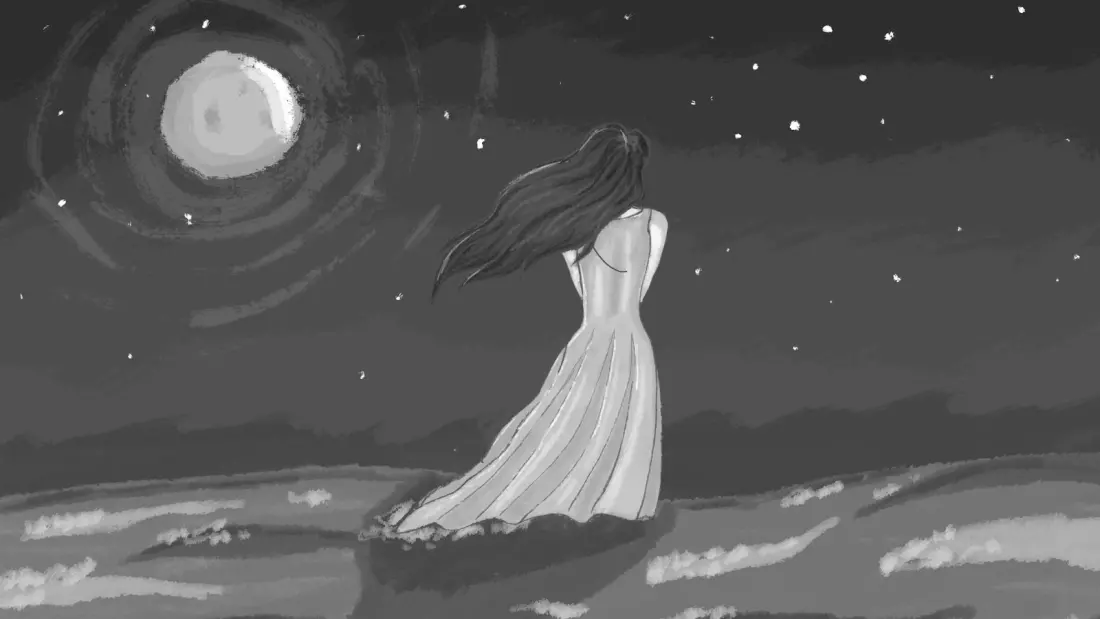
In July 2026, whitewater rafters running Idaho's Main Salmon River started comparing notes on something strange: a woman in white, standing alone on beaches and ridges in one of the most remote canyons in the Lower 48.
One of the first to see her was Nate Lewand, a 36-year-old river runner from Park City, Utah. Passing Black Canyon on a drizzly day, his group spotted a woman in clean linen clothes and military-style boots on a sandbar too small for a tent. She was bone dry despite the rain, carried no gear, and responded to shouted questions only with a half-wave that never quite happened. A topographic map offered no explanation — there's no trail on that stretch, just sheer granite walls. Between mid-July and early August, at least five other groups reported similar figures near Black Canyon, Lower Corey Bar and Yellow Pine; some heard wailing at night. Nobody has found her since. River runners have nicknamed her the Salmon Siren.
Local historian Kathy Deinhardt Hill, of the Central Idaho Historical Museum in McCall, thinks the figure may echo the river's hard pioneer past — and points to Rose Cook, a frontierswoman who died at Campbell's Ferry in October 1905 after a stillbirth, aged just 43. She and her baby are buried on the hill above the ferry meadow. Hers is one of several tragedies along the water: prospector William Campbell vanished in a 1902 snowstorm; rancher Ella Prescott lost her husband to the river's currents near Yellow Pine Bar in 1915 and died herself in 1923; and Reho Wolfe, whose four-year-old son drowned at Big Mallard Creek in 1945, lived on at Gaines Bar until her death on a final river trip in 1998. All are buried along or above the river.
The folklore fits. White-clad women haunting waterways — La Llorona, the Banshee, Scotland's Bean Nigh, Germany's Weisse Frau — appear across centuries and continents. It feels apt that the so-called River of No Return, where 19th-century boatmen could float in but never row back out, should have its own.
For travellers, the real story is the river itself. The Main Salmon is an 80-mile whitewater corridor through the Salmon-Challis National Forest and the heart of the 2.3-million-acre Frank Church–River of No Return Wilderness, the largest roadless wilderness in the continental US. It's the longest undammed river system in the Lower 48, its gorge deeper than the Grand Canyon, with no cell service and almost no way in or out except the water. Multi-day raft trips pass hot springs, sandy beaches, old orchards and historic homesteads — including camps like Gaines Bar, where early-morning fog lends some weight to the ghost stories. Whether the Siren is a lost hiker or something stranger, she picked the right river to haunt.