Djokovic picked up his seventh China Open title in early October, but the real story in Beijing that week wasn't on the court. Across the National Day holiday, the city stacked up major events — tennis at the National Tennis Center, table tennis at Shougang Park, motor racing by Tongming Lake, 3x3 basketball in Miyun — and turned each one into a full day out for visitors and locals alike.
At the China Open, the action spilled well beyond the stadium. A "second venue" with big-screen viewing, food stalls and merchandising gave ticket-holders and non-ticket-holders alike a festival feel. The two officially licensed stores at the north and south gates each pulled in more than 10,000 visitors a day during the holiday, browsing close to a thousand products — a tidy signal of how much spending a tournament can generate beyond tickets.
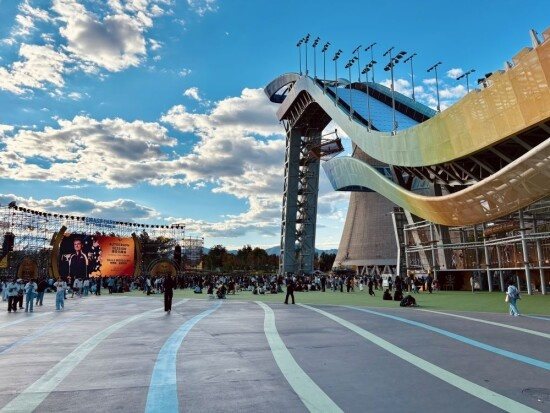
Across town, Shougang Park in Shijingshan hosted the WTT China Grand Smash for the third year running, timed to overlap with the tennis. The former steel mill, with its industrial-chic setting, now works as a day-long destination: matches, markets, dining and souvenirs all in one place, as one fan from Xinjiang put it.
The cleverest trick is what local organisers call the "ticket stub economy". The Grand Smash sells a tournament T-shirt dubbed "Explore Shijingshan in One T-Shirt" — wear it and you unlock discounts on food, hotels and sightseeing at hundreds of partner merchants around Shougang Park, Yongdingheji and the Moshikou Historical and Cultural Street. Your merch becomes your discount card, and your spending spreads through the neighbourhood instead of stopping at the gate.
The week wasn't only about the headline events. The Beijing Yizhuang GT World Challenge drew over 26,000 spectators to a car-themed carnival by Tongming Lake, boosting nearby restaurants, shops and hotels. In outlying Miyun, the China Men's 3x3 Basketball League Championship came with its own "Chao San" market of more than 30 traders selling local specialities such as Miyun's Three Roasts and the heritage starch noodles known as loufen.
For travellers, the takeaway is that Beijing has quietly built a model for sports tourism: pick a big event during the October holiday and you get a citywide festival attached to it, with markets, food and sights bundled in. It's a good excuse to plan a trip around the calendar rather than despite it — and to look beyond the usual imperial sights while you're there.