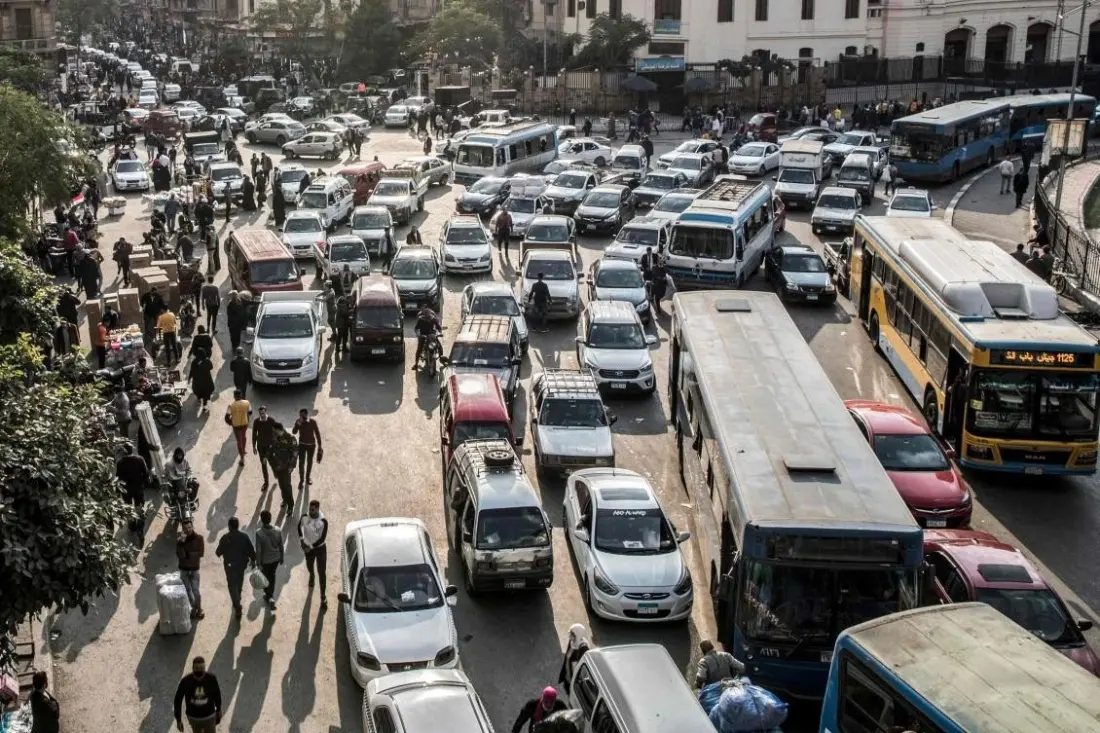
Cairo has no unwritten driving manual, but if it did, the first rule would be simple: size and nerve win. Egyptian Streets spoke to three local drivers — operations manager Mohamed Mahmoud, marketer Nehal Raafat and recruiter Radwa Ismail — and their picture of the city's roads is one where formal traffic law matters far less than a shifting social order of horns, gestures and mutual fear.
That order has a pecking order everyone recognises. Microbuses top it, barrelling through traffic with what drivers describe as sheer indifference to everyone else. Tuk-tuks rank alongside them, stopping wherever they please, even on bridge ramps. Big trucks and buses get automatic right of way because physics leaves no alternative. And then there are the "speedsters" — drivers who weave and overtake constantly, claiming space purely because everyone else swerves out of the way. Everyone below that hierarchy negotiates for what's left.
In place of official rules sits a code of gestures. A honk means "move, I'm coming through." A raised hand from the window is an apology. An arm out the window signals a turn, blinkers optional. Flashing headlights in a narrow street decides who passes first. Getting cut off — constantly, rudely, unavoidably — is simply accepted as how the city functions. "It is rude, but that's driving in Cairo," Mahmoud says.
The numbers back up the chaos. TomTom's Traffic Index recorded an average congestion level of 40.5 percent in Cairo in 2025, with drivers losing around 74 hours a year to rush-hour traffic. Egypt logged more than 18 million traffic violations in the first half of 2025 alone, spanning speeding, illegal parking, mobile phone use and riders without helmets. The stakes are real too: CAPMAS figures show road accident injuries rose 10.7 percent to 84,553, with 5,829 deaths, up nearly 11 percent year on year. The WHO notes 92 percent of road traffic deaths happen in low- and middle-income countries.
So why should a traveller care? If you're visiting Cairo and relying on taxis, Ubers or a rented car, understanding this unwritten system changes how you read the road. Crossing streets on foot is the biggest daily challenge — pedestrians routinely step into moving traffic and trust drivers to brake, so locals recommend crossing boldly, predictably, and never hesitating mid-road. If you plan to drive yourself, be warned: Mahmoud's advice is that Cairo driving demands "arrogance, entitlement and a bit of lawlessness," and the useful takeaway is hypervigilance — expect cars appearing from side streets, expect to be cut off, expect the unexpected. Many visitors will find a ride-hailing app plus a calm driver is worth every pound.
The encouraging note? Drivers here insist that once you've mastered Cairo, you can drive anywhere. Consider that either a challenge or a reason to stay in the passenger seat.