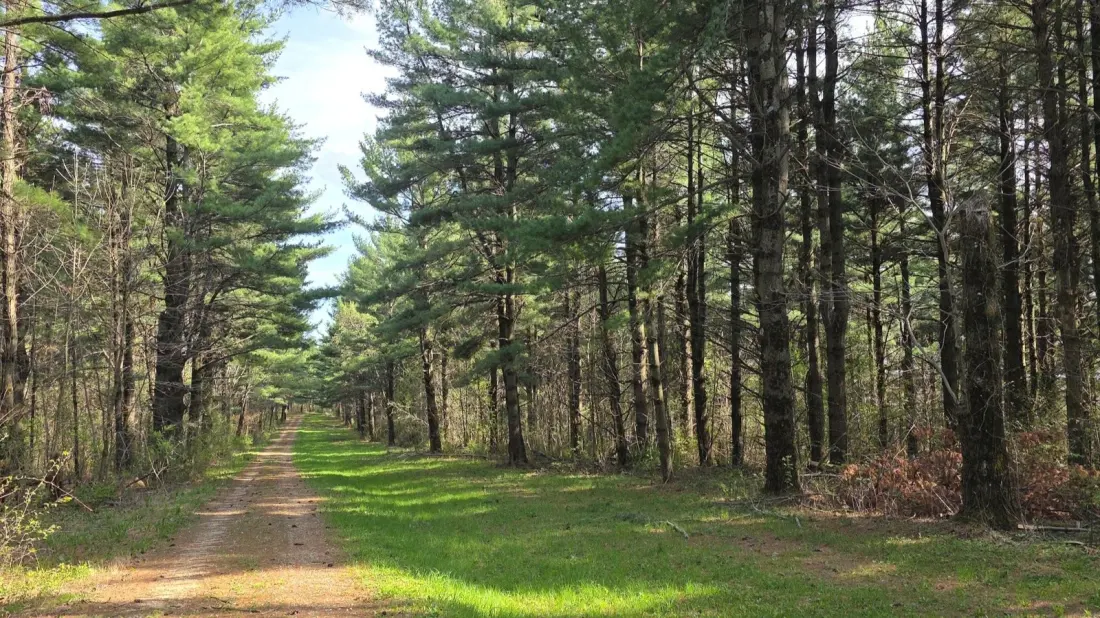
Roughly midway on the drive between Minneapolis and Madison, about 15 miles from La Crosse, sits a 3,000-acre forest most road-trippers blast right past. Coulee Experimental State Forest is part nature preserve, part living laboratory — and it's open to hikers, skiers, and hunters every day of the year.
The "experimental" part of the name is no gimmick. The land was set aside in 1960 as a research site for land management, and the U.S. Forest Service still works with the Wisconsin Department of Natural Resources on studies of plant species, water, and climate. Reclamation and erosion control were the founding concerns, and decades of that science have left the trails and prairies remarkably intact for casual visitors.
Two protected patches of dry prairie are the standout sights: Berg Prairie and Billy Goat Ridge. These are "goat prairies" — steep, south-facing hill slopes so sheer that goats would be the only livestock able to graze them. There are no actual goats on site, but the grasslands support milkweed, bluestem, and coneflower, plus the pollinators that follow. Come in late summer and you'll see why botanists care.
The terrain itself tells a bigger story. "Coulee" comes from a French word for gully, and the forest's dips and ravines are classic Driftless Area topography — the corner of the upper Midwest that glaciers never flattened during the last ice age. Without glacial drift to smooth things over, water carved steep bluffs and valleys over millennia, giving hikers an undulating landscape of wildflower ridges, pine stands, and oak-lined gulches you won't find in the flatter country around it.
Winter is arguably the best time to visit. Volunteers maintain about 12 miles of cross-country ski trails, accessed from the eastern parking lot near Berg Prairie, and once snow falls those trails are reserved for skiers only. In warmer months the same routes open to hikers, horseback riders, and hunters, while primitive roads and other paths stay open year-round. Two caveats: horses are barred from certain managed areas at all times, and from all trails in spring when the ground turns soft.
This is a deliberately no-frills destination. There are no restrooms or potable water, the hiking trails aren't always well-manicured, camping and fires are banned, and the forest is open only from 6 a.m. to 11 p.m. Pack what you need and treat it as a day trip. For a bed and a meal, the riverside city of La Crosse is roughly 30 minutes away, with a solid spread of 3- and 4-star hotels.
Who's this for? Anyone who likes their outdoors quiet and a little wild — birders chasing prairie species, skiers tired of crowded groomed networks, road-trippers needing a leg-stretch between the Twin Cities and Madison. You won't find visitor centers or cafés here, just a strange and beautiful chunk of unglaciated Midwest doing double duty as a science project.