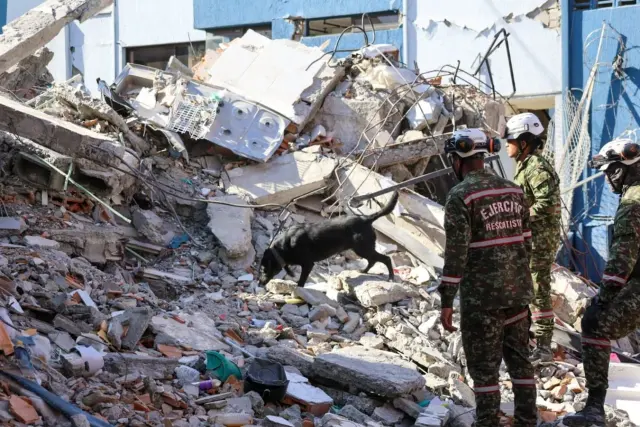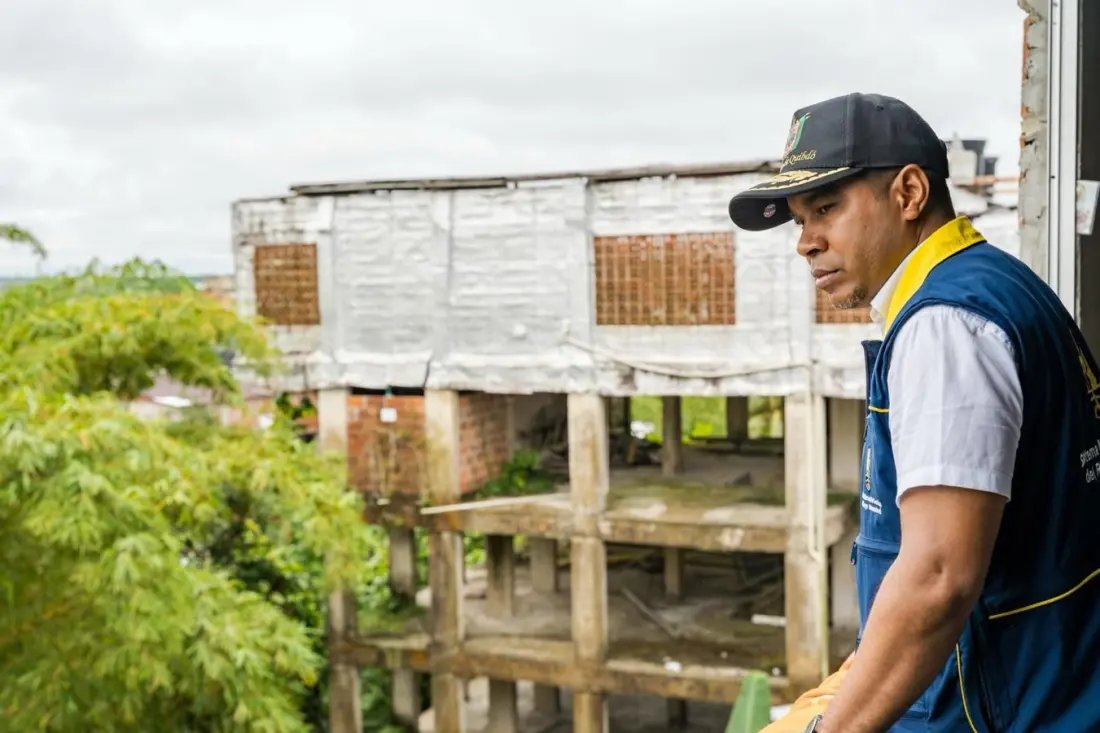
Ten November marks three months since a 7.4-magnitude earthquake hit western Colombia, epicentre near the rural town of San José del Palmar in Chocó. The emergency phase is officially over, and attention has shifted to Quibdó, the regional capital, where the real work — reconstruction — is only now getting organised.
The numbers are sobering. Quibdó's mayor, Rafael Bolaños, estimates total recovery costs at around 3 trillion Colombian pesos, with stabilising the city alone budgeted at more than 200 billion. On the housing front, more than 1,000 homes are destroyed or at risk of collapse, another 1,251 are uninhabitable and 1,482 are damaged — with hundreds still unevaluated. Nearly 15,000 families are on the national disaster registry, 84 of the city's 130 public schools were damaged, and a survey found 96.6% of local businesses hit, with 420 reporting jobs at risk.
The financing vehicle is the Fondo Milagro, or Miracle Fund, announced by President Abelardo de la Espriella two days after the quake and formally created by decree in September. Structured as an autonomous trust fund, it can contract under private law to sidestep some of the red tape that slows Colombia's existing disaster funds. It started operating in early October with roughly 1 trillion pesos, with the government aiming to contract another 2.7 trillion in November. Money is earmarked for housing, schools, health centres, water systems and roads.
Sequencing matters: demolitions come first, expected to take about six months, because nothing can be rebuilt until unstable structures and fractured hillsides are dealt with. The city lacks the machinery and trained crews to do it all, and secondary risks are building — debris dumped into water sources plus heavy rain is worsening landslide dangers. Beyond the fund, officials are counting on repair subsidies of up to 30 million pesos per family, forgivable small-business loans, a still-undefined social housing programme, and help from foundations and private companies. Grupo Argos has already built one home; Minuto de Dios, Terpel and others have pledged more.
The human picture is the harder part. Over 3,000 households are on a three-month rent subsidy that residents are already asking to have extended, and many families have simply moved in with relatives. Mayor Bolaños sees the rebuild as a chance to fix older problems too: only about 55% of Quibdó has piped water and 17% has sewerage, the main hospital is operating from its ground floor, and monetary poverty hit 61.7% in 2025 — the only Colombian city where it rose.
For travellers, the takeaway is simple: Chocó remains an active recovery zone. Aftershocks continue — residents reported a 5.6 tremor in early November — infrastructure is degraded, and officials themselves say the region needs sustained attention. Anyone planning to visit the Pacific coast or Chocó should monitor local conditions closely and expect disrupted services in Quibdó itself. For the people who live there, the message from survivors is blunt: don't treat this as over.
The Bogotá Post