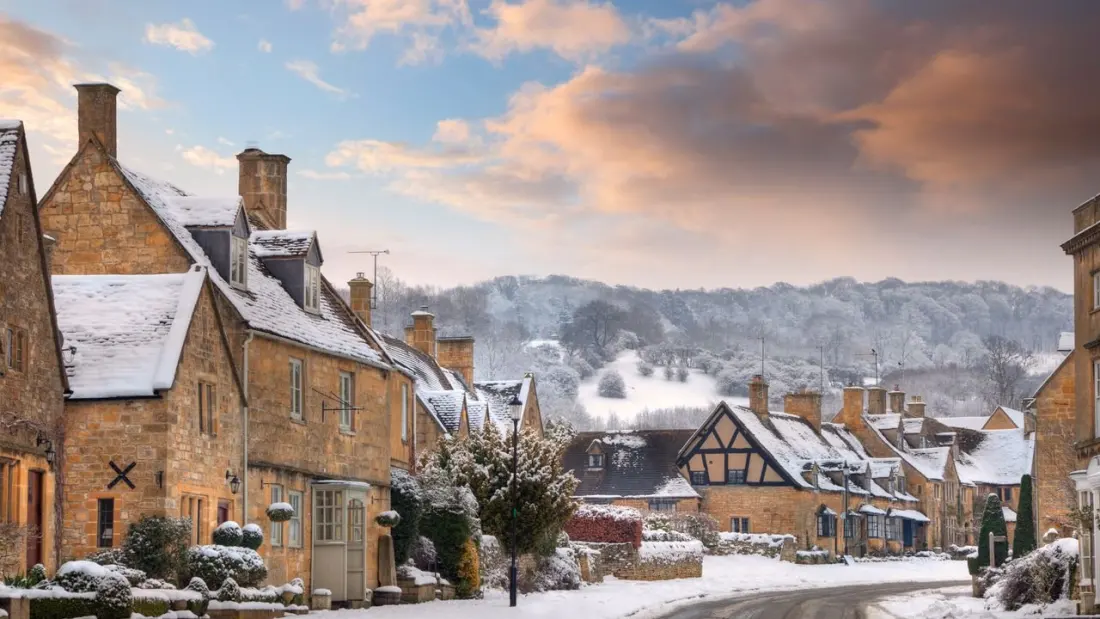
A snow-dusted Christmas morning feels like it's baked into the British imagination, but the statistics tell a less festive story. According to the Met Office, the UK is more likely to see snow in January or February than in December. And while a "white Christmas" is officially declared whenever a single snowflake falls on 25 December at a Met Office station, widespread settled snow is rare — it has only happened four times since 1960: 1981, 1995, 2009 and 2010.
The link between Christmas and snow largely comes from an older climate. White Christmases were far more frequent in the 18th and 19th centuries, which is where the classic Dickensian imagery comes from. Rising average temperatures over land and sea have made a genuinely snowy 25 December a much thinner prospect, particularly in the south.
So what about this year? Forecasters can't commit to anything yet — the Met Office only issues confident snow predictions in the days before Christmas. The immediate outlook offers little clue either way: early November is dominated by high pressure, bringing dry weather, sunny spells and temperatures a touch above average, with no early winter chill in sight.
For those determined to gamble on snow, there's a tool worth knowing: White Christmas crunches decades of snowfall data to estimate the probability of flakes on Christmas Day for postcodes across the country. The results are about as predictable as you'd guess. Every one of the ten snowiest spots is in Scotland, where odds of a white Christmas are noticeably better than elsewhere. Meanwhile, many London postcodes are looking at just a one to two per cent chance.
The practical takeaway for travellers: if snow is the whole point of your festive break, head north. The Scottish Highlands and Cairngorms offer the country's best odds, plus winter walks, log fires and scenery that delivers even without snow. If you're staying south, it's worth planning a Christmas that works in the rain too — cosy pubs, market stalls and coastal walks rather than sledging. And if you simply want the atmosphere, remember that even a forecast of no snow doesn't rule out a last-minute flurry; by the Met Office's loose definition, a single flake counts.
Keep an eye on the Met Office's short-range forecasts in the week before Christmas if the weather matters to your plans — that's when any real signal will emerge. Until then, it's a numbers game, and the numbers say Scotland.