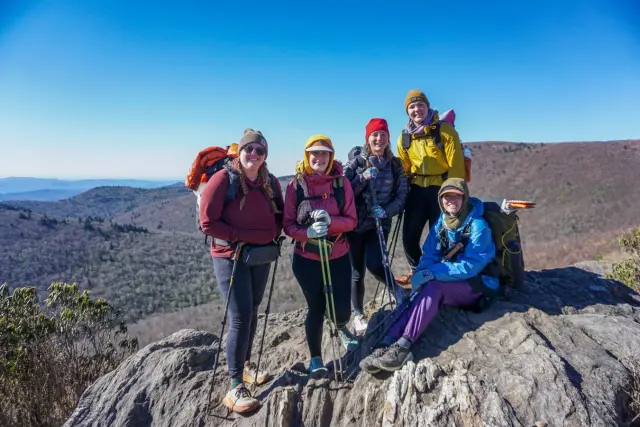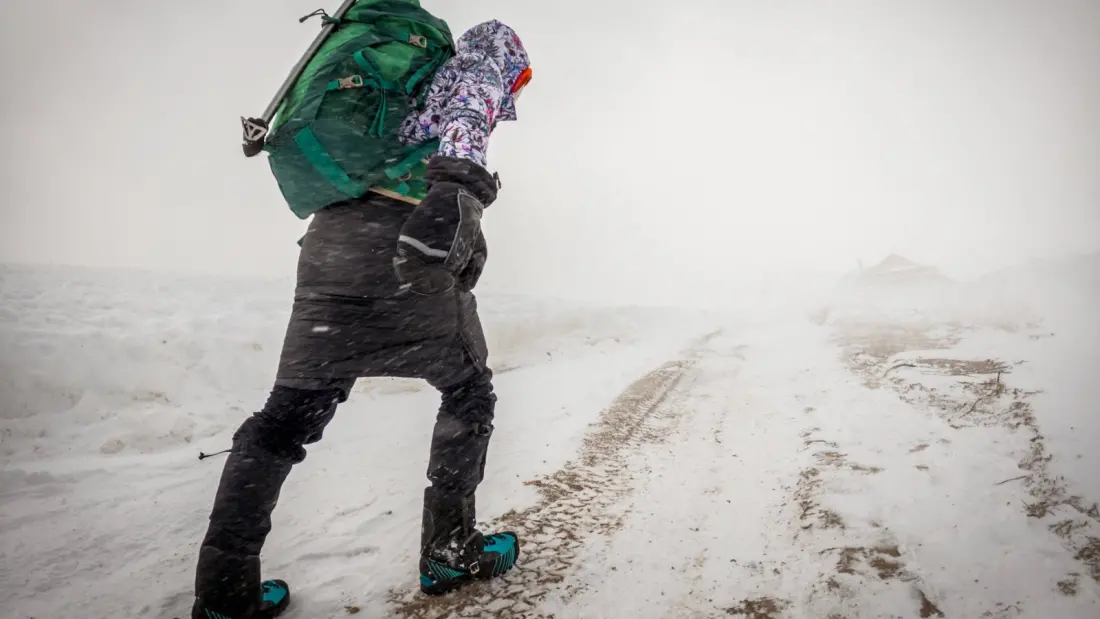
The scariest winter survival stories rarely happen on multi-day expeditions. They happen on short day hikes, where people carry almost nothing because "it's only two miles." Pennsylvania bushcraft instructor Dan Wowak calls those quick outings the highest-risk scenario of all: roll an ankle, watch a storm roll in, lose the light, and that two-miler becomes a genuine emergency.
So what should you actually do when snow starts falling faster than the forecast promised? The first move is counterintuitive — stop. Kahtoola founder Danny Giovale warns against the instinct to push harder when the weather turns. Snow quickly buries your tracks and the trail itself, so a mile from the car can feel like days. Check how much ground remains and how much daylight is left. If dusk is close and you're not equipped for night travel — when visibility and temperatures both bottom out — the experts agree it's better to settle in and wait out the storm than to stumble onward.
Shelter is the immediate priority, and it should already be in your pack: an emergency bivy or lightweight tent goes up straight away. As Jon King, who files trail reports from California's 10,000-foot San Jacinto Peak, puts it bluntly, once you're wet you're in trouble fast. No shelter? A snow cave works — pile snow, let it set into a dome, hollow out a body-sized space, and poke in an air vent. On some trails, like San Jacinto, man-made huts exist, which is a good reason to research shelter locations before you set out.
Staying warm is the second battle. Cold hands stop working, a cooling body starts making bad decisions, and hypothermia creeps in. Giovale rates a hooded shell jacket among the ounce-per-ounce best pieces of gear you can carry, and extra dry layers plus steady movement keep blood flowing to fingers and toes. A fire helps too — Wowak notes it's as psychologically calming as it is practical — though skip it in fire-prone areas or during bans unless it's truly life or death.
If you do end up spending a night out, insulate yourself from the ground, which steals body heat faster than the air. A foam mat is ideal; pine boughs or even your backpack will do. Melt snow over the fire for warm water rather than drinking it cold, since cold fluids drain energy. And if food runs short, keep drinking — hydration tricks your body into feeling less hungry. Above all, keep your brain busy with small tasks: building your bed, boiling water, organising gear. Dwelling on the situation is the fastest way to panic.
The through-line for anyone planning winter walks, even short ones: carry the ten essentials anyway, including a communication device, navigation, a fire starter, and an emergency shelter. Bad weather is getting less predictable, and being over-prepared on a short hike costs you a few ounces. Being under-prepared can cost you far more.
Story via Backpacker.