A missing exit stamp in a database could cost Anne Farmer her Christmas. The 70-year-old retiree, a former University of Oxford employee with no family in the UK, is booked to fly to Italy on 15 December to see relatives. But a data error in the EU's new Entry/Exit System (EES) has left her record looking like she never left the Schengen zone — which could mean she's flagged as an overstayer at the border.
The problem dates back to September, when Farmer took a day trip from Dover to Dunkirk. She checked in and out with her passport on both legs, yet when she later checked her remaining EU travel days online, she got an error message: no calculations could be made because entry and exit data was missing. Without a logged exit, the system may read her as having exceeded the post-Brexit rule that allows Brits 90 days in any 180-day period across the Schengen zone.
She isn't alone. Consumer group Which? reports that several British passport holders have been misidentified as overstayers because of incomplete exit records. Author Jojo Moyes was recently told by French border guards she could face a two-year ban and a €10,000 (about £8,360) fine if she tried to re-enter Europe after being wrongly flagged. Farmer says she has contacted the French Data Controller, Dunkirk's Border Police and the Paris Border Police headquarters — with no response from any of them.
The UK government has acknowledged the issue, saying it is aware of reports of inaccurate EES records affecting British nationals, including incomplete records and the registration of people who should be exempt. Because EES is an EU system, sorting it out sits with Brussels and member states, though officials say they are raising the problems with the European Commission. Travellers are being told to check FCDO advice before flying and to challenge incorrect records directly.
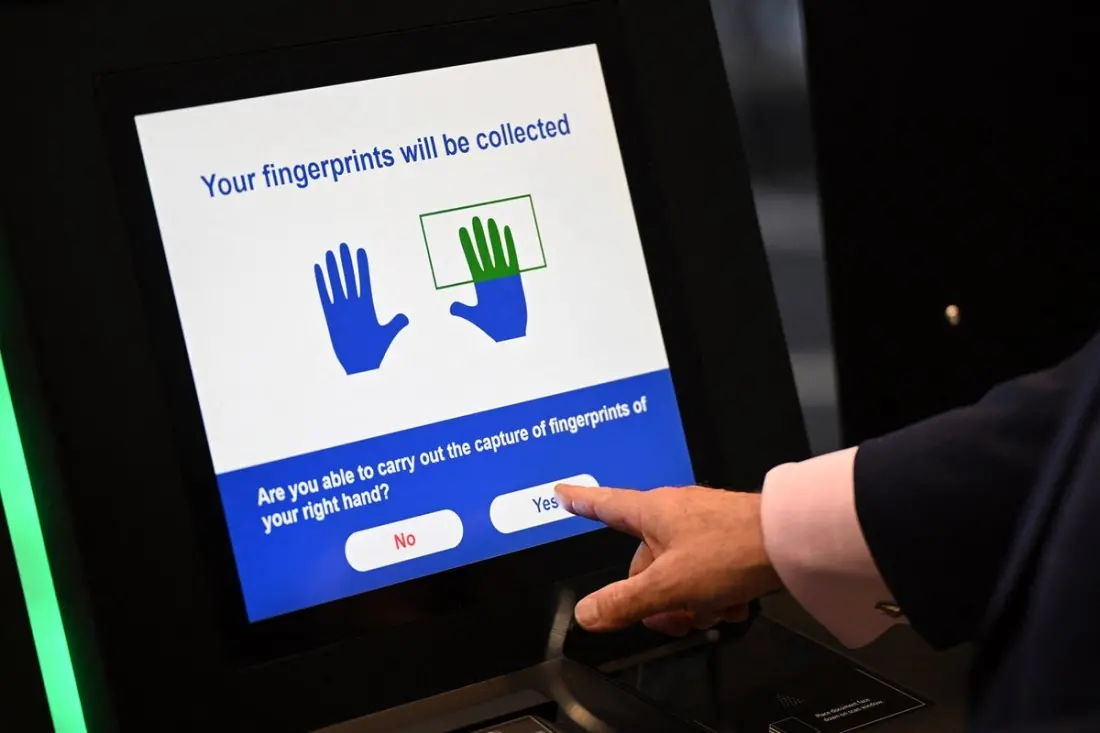
Context for anyone planning a trip: the EES became fully operational on 10 April 2026 and requires fingerprints and a headshot at the border, replacing manual passport stamps. That shift from paper to digital logging is exactly where the errors are creeping in — if your exit isn't recorded, the algorithm assumes you're still in the bloc.
Why should holidaymakers care? Because a database glitch you didn't cause can, in theory, get you refused boarding or entry, or worse, trigger talk of bans and fines. Until the teething problems are ironed out, the practical advice is simple: after any Schengen trip, verify your EES record online rather than assuming it's accurate, keep evidence of your travel dates (boarding passes, ferry tickets), and report discrepancies immediately — chasing a fix can take weeks, as Farmer is discovering. If your Christmas plans involve the EU, don't leave the admin until the airport.